Why Netflix Paid $469 Million For Knives Out Sequels

How much is too much for one movie? That’s the question many insiders in Hollywood are asking after news came out that Rian Johnson’s upcoming Knives Out sequels were snatched up by Netflix, the biggest streaming service in the world.

At $469 million (or $234.5 million per film), that’s well above the $160 million Netflix spent on Martin Scorsese’s The Irishman, more than overall output deals for Shonda Rhimes ($150 million) or Kenya Barris ($100 million), and nearly the same cost as Adam Sandler’s four picture deal with Netflix in 2014 ($250 million). On the surface, it’s absurd. Except Netflix executives aren’t buying two movies with hopes that 100 million accounts watch over a few weekends; they’re relying on Knives Out accomplishing more. Specifically, if the Knives Out sequels are as successful as Johnson’s original whodunnit, Netflix will have:

  • Franchise building beyond two films

  • Synergistic factors that help Netflix keep subscribers engaged

  • Reiterates that Netflix is home to big blockbusters

[widget path=”global/article/imagegallery” parameters=”albumSlug=the-best-netflix-original-movies-and-tv-shows&captions=true”]

Knives Out the TV Show?

A top cited reason for Netflix’s bid is franchise building. This is Netflix’s bread and butter. Take controlling rights to a franchise like The Witcher. Netflix took ownership of the film rights for an undisclosed figure, and turned that into one of the streamer’s most popular live-action series that is now being spun out into a secondary prequel series and an animated movie. It’s a formula that Netflix is planning with a number of popular franchises and big name directors: Zack Snyder’s Army of the Dead is getting a animated prequel after the film is released, while Assassin’s Creed is being turned into several different projects. Ambitions don’t stop there, either. This is also why Netflix is making several projects based on popular works in the Roald Dahl library.

As co-CEO Ted Sarandos once told analysts, the merit of a franchise is based on the “value of brand creation and how you scale off of it.” In other words, Netflix doesn’t own Star Wars, but could Netflix make The Witcher, Army of the Dead, Money Heist or, in this case, Knives Out its own version of a core franchise pillar that Disney and WarnerMedia have? In his opinion, yes. If Netflix controls the rights to Knives Out beyond these two films, then Netflix could build its own Agatha Christie-like universe. But that’s a big if. It’s unclear just how much premium control Netflix actually retains with the purchase.

As it stands, Netflix is reportedly paying Johnson, producer Ram Bergman, and actor Daniel Craig upwards of $100 million each, according to the Hollywood Reporter. Johnson will have full creative control with effectively no notes from Netflix, and the only requirements the streamer is demanding are that Craig appear in both sequels and “each [film] must have at least the budget of the 2019 movie, which was in the $40 million range.” It’s a wildly profitable deal for all three, and one that Lionsgate nor original financier MRC could compete with — an all too familiar occurrence in Hollywood these last couple of years.

Let’s do some simple math. Out of the $469 million Netflix is paying, $300 million (or 64%) is going to three people. The remaining $169 million is divided up a few different ways. There’s the budget for the films (with a set minimum of $40 million per), marketing costs, and other fees – like, say, backend deals for all those other actors that Johnson and Bergman need to hire for the film. Suddenly, the possibility of Netflix buying overall rights to the IP seems less secure. As Michael Rifkin, Sony Pictures’ head of business and operations, points out on Twitter, the perceived value of the deal (what Netflix was actually getting out of the purchase) is smaller than before more details emerged.

 [ignvideo url=”https://www.ign.com/videos/2019/09/10/knives-out-review”]

This doesn’t mean Netflix can’t build a Knives Out universe. If Netflix couldn’t have wrangled the rights away from Johnson and Bergman, it’s unlikely that any other company could have at this point. Apple and Amazon are the exceptions, and while they were reportedly in talks with Johnson and Bergman as well, they were ultimately outbid by Netflix. As Rifkin points out, Knives Out “will live on Netflix now” and that may continue to be true long after Johnson and Craig are done with the world they’ve created. This is why I have to believe there are aspects of the deal about what Netflix can do with the franchise and characters after the third movie that hasn’t come out in coverage of the deal.

Not owning the control premium is a bet maybe too risky even for Netflix. The price tag is too high. There’s always a chance that Knives Out 2, which I hope is called 2 Knives 2day, absolutely fails and that makes the third installment more of a problem than an opportunity. For example, Alice in Wonderland surpassed $1 billion at the box office, but the second film couldn’t crack $300 million globally. If there was a third picture in the deal, Disney executives would probably be a tad concerned.

Knives Out, however, also hits every mark that Sarandos wants for Netflix’s film slate. Remember, Sarandos told analysts in January that people’s “appetite to watch a movie” isn’t just once a week. Netflix needs more movies — a combination of big blockbusters, horror, dramas, documentaries, and independent darlings to satiate people’s wants. They also want more movie stars.

“[Think] about movie stars like Gal Gadot and Leonardo DiCaprio and Meryl Streep and filmmakers like Jane Campion and Adam McKay, Zack Snyder, Antoine Fuqua making films at enormous scale for Netflix so that when people have an appetite to watch a movie, they can do it at home and they could do it on a big screen or they could do it on their phone,” Sarandos said.

[ignvideo url=”https://www.ign.com/videos/2017/10/31/house-of-cards-to-end-with-season-6″]

Owning Search

Those names aren’t just Sarandos boasting about the talent Netflix is working with (although that’s partially it); they’re also integral to Netflix’s data about subscriber interest.

Before Sarandos ordered two seasons of House of Cards for $100 million in 2013, the Netflix team ran the numbers. What was the likely outcome of the purchase for Netflix’s subscriber base (then about 33 million globally with 27 million in the United States)? Would they be interested? Data seemed to suggest so; a good portion of its subscriber base watched House of Cards producer and director David Fincher’s movies from beginning to end when streamed on Netflix (like the Social Network), they seemed to like the British version of the series, and Kevin Spacey movies performed well.

House of Cards, a show that combined all three things, was a logical bet even if still daunting. Better yet for Netflix, when people searched for David Fincher or Kevin Spacey on Netflix, House of Cards would appear at the top of the list. Netflix can then use that same search to recommend other movies and TV shows people like based on their interest.

Let’s use Rian Johnson as an example. Searching for the director’s name on Netflix brings up a number of projects, none that he has any front facing hand in. The first row alone, however, recommends four Netflix original projects: Anima, I Care A Lot, Barbara: The Music, The Memories, The Magic, and What Did Jack Do? Every row features some Netflix originals alongside licensed and acquired titles. The same thing happens with Daniel Craig, where recommendations span from James Bond titles to David Fincher movies (remember, Netflix has a long standing relationship with Fincher) and more.

[ignvideo url=”https://www.ign.com/videos/2016/06/09/how-james-cameron-and-david-fincher-helped-get-deadpool-made”]

Search doesn’t get talked about as often when it comes to why Netflix decides to pursue a project, whether it be an original movie or an acquisition. There are a plethora of other reasons — executives believe in the filmmaker, writer, and cast, or it’s a good franchise bet, for example. Still, Netflix’s primary goal is to make entertainment that keeps people inside its streaming service, and that means studying what subscribers are looking for and figuring out how to meet those needs.

Being able to add high profile directors and writers to its slate of talent that people search for at night is also crucial. Arguably, this is also why Netflix is handing out individual projects to cast members from Stranger Things (like Millie Bobby Brown) and Money Heist, too.

If the goal is to make everything on Netflix feel like it’s all in the family, studying what type of movie a subscriber wants — and who they want to see more of — is crucial. Netflix executives made one of their two stipulations that Daniel Craig appears in both films. Sure, he’s an A-list actor who can bring in eyeballs, but I would put good money betting that people are routinely also looking for more Daniel Craig things to watch.

Outplaying The Competition

All of which brings us to the final — and most obvious — reason for Neflix’s decision to pick up Knives Out. It’s perfectly summed up by one executive with knowledge of the deal who told the Hollywood Reporter, “It takes a proven theatrical commodity off the board and puts it in their pocket. And it’s another way they re-educate audiences to think of streaming and their company above a studio.”

Competition is coming back tenfold. Marvel movies are going to hit theaters again in just a few months, and Warner Bros. is seeing people return to cinemas to watch some of its most anticipated films, like Godzilla vs Kong. While Netflix overperforms with television shows, Amazon and Disney+ routinely have some of the most watched movies, according to Nielsen data. In order to stand out from the crowd — and keep people’s attention on movies they can stream at home — acquiring a few popular titles that can lead to a bigger play down the road makes sense. It’s also why Netflix is reportedly spending north of $1 billion to become the streaming-exclusive home for Sony movies after they play in theaters.

Netflix is all grown up. It’s no longer the underdog — it hasn’t been for some time. Relying on the spaghetti method (throwing whatever at the wall to see what sticks) isn’t the best path forward anymore. Instead, Netflix has to think of how it can own the spaces its in; films people want to stay home to watch, movies that can become TV shows, and tapping into a library of talent subscribers are routinely seeking out are a few methods of ensuring people are getting what they want out of their $14 a month subscription.

Knives Out is an expensive bet, but it checks all three of those crucial boxes.

[poilib element=”accentDivider”]

Julia Alexander is IGN’s top streaming editor. Have a story tip? DM her on Twitter @loudmouthjulia or request her Signal number by emailing [email protected].

Backbone One Review

When I first saw the Backbone One, I figured it would be just another gimmicky mobile phone controller alternative. In a world of clunky phone clips, latency issues, and bad designs, no solution has really grabbed my attention and made me seriously consider mobile gaming as a viable option. But, with the mobile market comprising over 2.2 billion gamers, it’s a shame there isn’t a ubiquitous solution yet. Enter Backbone. While it’s got some shortcomings, it’s laid the foundation for a unified platform ecosystem that mobile gaming desperately needs.

[widget path=”global/article/imagegallery” parameters=”albumSlug=backbone-one-review&captions=true”]

Backbone One – Design and Features

The Backbone One is aptly named due to its dog bone-shape that attaches directly to your iPhone. It features two independent sides of the controller, each roughly the size of a Nintendo Switch Joy-Con controller, held together by an expandable middle section. To connect it, you simply pull the two ends apart and plug your iPhone into the Lightning connector. That’s it. There’s no Bluetooth settings to worry about or pairing that needs to take place – it just works. The direct connection allows for almost no latency when playing games, bringing it closer to a console experience. It’s also extremely low-power, taking less energy than a pair of Lightning-connected headphones.

Ergonomically, the Backbone is comfortable to hold – albeit better suited for smaller hands. It’s extremely lightweight, weighing just 138g. With an iPhone 12 attached it’s just over 300g, or roughly the weight of a Nintendo Switch Lite. It has a slightly bulbous base on each side of the controller that evenly distributes the weight and doesn’t make the unit feel top-heavy while playing. It also features a matte black finish with a slight sheen to it that unfortunately picks up a lot of fingerprints.

[poilib element=”poll” parameters=”id=34851ca7-0217-402c-b5ee-42fe71043a17″]

There are two offset analog sticks in total, one on each side of the controller. They are smaller and a bit stiff, and the closest comparison I can make in terms of how they feel are the analog sticks on Joy-Con controllers. There’s a surprisingly good D-pad just below the left analog stick taking the shape of a rounded plus sign. It’s not clicky like everything else on the controller, but instead almost silent with a satisfying press.

Below the D-pad is an options button and a dedicated button for screenshots and video recording. Both buttons are extremely low-profile – almost flush with the face of the device – and have a bit of a mushy press to them. Up top are the L1 and L2 buttons. The L1 button is a slim, clicky, tapered button that gently contours with the shape of the controller. L2 is lightweight and easy to press, although there’s not much tension. What’s nice, though, is that it’s an analog trigger meaning it can register exactly how far it’s pressed down and benefits from a 5mm travel.

Backbone One Review

On the right side of the controller are the four primary face buttons: A, B, X, and Y – laid out like an Xbox controller with A on the bottom and B on the right. All four buttons are small and have a mushy click to them. They also suffer from a very slight wiggle in their individual slots. Below the face buttons is another analog stick, identical to the one on the left. Just below that are two more buttons: the orange Backbone button and a menu button, both low-profile and mushy like their counterparts on the left side of the controller. And, as expected, R1 and R2 up top.

Because this controller plugs into your phone, there’s a Lightning passthrough charger on the bottom of the right side of the controller, allowing you to charge and play at the same time using the cable you already use for your iPhone. It also supports using Lightning accessories or Lightning headphones, too. On the bottom of the left side of the controller is a 3.5mm auxiliary port for connecting a pair of traditional headphones.

The Backbone supports everything from iPhone 6s to the latest iPhone 12 series – including the larger iPhone 12 Pro Max – running iOS 13 or later. Because of the various shapes and sizes of these devices, it has a large groove that wraps around both sides of the phone. Since it’s not custom-fit for each iPhone it doesn’t sit perfectly in the groove, allowing it to twist slightly in your hands and bow a bit on the back portion that pulls apart. The result is a controller that doesn’t feel perfectly secure, but I never worried that my phone was going to fall out while playing.

Backbone One Review

Backbone One – Software

Where the Backbone really shines, however, is its tight integration of hardware and software. When first connected, it will prompt you to download the Backbone app. This effectively acts as a “hub” to keep all of your games and various remote play apps organized. While it’s not required to use the controller, it solves one of the major issues of mobile gaming: creating a cohesive experience that blurs the lines between console and mobile games through what feels like a natural home screen experience.

The first row of icons includes your installed games and remote play services like PlayStation Remote Play, Xbox Remote Play, and Steam Link, just to name a few. Having everything side-by-side creates the illusion that you’re bouncing between games on your console and clicking one jumps right into that experience. When you’re finished playing, simply press the Backbone button again and you’re taken back to the app’s home screen; once again making you forget you’re actually playing on your phone.

Backbone One Review

Below your games are more categories of horizontally-scrolling tiles that include recent highlights taken by other Backbone users, trending games, multiplayer games, single-player experiences, classics like Sonic the Hedgehog and Doom, as well as a dedicated section highlighting some popular Apple Arcade games. If you see something that interests you, simply tap or click on it and you can download it on the spot without ever leaving the app and transitioning over to the App Store. It’s as seamless as it could possibly be while focusing on the most important thing: never breaking that illusion of a “home screen.”

Also contained within the app is a friend system which allows you to add other Backbone users, as well as voice chat rooms that you can easily jump into for popular games like Call of Duty Mobile, Minecraft, and Brawlhalla. You can even create your own party for up to eight players within the Backbone app – complete with invites and system-wide voice chat. Friends’ play activity is shown and you can easily party up and jump directly into their game right from the app or by tapping on a push notification.

Backbone One Review

Video capture and screenshots work similarly, too. Since the feature is bound to a hardware button on the controller, you can activate it across any game or service and your recordings are automatically saved in a gallery section inside the Backbone app – allowing you to easily view, clip, and share them without cluttering up your Camera roll. The Backbone button slowly pulses red while recording to provide a subtle visual reminder, too.

There’s also a system-wide shortcut to mute your microphone audio by double-pressing the options button, allowing you to quickly mute yourself without having to leave the game and fiddle with the native iOS microphone settings. What’s even better is your recordings intelligently filter out the sounds made from the analog sticks and buttons, leaving you with just the audio from your gameplay and party chat. Recordings are high-quality, too, capturing footage in full 1080p at 30fps with a 20mbps bitrate. You can also choose between recording in the smaller HEVC or more-compatible H.264 formats.

The Backbone is still relatively new, having been released in late 2020, but the developers have continued to push out weekly updates to the Backbone app, adding or tweaking aspects of it based on community feedback. Not only is it encouraging to see such frequent updates, but because so much of the magic lies in the app itself, the Backbone could theoretically gain new features without necessarily requiring a hardware revision.

Backbone One Review

Backbone One – Gaming

Whether you’re using the Backbone exclusively for playing mobile games, playing or streaming games remotely over Wi-Fi, or a mix of both, this controller feels right at home. It works with more than 1,300 mobile games on iOS that support a controller as well as PlayStation Remote Play, Xbox Remote Play, Steam Link, Google Stadia, Amazon Luna, Nvidia GeForce Now, Shadow, and Rainway.

I tested it with a handful of mobile games such as Genshin Impact, Call of Duty Mobile, and The Pathless. There was virtually no latency using any of the buttons, sticks, or triggers on the controller, with everything feeling quick and responsive. Aiming with the analog sticks took some getting used to in something like Call of Duty Mobile as the controls felt a bit jumpy and not as smooth as I’m used to when turning, although some of those issues can be chalked up to the individual sensitivity levels within each game.

Backbone One Review

The analog triggers felt great and truly replicated the console experience when aiming down sights and firing. Since the Backbone doesn’t feature its own built-in rumble, it instead makes clever use of the iPhone’s haptic feedback and makes it feel like it’s vibrating both sides of the controller. This is a welcome addition as most iOS controllers don’t have built-in rumble, yet having that extra sensation definitely increases immersion.

Playing games remotely from my PS5 and Xbox Series X, as well as gaming PC all felt great on the Backbone, as well. Aside from minor internet-related latency issues, all the controls were responsive. This feels like a worthy successor to the PlayStation Vita for playing games remotely, and being able to play console games on the couch while watching TV or while lying in bed felt extremely comfortable.

Backbone One Review

The location of the Backbone button and screenshot buttons are great, but pressing the options and menu buttons in-game can be a bit uncomfortable as they force your thumb into an awkward angle. This is especially prevalent when using Remote Play functionality for PlayStation and Xbox as these buttons become used more frequently.

Overall, playing games on the Backbone was enjoyable. Switching between native iPhone games and Remote Play options was seamless, with everything filtered through the Backbone app. With notifications silenced, I really did forget I was using my phone much of the time. There were even instances where I’d set the Backbone down and start searching for my phone – only to realize it was still attached.

[widget path=”global/article/imagegallery” parameters=”albumSlug=best-smartphones&captions=true”]

Robert De Niro Was Originally Cast As Lead Role In Big Instead of Tom Hanks

Robert De Niro was originally cast in the lead role of Big, the movie that proved pivotal to Tom Hanks’ career.

Talking during an interview on Watch What Happens Live With Andy Cohen, Elizabeth Perkins – who played Susan Lawrence in Big – revealed the original casting decision.

“Robert De Niro was actually cast in the role of Josh in the movie Big,” she revealed. “It fell apart because he had a scheduling conflict, and then they went to Tom Hanks. It’s like a totally different movie in my brain with Robert De Niro.”

[ignvideo url=”https://www.ign.com/videos/2013/10/02/igns-top-10-tom-hanks-movies”]

While filming never happened with De Niro playing the lead character of Josh, Perkins did audition with De Niro and so had a glimpse of what De Niro’s portrayal of the character would have been like.

“He was more moody. It was more of a — a little more of a horror movie,” she said. “Robert De Niro wandering around the streets of New York. What Tom Hanks brought to it was so much lighter.”

Big, of course, tells the tale of a young boy having his wish granted to become big. But rather than become an adult with all the wisdom and learnings of age, he wakes up as essentially a boy in a grown man’s body, as played whimsically by Tom Hanks. You can imagine, though, that this premise would lend itself to something a little more freaky with an unsettling edge if played in the right way. While De Niro only ever performed at an audition, it would be fascinating to see what that apparently moodier feel would have brought to the entire story.

For more from Hollywood, check out the confirmed cast of Marvel’s She-Hulk, Netflix’s grabbing of the rights to Sony movies after their theatrical run, and how the Batman v Superman writer hated WB’s original, darker ending.

[poilib element=”accentDivider”]

Matt Purslow is IGN’s UK News and Entertainment Writer. 

Analogue Super Nt Will Be Back In Stock Today

Analogue’s Super Nt, a custom piece of hardware built to play classic Super NES and Super Famicom cartridges, will go on sale again soon. The company has announced it will open orders today, April 9, at 8 AM PT / 11 AM ET.

The Super Nt comes in three colors: Classic, modeled after the Super NES; SF, modeled after the Super Famicom; and black. A fourth option with transparent casing has been discontinued. Each version includes the system and controller with all the cables and power supply, along with digital copies of Super Turrican – Director’s Cut and Super Turrican 2.

As Analogue notes, the Super Nt isn’t a plug-and-play console pre-loaded with games like Nintendo’s own Super NES Classic. Instead, it’s a full-fledged console like the original Super NES, able to play the library of Super NES cartridge games. If you still have those carts as part of your collection or are looking to start, this is one way to play them. Check out our Super Nt review for more details.

Gallery

We expect the Super Nt stock to sell out quickly, though, as that often happens with Analogue’s retro consoles. The tweet announcing the sale mentioned that there’s a two-per-customer limit. Analogue also announced that the last stock of its Nt Mini Noir, the high-end $500 version of NES hardware, will go on sale at the same time, and those will be limited to one per customer.

Another retro device from the company, the Analogue Pocket which plays Game Boy games, was recently delayed to October due to widespread component shortages that are impacting several industries. The shortage of semiconductors has been called a “crisis” as it impacts industries from car manufacturers to phone producers, and the Biden administration is looking into solutions.

Hitman 3’s Latest Elusive Target Is A Homicidal Art Collector

Just like the previous two games, Hitman 3 has no shortage of targets for contracts to pursue within its various stages, and this weekend will see a brand new Elusive Target roaming the Dartmoor Estate. As part of the Season of Greed, players can hunt down an obsessive and homicidal art collector by the name of Kody Haynes.

Also known as The Collector, Haynes has been on the run for the last six years after his wife discovered that he had been embezzling funds from her fast-food family fortune to help support his art-collecting habit.

Unlike other collectors though, Heynes cannot stomach the idea of his prized possessions having been owned by anyone else who is still alive, and he usually fixes that dilemma by murdering the previous artwork owners. Sounds like a problem that only a lethal master of disguise can permanently solve.

Like all other Elusive Targets, tracking Haynes down is easier said than done. He won’t show up when using Agent 47’s instinct vision and you’ll need to pay close attention to your surroundings to find out where he is in the mansion exactly. You’ve also only got one chance to eliminate him, using any means at your disposal to fulfill the contract.

The Collector Elusive Target will be active from today until April 19. The rest of the month has no shortage of Hitman 3 content either, as the Season of Greed that forms part of the Seven Deadly Sins DLC collection has already begun rolling out. A seasonal egg hunt on the Berlin level is ongoing and runs until April 12, while the next Elusive Target, The Politician, arrives on April 23. You can see the rest of the Hitman 3 April roadmap right here.

In more Hitman news, IO Interactive has confirmed that the series will take a break as the studio focuses on its James Bond game. While that project is still in the early days of development, the studio has increased in size by hiring 200 more employees to work on Project 007 and other in-progress games.

GameSpot may get a commission from retail offers.

The Last Of Us Remake In The Works At Naughty Dog, Report Says

A new report from Bloomberg has shed some light on the goings-on at PlayStation, and one of the most notable takeaways is that Naughty Dog is working on a The Last of Us remake. The report also mentioned that Days Gone studio Sony Bend was developing a new Uncharted game and that Days Gone will not get a sequel.

Sony’s Visual Arts Service Group, based in San Diego, has typically supported other Sony studios in the past. However, the studio is said to have begun its attempts to remake The Last of Us about three years ago.

Visual Arts Service Group founder Michael Mumbauer recruited about 30 people, from inside Sony and out, to create a new division that would develop a remake of The Last of Us for PS5, Bloomberg said. The team didn’t get funding or support and Sony elected to shift development on the Last of Us remake to Naughty Dog, according to the report.

Mumbauer has since left the company, along with others who worked there. A spokesperson for Sony declined to comment.

The report also mentions that Days Gone studio Sony Bend pitched a sequel to the game, but it apparently did not move ahead despite the commercial success of the first game. Instead of working on a sequel, one team at Sony Bend is now assisting Naughty Dog “a multiplayer game.”

The report doesn’t say what the game is, but it was previously announced that Naughty Dog is making standalone Last of Us multiplayer game. Another team inside Sony Bend was put to work on a “new Uncharted game” with Naughty Dog overseeing the project, according to the report.

Some higher-ups at Sony Bend were reportedly unhappy about working on Uncharted, and asked to be removed from the game. Sony agreed, according to the report, and Sony Bend is now making “a new game of their own.”

Naughty Dog has said it won’t make another Uncharted game, but the studio previously mentioned that a different studio could come in to make Uncharted 5. It seems that still remains a possibility, even if Sony Bend isn’t doing it.

Also in the report, it’s mentioned that Mumbauer’s team initially wanted to do a remake of the original Uncharted game, but the game “quickly fizzled” due to costs and other issues. So the team moved on to make a remake of The Last of Us with an idea to release it in a package with The Last of Us 2 for PS5.

The new PlayStation Studios boss, Hermen Hulst, said the Last of Us remake was too expensive due to its new engine for PS5 and gameplay redesigns, according to the report.

Instead, Sony put Mumbauer’s team to work on The Last of Us II as a co-developer with Naughty Dog to help polish the game, the report said. After The Last of Us II was finished, Sony reportedly asked some developers from Naughty Dog to help Mumbauer’s team with the Last of Us remake, but the game later reportedly shifted to Naughty Dog’s internal team.

The Last of Us remake, which is said to be known as T1X, is still in development at Naughty Dog with help from Visual Arts Support Group, the report said.

It’s one of multiple titles that could be in the works at Naughty Dog, as the studio is also developing the previously announced Last of Us multiplayer game. Outside of that, Naughty Dog’s Neil Druckmann has said the studio might make The Last of Us 3 or a new IP.

Sony has already revived The Last of Us in some form, in 2014 releasing a remastered edition of the PS3 original for PS4. The series continues to be very popular, and just recently, HBO announced that Pedro Pascal and Bella Ramsey will star in a TV show based on it.

Go to Bloomberg to read the full report, which has more details on what is said to be going on inside Sony/PlayStation.

Now Playing: The Last Of Us Part II Video Review

GameSpot may get a commission from retail offers.

Sean Astin Asked To Play Aragorn In Lord Of The Rings

Actor Sean Astin starred in Peter Jackson’s The Lord of the Rings series as the Hobbit Samwise Gamgee, but he apparently wasn’t always guaranteed to play that role. Astin and other Lord of the Rings cast members recently spoke to Stephen Colbert for an Alamo Drafthouse event, and a few of these videos were shared with Esquire.

In one of the videos, Astin said he got the impression that he was being pigeon-holed into playing Sam when he might have had an opportunity to play a different character. Maybe that was true, but one part he was never in the running for was Aragorn.

“The way the agent and the Victoria Burrows the casting director were talking to me, all of a sudden I got this sense, like, ‘Wait a minute. Are you pigeon-holing me? Is this typecasting?” he said. “‘Who else could I be because this Aragorn guy looks really cool–he’s got a sword! Could I play Aragorn?’ And I remember them going, ‘No. No, you couldn’t play Aragorn.”

Sam is one of the central characters in The Lord of the Rings and some believe he is the true hero of the story, so Astin did in fact land a very important role in the film.

Astin and his castmates spoke with Colbert for the Alamo Drafthouse event that aims to help revive the theater business. You can attend a screening of The Lord of the Rings at an Alamo Drafthouse theater to watch these videos featuring the cast and crew that made the films.

The Lord of the Rings: The Fellowship of the Ring celebrates its 20th anniversary this year. The franchise remains popular and in the news frequently, with the Amazon TV show and the various video games in the works.

Marvel’s She-Hulk Show Adds Hamilton Star Renée Elise Goldsberry

The upcoming Marvel Disney+ show She-Hulk has added Renée Elise Goldsberry to its cast. It’s been reported that the Hamilton star will co-star in the series alongside Tatiana Maslany.

According to Deadline, Goldsberry will play a character named Amelia. No further details about her character are currently known, and Marvel has not confirmed the casting. Goldsberry is best known for her Tony Award-winning role as Angelica Schuyler in the original cast of Hamilton, plus roles in Altered Carbon, Zoey’s Extraordinary Playlist, and The House with a Clock in Its Walls.

She-Hulk will star Maslany as Jennifer Walters, an attorney with similar powers to her cousin Bruce Banner. The show has been described by Marvel Studios boss Kevin Feige as a “half-hour legal comedy,” and will see Mark Ruffalo play Banner once more. In addition, Tim Roth is set to return to the MCU as the villainous Emil Blonsky (aka Abomination), a role he played in 2009’s The Incredible Hulk. The showrunner is Jessica Gao, and the series will hit Disney+ in 2022.

She-Hulk is one several new Marvel shows in the works for Disney+. Loki releases in June, while the animated What If…? also arrives this year. Beyond that, Ms. Marvel, Hawkeye, Moon Knight, and the crossover show Secret Invasion are expected in the next couple of years.

For more, check out GameSpot’s guide to every upcoming Marvel Studios movie and TV show.

Now Playing: Everything We Learned About The MCU On Disney+ – GS Universe News Update

Become A Pro Music Producer Without A Studio With This High-Tech Vocal Remover App

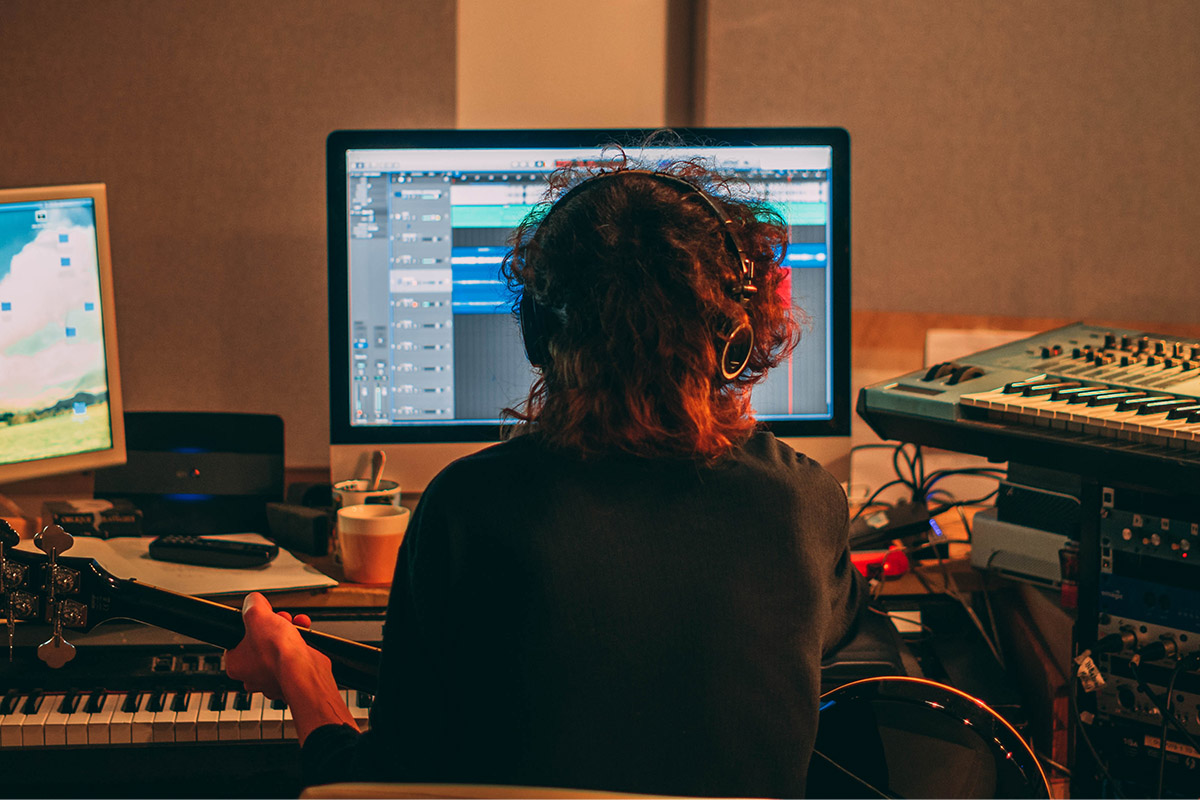
Creating your own music can be the most fun, creative – and lucrative – things you can do. But, to make professionally produced tracks, you need the tech to isolate and split songs into separate STEMs. Usually, this would mean using a pro music studio, which can cost up to $500 an hour. But, with the top-rated EasySplitter Pro Vocal Remover, you can do it all in one app – and even better, right now, you can get a Lifetime Subscription for just $39.99. 

[youtube clip_id=”TA7mAF34NWU”]

EasySplitter Pro is one of the most exciting new technologies in the music industry, allowing you to upload tracks, remove vocals and provide four separated music versions – vocal, instrumental, bass, and drums – without having to separate the STEMs manually. 

Whether you’re already a pro DJ or want to become one, with this innovative tool, you’ll save countless hours which would usually be wasted trying to remove vocals from songs – and all without any audio quality loss. 

Instead, EasySplitter’s fast processing allows for quick song splitting, and the app’s smart UI means you’ll immediately find it easy to work with splitter, using all its features such as file history to store your split audio files and access them any time, and the app’s built-in audio player, allowing each song can be played in real-time from your dashboard. 

Plus, EasySplitter comes highly reviewed by its users, with an impressive 4.5/5 star rating. As one recent customer praised, of its endless possibilities, “Amazing idea and hopefully great execution! Cannot wait to test what types of musical creations I can make!” 

Start producing your own professional tracks today with an EasySplitter Pro Vocal Remover: Lifetime Subscription, on sale today with 93% off, for just $39.99 (regular price $599). 


EasySplitter Pro Vocal Remover: Lifetime Subscription – $39.99

See Deal
 

Prices subject to change.

Never Lose A Precious Memory Again With This Unlimited Cloud Storage Deal

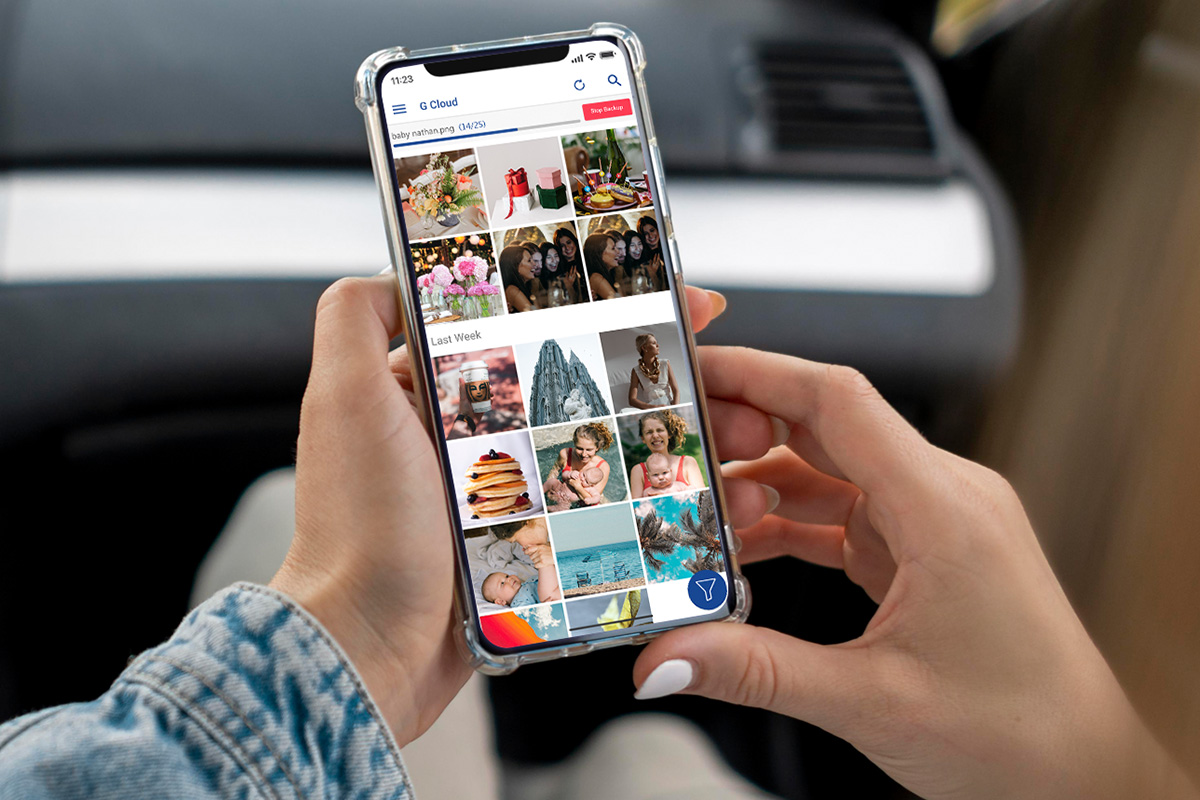
Is there anything worse than losing your precious personal photos and videos? How about the dreaded notification that your storage is full? Thankfully, with this great deal, you’ll never have to risk either again, as we’ve found a year’s subscription to the G Cloud Mobile Backup Unlimited Storage Plan on sale right now for just $39.99 – that’s a 44% discount off the regular price of $71. 

G Cloud allows you to manage, open, and share your files in the cloud, giving you unlimited storage to do it with. Its fully accessible storage allows you to migrate your media, call logs, contacts, and messages to any Android or Apple device – as well as to back up multiple devices to just one G Cloud account – you’ll be able to keep all the media from all your gadgets in one, easily accessible place and never have to worry about losing a single memory again.

You can be confident that your data is protected, too, thanks to G Cloud’s exceptional security. With this service, all your data is securely stored on the Amazon AWS Cloud and protected by military-grade 256 AES encryption. 

It does this all without even needing an app, too. And because you can simply access your G Cloud account through your web browser, you can use it easily and quickly from anywhere. Protecting your data has never been so simple. 

With more than 5 million downloads, G Cloud is loved by its users and tech experts alike, with an impressive 4.4/5 star rating from customer reviews on the Google Play Store, and being awarded 4/5 stars from the editors at TechRadar.

Back up your most treasured memories today with the G Cloud Mobile Backup Unlimited Storage Plan, with a one-year’s subscription on sale with 44% off now, for just $39.99 (regular price $71). 

G Cloud Mobile Backup Unlimited Storage Plan – $39.99

See Deal

Prices subject to change.