Microsoft is scaling back its support for Halo: The Master Chief Collection, announcing that the upcoming Season 8 launch will be the final new season of 2021 as 343 shifts its focus to Halo Infinite. That being said, 343 still has lots of new content planned for MCC in the future, including potentially new content for Halo 2.
In a blog post, 343 said the remainder of 2021 will be a “wild one” for 343 with the launch of Halo Infinite coming up on December 8. There are separate teams working on Infinite and MCC, but there are some shared areas like services, support, and community management. As such, 343 is understandably focusing more of its attention on Infinite.
Click To Unmute
Size:
Want us to remember this setting for all your devices?
Now Playing: 5 Things To Know About Halo Infinite’s Multiplayer Preview
“It’s important to us that we position MCC’s eighth season for success but also help alleviate any conflicts that could take away from the studio’s focus on Halo Infinite’s launch. To that end, Season 8’s release later this Fall will be our last official MCC update of this calendar year. Suffice it to say that we’re going to finish the year on a high note with a jam-packed season that’s actually swelled in some regards as pieces once ear-marked for later this year were pulled in to clear the landing zone for Halo Infinite.”
343 said it has already had “a lot of conversations” about the best way to continue to support MCC when Halo Infinite launches. Releasing seasonal updates for two games, at the same time, doesn’t make sense for the studio. “One, we have more MCC work to do and support will continue; and two, as a studio it’s not ideal to run and continue shipping seasonal updates for two different multiplayer titles concurrently. So, while we very much have more updates coming–including more content, fixes, and features–the manner in which they are delivered is expected to shift.”
Beginning in 2022, MCC will move away from the seasonal model and shift to a focus on “smaller” updates. “These updates will continue to be free and will include the unreleased features and content from this year–as well as a continued effort to improve stability and tackle legacy fixes where possible. We still have a lot of goodness to deliver in 2022,” 343 said.
“This likely brings up a lot of questions–namely what this might mean for challenges, season points, the Exchange, and all the other specific aspects that have come to make up a typical MCC season. We’re working through more detailed plans for the future of MCC and look forward to sharing more info early next year. In the meantime, we’re focused on finalizing Season 8 to ensure we give you an amazing release to cap off the year for MCC,” 343 added.
MCC could get even more DLC maps in 2022, it seems. The developers said in the blog post that there are more maps they would like to evaluate and consider for release in the game, for Halo 3 or other titles. The recent DLC maps for Halo 3 in MCC came from Halo Online, the canceled free-to-play Halo game for Russia. The latest one is Icebox, a remake of Halo 2’s Turf, which is scheduled to release in Season 8.
“We are always thinking about what to add to Halo: MCC and the list never seems to end. The team loves these games and we hear your requests and feedback. The question is, if we wanted to add new content, which game do we add it to? We hear some players out there are looking for more Halo 2 content, for example…” design director Max Szlagor teased.
343 recently wrapped up a beta test for MCC Season 8, so an official release date might be announced soon. As for Infinite, after a year-long delay, it is scheduled for release on December 8. The multiplayer is a free standalone game, while the campaign is included with Xbox Game Pass.
Titan Comics has unveiled six variant covers for the first issue of its Cowboy Bebop comic series, which is based on the new Netflix live-action adaptation of the iconic anime.
The upcoming miniseries, written by Dan Watters with art by Lamar Mathurin, aims to expand the Cowboy Bebop universe with an original story set in the world of the Netflix show. The first issue hits shelves on December 8 and there are six variant covers to choose from. Have a browse through our slideshow below and let us know which one you would pick:
Stanley ‘Artgerm’ Lau is the artist behind the primary cover to Titan Comics’ Cowboy Bebop #1, which means his cover for the issue is also available in black and white. The rest of the covers feature different takes and various styles having been drawn by a range of artists, including Claudia Ianniciello, Afu Chan, and Yishan Li.
The Cowboy Bebop comic series will transport readers into the future with a story set in the year 2171, where a bounty hunter crew of the spaceship Bebop are being chased down by an ex-gang member who holds a vest that gives the wearer “unlimited luck,” so the Bebop bunch will need to have more than just luck on their side.
The four-issue series is based on Netflix’s live-action Cowboy Bebop series, which is set to arrive on the streamer on November 19. The show seems to be faithfully recreating the look and feel of the popular anime, with an all-star cast line-up that features John Cho, Mustafa Shakir, and Daniela Pinada, amongst others.
The comic is part of a broader push for Cowboy Bebop, with the live-action adaptation also getting a supporting prequel novel written by Sean Cummings, and an official companion book for the Netflix series showcasing concept art and behind-the-scenes photography across its pages, with a foreward by showrunner André Nemec.
The prequel novel, titled Cowboy Bebop: A Syndicate Story: Red Planet Requiem, will be releasing just a few days after the show on November 23, and the companion book will be launching on January 11. The first installment in the four-issue comic series will be out December 8, with a trade paperback to follow in May 2022.
Sony recently announced a brand new entry into the PS5 accessories family, the Midnight Black Pulse 3D Headset, to go alongside the standard white PS5 Headset. It will release on October 29, 2021, and costs £89.99 in the UK. Preorders are now live at Amazon.
Pulse 3D Headset in Midnight Black Now Available to Preorder
The new colour for the Pulse 3D Headset directly follows up from the release of DualSense Controllers in Midnight Black and Cosmic Red. Which now begs the question, what colours will we see next, and will Sony ever release alternate faceplate covers for the console?
Robert Anderson is a deals expert and Commerce Editor for IGN. You can follow him @robertliam21 on Twitter.
343 Industries has once again stated that Halo 5 won’t be heading to PC anytime soon, despite a recent datamine leak suggesting otherwise.
343’s stance on the matter comes after the recent Nvidia GeForce Now leak which seemed to point to a number of potential PC announcements for various games including Sony’s God of War, Gears of War 6, and Halo 5: Guardians.
As fans once again built up hope for a PC port of the 2015 Halo game, Community Director at 343 Industries, Brian Jarrard, was quick to clarify the 343i’s stance. He addressed fans on Twitter, explaining that while the studio will never say never, it currently has no plans to bring the game over to PC.
“Maybe this was for H5:Forge,” Jarrard said. “But I can confirm there are no plans to bring H5 to PC. We know there’s some demand for it, but as we’ve stated before, not in the cards as the studio is fully focused on Infinite and MCC. Will never say never, but nothing [is] underway currently.”
Maybe this was for “H5:Forge” but I can confirm there are no plans to bring H5 to PC. We know there’s some demand for it, but as we’ve stated before, not in the cards as the studio is fully focused on Infinite and MCC. Will never say never, but nothing underway currently
As noted in the response, 343 Industries’ current focus is largely directed toward the upcoming release of Halo Infinite. Following the conclusion of the game’s recent technical preview, the studio has been working on a number of tweaks and changes brought about by the feedback it received from the event. One such change comes to Infinite’s combat sensor, which the developer says it has updated to feel more like the ‘motion tracker’ of old Halo games.
In a bid to receive further feedback on Halo Infinite, 343 has announced that further previews of the game will roll out before it launches later this year. The next multiplayer preview for Halo Infinite is set to go live on September 24. All players with a fully registered Halo Insider profile (created before September 13) are eligible for the preview.
Halo Infinite is set to be released for Xbox One, Xbox Series X|S, and PC on December 8. For more on the game, make sure to check out this article detailing why some fans are feeling worried about 343’s approach to Halo Infinite’s multiplayer progression.
Jared Moore is a freelance writer for IGN. You can follow him on Twitter.
After releasing Yakuza: Like a Dragon last year, Ryu Ga Gotoku Studios is back with another trip to Yokohama in the form of Lost Judgment. A sequel to 2018’s Judgment, the legal suspense game stars detective Takayuki Yagami once again as he finds himself caught up in the middle of a murder mystery.
Ahead of its release on September 24, reviews have gone live for the game from several outlets, with most writers praising Lost Judgment’s lengthy story, gameplay improvements, and brutally effective combat.
Click To Unmute
Size:
Want us to remember this setting for all your devices?
While the sequel is an improvement when compared to the original, it has been noted that it doesn’t venture far enough into the elements that make it stand apart from the regular Yakuza series of games.
“It’s hard not to feel disappointed that you still feel like a passenger when it breaks away from the Yakuza mould,” critic Richard Wakeling wrote in GameSpot’s Lost Judgment review. “If this is indeed our last time with Yagami and co., then it’s one to cherish. There will just always be a nagging feeling that this was a missed opportunity to do something truly special.”
We’ve compiled some more reviews from around the industry below, and for an even more detailed look, check out GameSpot sister site Metacritic.
Game: Lost Judgment
Platforms: PC, PS4, PS5, Xbox One, Xbox Series X|S
Developer: Ryu Ga Gotoku Studios
Release Date: September 24
Price: $60
GameSpot – 7/10
“Lost Judgment improves on its predecessor by cutting down on some of the more tedious elements of its design rather than outright changing the mechanics to make the investigative side of the equation more engaging. In this sense, it’s disappointing that it doesn’t lean into what makes Judgment unique compared to the Yakuza series and instead remains at its best when sticking close to those origins.” — Richard Wakeling [Full review]
RPG Site – 9/10
“If you’re looking for 2021’s most-improved sequel, Lost Judgment might be it. It offers many new and cool things to do while striking a fine balance between a goofy Yakuza spin-off and a spectacular crime drama that tackles difficult themes not seen often enough in games.” — Josh Torres [Full review]
SiliconEra – 9/10
“Lost Judgment once again puts players in the sneakers of lawyer turned street-fighting detective Takayuki Yagami. Joined by his partner, ex-yazuka Masaharu Kaito, the crime-fighting duo is called on to investigate a seemingly perfect crime whose lead suspect has an airtight alibi. PlayStation 5 version reviewed.” — Graham Russell [Full review]
VGC – 4/5
“Lively combat and engrossing social clubs keep you busy, but it’s the much-improved detective story that elevates Lost Judgment above the original.” — Matthew Castle [Full review]
Destructoid – 8/10
“Judgment may have been an acquired taste in many ways, but the sequel makes some of the bitterness go down easier. Given that you can basically dive in here and feel sufficiently caught up with a new case as the focus, it’s for the best. I really hope we haven’t seen the last of this subseries, because the creators seem to really care about it.” — Chris Carter [Full review]
Game Informer – 73/100
“When Lost Judgment stumbles, it never recovers. While there’s a lot to love in the story and gameplay, at the end of the day, its issues become too much to ignore – especially when those issues are messy and irresponsible.” — Blake Hester [
Shacknews – 7/10
“Sega is clearly capable of making a compelling mystery game that could stand in league with the work we see out of studios like Naughty Dog, but that will require a more focused, better-paced approach that Lost Judgement seems eager to avoid.” — Chris Jarrard [Full review]
For more on Lost Judgment, you can check out the gameplay trailer that shows off the many mini-games you can try out and the opening cinematic that turns the dramatic brooding up to 11. If you’re wondering if you should grab a version for PS4 or Xbox One, the good news is that the game comes with a free PS5/Xbox Series X|S upgrade option.
Shang-Chi and the Legend of the Ten Rings star Florian Munteanu has detailed some deleted scenes featuring his character Razor Fist.
Speaking with ComicBookMovie.com, Munteanu discussed his role in Marvel’s Shang-Chi and revealed that his character, Razor Fist, will appear in a couple of deleted scenes on the film’s upcoming Blu-ray release. The actor said the team had shot an extended battle scene with him but unfortunately it ended up being cut from the theatrical release.
“We had that big end battle, and you [originally] would have seen a bit more there from Razor Fist,” Munteanu explained. “I’m looking forward to people seeing that because there was a reason why he replaced his blade with the dragon sword and fights with two swords, but I don’t want to spoil too much and I don’t want to give away too much.”
Munteanu also revealed that, at one time, there had been plans to show more of his character’s backstory and origins. One scene would have shown more of Razor Fist’s recruitment into the Ten Rings organization and his relationship with Wenwu, including how he gave him “a new life and purpose and a home.”
“[Wenwu] trained him and took him away from the streets. That’s also something you will see in the bonus material,” the actor teased about the extras included with Shang-Chi’s home release. “[Xialing’s] his daughter, so there’s more meaning to that than just following a new leader, but we’ll have to see what happens.”
There’s no release date for the home release of Shang-Chi yet but the movie has managed to stay atop the box office charts in its second weekend at theaters, with a U.S. haul of $35.8 million. It has also officially crossed the $250 million mark at the global box office and has a worldwide total of $257.6 million.
After a successful launch, the Gayming Awards are coming back for a second year. The LGBTQ+-focused awards show for games will be returning in 2022 to highlight the best games with LGBTQ-friendly themes.
This year’s show will feature an expanded set of award categories, which are set to be revealed in October. Xbox, EA, Green Man Gaming, and Hangar 13/2K will be among the returning sponsors for the event.
The Gayming Awards is an event put on by Gayming Magazine, a publication dedicated to covering video games through the lens of the LGBTQ+ community. The inaugural edition of the awards featured Hades, Tell Me Why, and If Found, with the LGBTQ Streamer of the Year and the Readers’ Award decided by public vote.
A likely candidate for this year’s awards is Life is Strange: True Colors, which stars Alex Chen as she uses her psychic power of Empathy to solve the mystery of her brother’s death. Other inclusive games include Boyfriend Dungeon and Lake.
The Gayming Awards will be held at an in-person event live in London in April 2022, with Twitch as the exclusive broadcaster. Nominations open later this year.
The Razer Huntsman is officially Razer’s flagship keyboard line, so it’s only right to expect big things from the next major release, the Razer Huntsman V2. It’s faster, cheaper, and puts performance first for a competitive edge. Coming from the original Huntsman lineup, it brings improvements like PBT keycaps, 8k HyperPolling, and acoustic foam to improve typing sounds. At $189.99 for the clicky version and $199.99 for linear, it’s an expensive peripheral, so let’s see if it earns its keep as the “world’s fastest gaming keyboard.”
Razer Huntsman V2 – Design and Features
The Razer Huntsman V2 and the V2 Analog (reviewed here) could be twins. Both keyboards feature the same stealth-black design. Both feature thick doubleshot PBT keycaps with backlit legends, dedicated media controls and the excellent multi-function dial first introduced on the Huntsman Elite back in 2018. The V2 bucks the compact trend that’s taken over the industry of late and is a full-size keyboard, complete with a function row and number pad. Looked at side by side, you’d be hard-pressed to tell these keyboards apart.
Look a little closer, though, and you’ll find that the V2 has been trimmed back from previous models. There’s no more wrap-around RGB strip encompassing the keyboard and palm rest. There’s no more USB passthrough for connecting peripherals (though this also means it uses a single USB connection this time around). In our meeting with Razer, the design team focused on bringing the Huntsman back to its fundamentals. If you opt for clicky switches, you’ll save ten dollars versus the Huntsman Elite, but linear will launch at the same $199 price. Compared to the hallmark releases of the Huntsman Elite and Huntsman Analog, which each had interesting new features, the V2 feels less exciting in comparison, even if it does have a few tricks up its sleeve.
Still, it checks the boxes for a high-end Razer gaming keyboard. Bright, per-key RGB backlighting? Check. Full programmability for lighting, macros, remaps, applications, and Windows shortcuts? Check. Aluminum top plate for a rigid, durable typing experience? Check. Detachable, braided USB cable? Check. You can map macros on the fly, choose between a selection of preset lighting effects, enable Game Mode to disable the Windows keys key and game-wrecking combinations like Alt+Tab. Standard fare if you’ve used a Razer keyboard before. The Huntsman V2 also supports five onboard memory profiles for swapping settings between games without the need for Razer’s Synapse software.
A focus on the fundamentals doesn’t necessarily mean the Huntsman is boring, especially if you’re a competitive gamer. Like the Huntsman Mini, it features Razer’s second-gen optical switches for faster response time. Since these switches don’t rely on mechanical contacts, they avoid electrical interference known as “debounce” which typically adds milliseconds of input delay. Instead, a beam of light fires under each key that is broken with each press, actuating the key instantly. Each key also features a stabilizer wire to increase stability under your finger, though it’s a double-edged sword when paired with the damping effect of the acoustic foam.
The linear switches are especially improved from the last generation and have been made less sensitive while still offering faster operation than traditional mechanical switches. Compared to Cherry-style mechanical switches, which typically actuate at 2mm, Razer’s linear optical switch actuates at 1.2mm. The clicky version also beats the average mechanical switch at 1.5mm. That may not seem like much, but it’s a difference you can absolutely feel. If your own skills are up to the challenge, either switch theoretically allows for more inputs than most other mechanical keyboards on the market today in a given time. Razer’s linears also feature internal silicone pads to quiet down keystrokes, turning them into a silent switch.
The board dials up the speed even more with HyperPolling. Most gaming keyboards transmit data to the PC at 1000Hz or 1ms. The Huntsman V2 joins the Viper 8K and cranks that all the way to 8000Hz, which translates to 0.125ms. If you’re wondering why a keyboard would need to report that quickly, I’m not convinced it does, but it makes an excellent pairing with those switches. The millisecond you press a key, your computer knows it and sends that input through to the game.
The V2 brings several other quality of life improvements to your gaming rig. The keycaps are now doubleshot PBT instead of thin-walled ABS. They’re thick and dense, dramatically improving upon the caps that came with the Huntsman Elite in sound and feel. The denseness of the material means they won’t shine over time and since the legends are made from a second piece of plastic, you won’t have to worry about them fading over time.
Above the number pad is a cluster of dedicated media keys and Razer’s excellent multi-function digital dial. All three buttons (play/pause, forward, back) and the dial itself are customizable with RGB backlighting. Dedicated media keys are always welcome on a full-size keyboard, but the real star of the show is the multi-function dial. It’s easy to use thanks to a slight overhang on the right side of the board and programmable within Razer Synapse like every other key. With some creative programming, it can easily be used within apps like Photoshop or Premiere Pro to adjust tools and scrub timelines.
The palm rest has also been upgraded from last generation. It now features edge-to-edge padding, saving your wrists from hard plastic bezels. It turns out to be a mixed bag thanks to weak magnets that hold it in place on the edge of the keyboard. Move the V2 even a little bit and the magnets separate, leaving you wishing for something more stable.
In a direct nod to the custom keyboard community, the Huntsman V2 has been outfitted with sound dampening foam inside the case. Foam has become a staple in enthusiast custom keyboards, reducing the hollowness of keystrokes and improving acoustics. It works well…perhaps too well. I tested the linear switch version, and between the silent switches and sound damping foam, the lack of clack revealed other unwanted noise from the stabilizers under each switch.
Razer Huntsman V2 – Performance
The Razer Huntsman V2 offers stellar gaming performance. I tested it across multiple first-person shooters, RPGs, and even took a respite in Final Fantasy 14 before sitting down to draw my conclusions, and there simply wasn’t a case when the keyboard was less than ridiculously responsive. The added layer of programmability afforded by Synapse also allowed me to keep custom keymaps and onboard profiles for individual games, so I didn’t have to go hunting through settings before launching and diving into a game. I don’t consider myself a competitive gamer, but in both Call of Duty and Battlefield, the Huntsman V2 had me feeling nimble and ready to react.
It might be tempting to attribute this responsiveness to the new HyperPolling technology, but I actually think the linear optical switches had more to do with how good the V2 felt to game on. They were buttery smooth under my fingers and the heightened actuation point meant they reacted noticeably faster under my fingers. Unlike the first generation of these switches, they’re not as easy to trigger by mistake (in fact, they require slightly more force than Cherry MX Reds) which lowers the learning curve and helps to avoid typos.
HyperPolling, on the other hand, feels a bit gimmicky. I don’t doubt Razer’s claim about 8000Hz polling, it’s proven it can do it with the Viper 8K, but ask yourself, will you be able to tell the difference between 1ms and 0.125ms – is it even possible to send inputs that fast? Side by side with the Huntsman Analog, which is a 1000Hz keyboard, I wasn’t able to tell any difference in responsiveness. Depending on your sensitivity to these things, your mileage may vary, but a keyboard running at 8000Hz doesn’t have the same noticeable impact as an 8K mouse where you can see the cursor tracking across your screen.
Like usual, to get the most out of the V2, you’ll need to download Razer Synapse. The software is easy to use and fairly intuitive, so programming in custom keymaps and macros was fairly easy. There’s a lot there, and the programming UI can look a bit busy, so be sure to allot some time to click through each tab in the Customize section. Everything from mapping basic keys, to mouse functions, Windows shortcuts, lighting, or tying whole applications to a keystroke can be applied by clicking the target key and setting some basic parameters in the software.
Also like usual, the Huntsman V2 is over-reliant on this software. It features gorgeous, bright RGB backlighting, but if you’d care to customize any of the presets, you’ll be forced to do so through the software. Likewise, on-the-fly macro recording flat out doesn’t work without Synapse running, which is a sad thing to say when smaller companies like Ducky and Vortex have been offering it for years.
The keyboard performs like a champ, but falls short of its acoustic goals – at least on the linear switch version. Ironically, this seems to be because Razer was too successful with its sound dampening foam and silenced switches. The foam cuts out hollowness and reverberations throughout the case, but in doing so reveals all of the extra rattle from the stabilizer wires beneath each key.
For years, keyboard enthusiasts have been complaining about the sound of rattly stabilizers under the larger keys. Once you notice the louder, rattly clack these keys generate, it quickly becomes irritating. The same effect, minus the added volume from the bigger keys, now applies to every single key on the Huntsman V2. Instead of a simple, silenced keypress like you’d find on silenced mechanical keyboards, every bottom-out is underlined with a subtle rattle that’s hard to ignore.
These wires have been on Razer’s optical switches since the beginning, so to make sure I wasn’t going crazy, I put the V2 side by side with the Huntsman Tournament Edition with Gen 1 switches and the Huntsman V2 Analog. Both of the other keyboards have a similar rattle, but it’s masked by the added noise of bottoming out the key. You can barely hear it in normal use. On the Huntsman V2, you hear it with every keystroke.
Whether or not this is a big deal will vary from user to user. If you’ve never noticed the rattle on your larger keys before, you aren’t likely to notice the quieter rattle under the rest here. Likewise, if you opt for the clicky version, I suspect this won’t be an issue at all, as the normal click should hide most of the wire noise. Still, the linear Huntsman V2 just doesn’t sound as clean as most other linear gaming keyboards, including others in the Huntsman line-up.
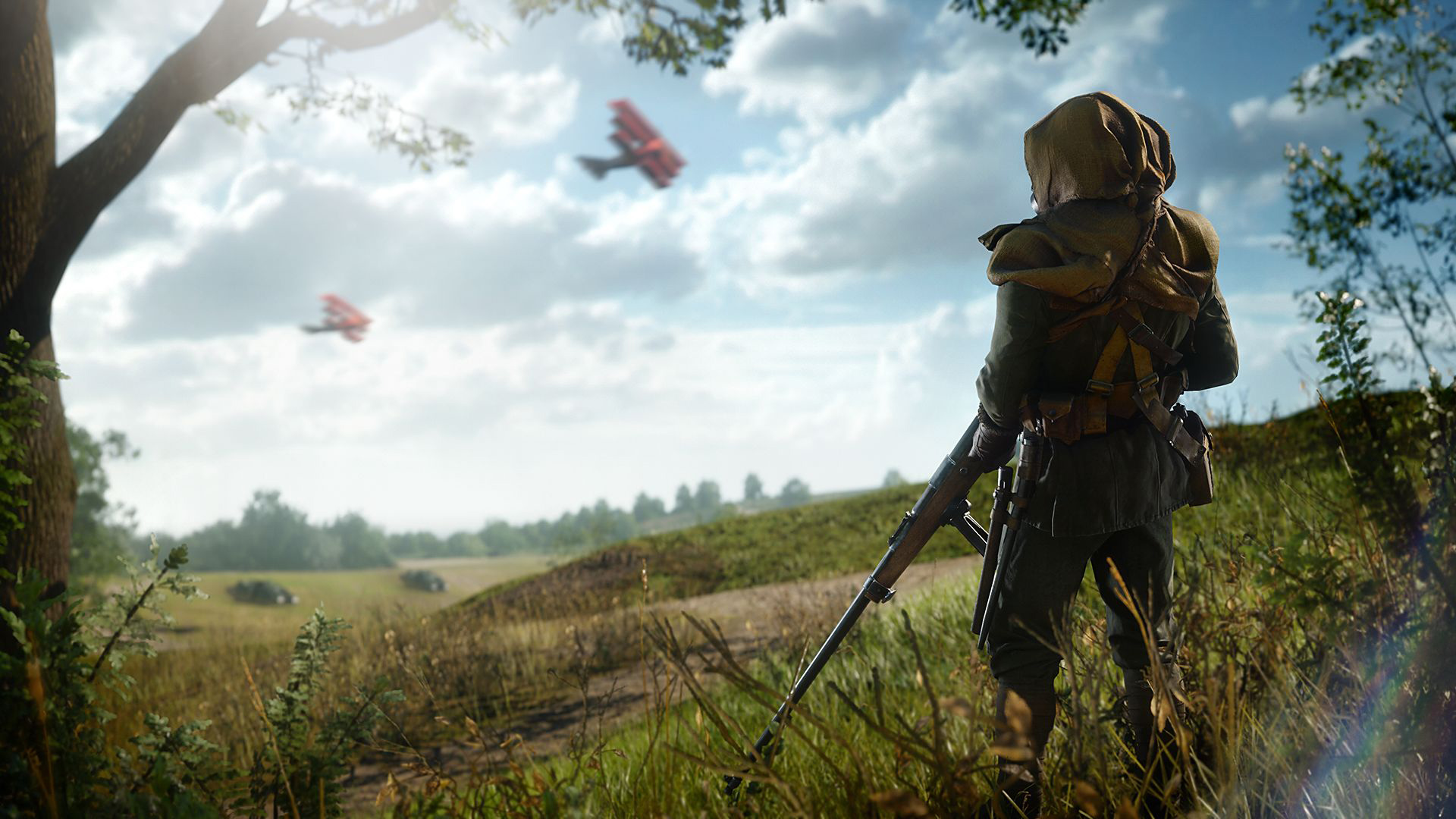
The Battlefield series has always stood out from its competition because of its enormous battles, whether they be in war-torn Europe during World War 2 or in a crumbling metropolis in the modern day. But despite the games’ shared elements, they aren’t all created equal. In fact, the quality gap between the very best Battlefield game and the worst is surprisingly large–especially when considering how only a handful of years separated the two. With Battlefield 2042 releasing on November 19, we’ve ranked the mainline Battlefield games from worst to best.
The Battlefield series is just the latest franchise that we’ve ranked. Make sure to check out our roundups of the best Far Cry games and best Call of Duty games, too.
11. Battlefield V
Battlefield V
After years away from the deadliest war in human history–World War 2–DICE finally returned to it with Battlefield V, a game that followed the excellent Battlefield 1 and attempted to capture its best qualities via the returning War Stories single-player mode. The problem was that it just wasn’t as interesting, despite intentionally focusing on lesser-known regiments and combatants during the war. Map design in multiplayer and the lack of many memorable weapons and gear from World War 2 didn’t help matters, and the time-to-kill often felt so painfully short that you barely had time to make any tactical decisions before you got destroyed by a tank.
One of the biggest departures for the Battlefield series to date, Battlefield Hardline put players in the role of law enforcement officers rather than the military. Much of the game takes place in Florida, and the single-player campaign features an arresting mechanic and a greater focus on stealth and investigation than the other games. This sounds fine in theory, but the more character-driven story required much better writing than what we got, especially with a bizarre, nonsensical ending that soured the whole experience. On the multiplayer side, there are heist-style objectives and other police-themed modes, but it generally doesn’t feel all that different from the other Battlefield games–and never feels as fun.
Once again beating its rival to the punch by going to the future way before Call of Duty ever did, Battlefield 2142 took the large-scale multiplayer more than a century into the future as a new massive world war erupted between major factions. The futuristic setting didn’t change the game’s emphasis on both on-foot and vehicular combat, however, but simply made it even more creative. Fictional tanks, air vehicles, and even a mech straight out of Halo or Metal Gear are all included, alongside futuristic weapons that go beyond what we even dream of being possible today. Since its release, Battlefield has mostly stuck to historic and modern settings, but that is going to change very soon.
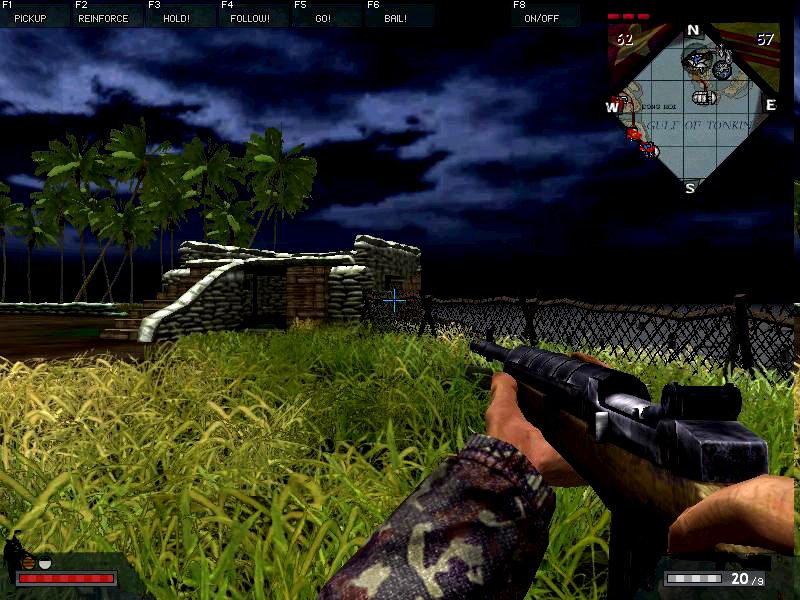
Years before Call of Duty followed suit–and only in certain levels–with Black Ops, Battlefield had already headed to one of the most controversial wars in American history with Battlefield Vietnam. It aimed to deliver an accurate representation of the jungle-based warfare soldiers experienced during the decade-long conflict, with helicopters and jet fighters both available to pilot as ground troops clashed in the brush underneath. Punji sticks weren’t just for Tony Hawk, so you’d also have to watch your step to make sure you weren’t sent to a very painful early grave. No war is better known for its era’s music than Vietnam, either, and Battlefield Vietnam delivered with songs like Fortunate Son by CCR as well as an Apocalypse Now reference with Ride of the Valkyries.
Shifting from the ultra-serious tone of many of the other Battlefield games and featuring a full single-player campaign–the series was largely known for multiplayer-only and bot-based matches at the time–Battlefield: Bad Company helped to introduce the franchise to an entirely new audience. The game’s destruction, made possible by an early version of the Frostbite engine, helped to keep matches feeling tense, and even those who just wanted a roller coaster ride campaign were in for a good time. The only people who weren’t? PC players, as the game was only released for Xbox 360 and PS3 despite the series’ long history on the PC. That would be rectified with its sequel, which came to all three.
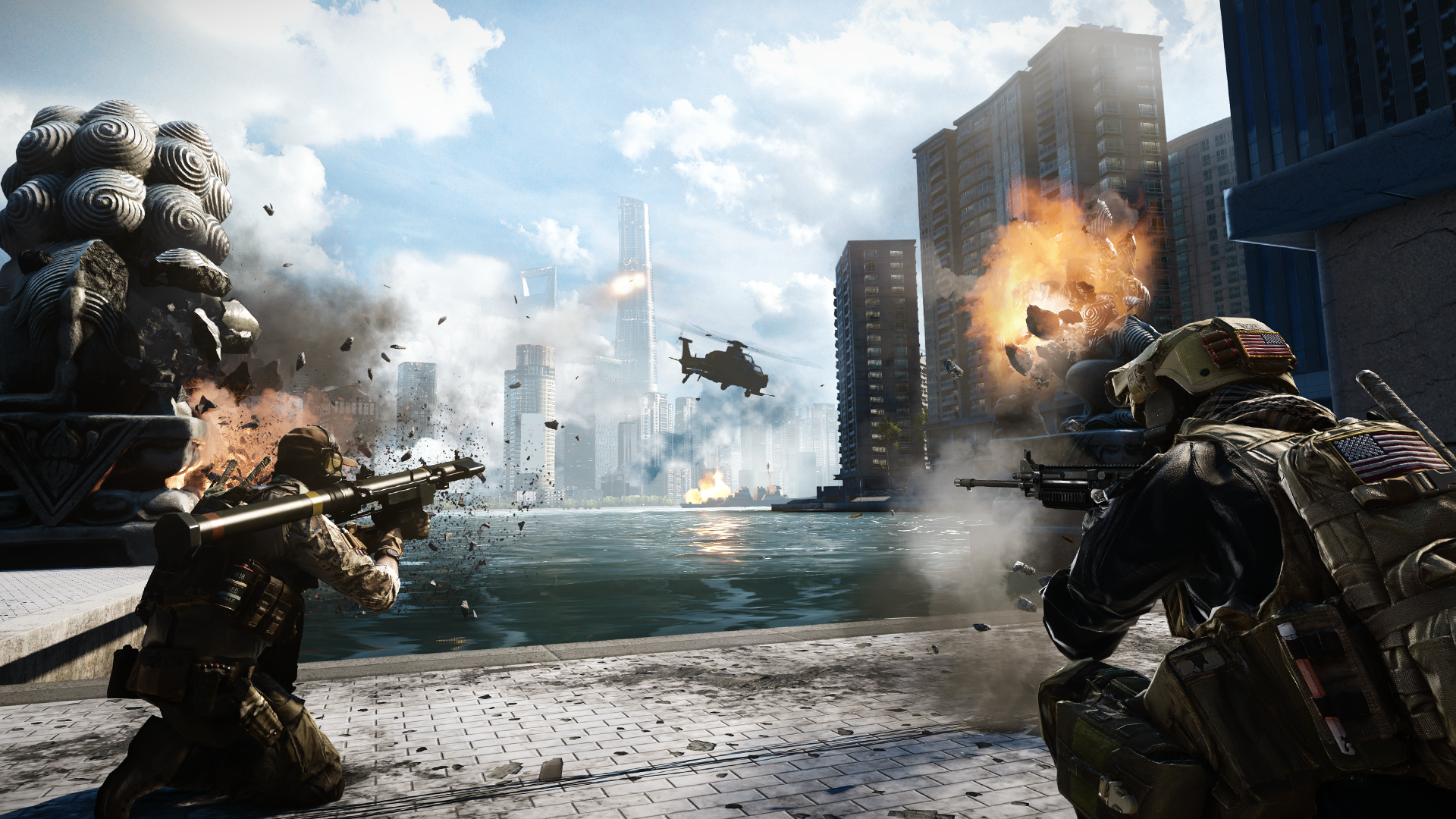
Released to coincide, roughly, with the launch of the PS4 and Xbox One, Battlefield 4 was an absolute mess at launch–it simply crashed to the dashboard as often as it worked as intended. But after a few patches, it became one of the best modern-era Battlefield games around. With incredible destruction through a new system dubbed “Levolution,” entire skyscrapers would routinely crash to the ground and change the entire map, often while taking down lots of players in the process. It once again featured a single-player campaign that reached an explosive finale, and it even featured the late Michael K. Williams in a major role. Battlefield 4 wasn’t the greatest game in the series, but it showed us just what was possible with new technology.
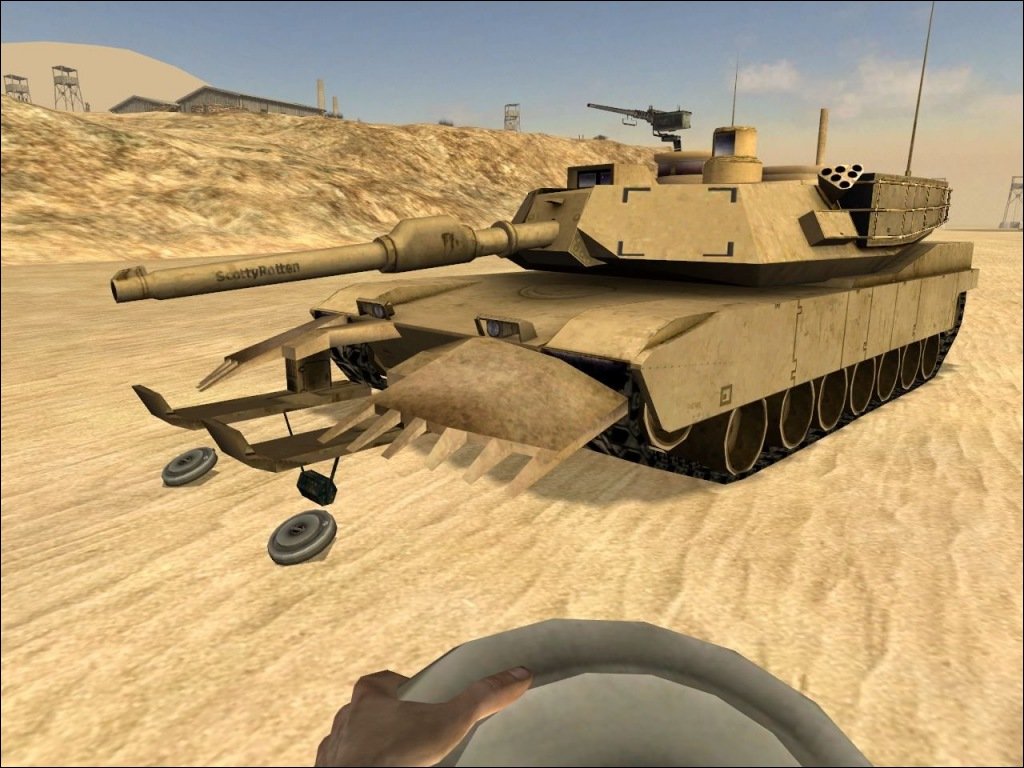
Not the 1942th interaction of the game, but rather the very first, introducing the massive, all-out battles across land, air, and sea that continue to define the series to this day. As with some of its successors, Battlefield 1942 is a global warfare game, with multiple battles and locations featured across its 16 maps. At the time, the series was exclusive to PC, allowing for cutting-edge–at least at the moment–technology compared to what was offered in most console games. It’s surprising just how much of the game’s DNA we still see in modern Battlefield games, including the ticket system and mix of several vehicle types without throwing off a multiplayer match’s balance. Is it still worth playing today? Probably not, but it’s worth appreciating.
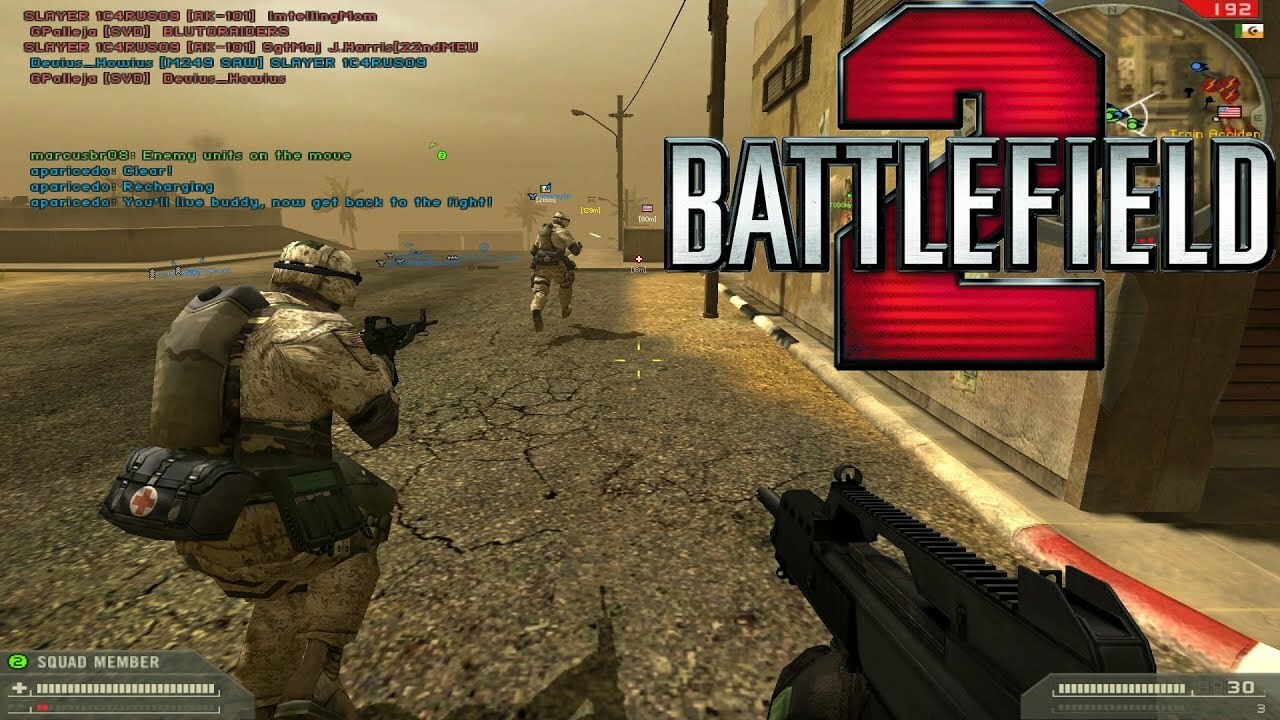
The game that would be a bit of a hint of things to come, Battlefield 2 was ahead of its time in many respects. It went to modern-day combat years before Call of Duty did so, and with a bullet penetration system and 64-player PC battles, it made for something on a scale most players had never seen. It also included Commander mode, a strategic role that let one person oversee a battle and make decisions from an eye in the sky. This mode would later be brought back for Battlefield 4, another modern-day entry, and added a level of coordination and tactical planning to attacks that wasn’t present in the previous games. Unfortunately, the “real” version of the game is only available on PC, with the console-exclusive Modern Combat offering a completely different and inferior experience.
Though World War 2 has been the subject of countless video games over the years, its predecessor–the supposed War to End All Wars–hasn’t received nearly as much attention. Battlefield 1 takes the series back further in time than ever before for an explosive and just as chaotic take on first-person shooter multiplayer, complete with dogfights in the sky and enormous battles on the ground. With less emphasis on long-range automatic weapons, snipers become even more deadly, resulting in cat-and-mouse matches playing out as the bravest soldiers attempt to reach an objective. It’s all made even better by War Stories, a single-player mode that shines the spotlight on several soldiers from a variety of regions during the war.
Released only a little more than a year before Battlefield 3, Battlefield: Bad Company 2 put a heavier emphasis on destruction than its predecessor while continuing its Hollywood-style campaign romp. Unlike the previous game, this one actually came to PC in addition to consoles, and while it didn’t make the same cultural splash as its successor, there is a reason so many people keep demanding a Bad Company 3 game whenever DICE teases a new announcement. The other games, including both Battlefield 3 and 4, show a little more restraint, which is often a better approach for dealing with realistic warfare, but there is something about the all-out chaos of Battlefield that makes Bad Company 2 such a perfect fit.
For years–and sometimes without a clear reason–the Battlefield series had struggled to reach the same cultural relevance as the Call of Duty series. It usually wasn’t a reflection of the games’ quality, and with Battlefield 3, EA and DICE finally established Battlefield as Call of Duty’s equal. In this case, Battlefield 3 was arguably the better game, with 2011’s Call of Duty: Modern Warfare 3 feeling like a retread of the previous two games’ best elements without knowing exactly what made them work. Battlefield 3 contrasted itself with its enormous maps, blend of on-foot, vehicular, and aerial combat, and environmental destruction. No place in the game was truly safe, with sniper fire and explosives always keeping you from getting too comfortable, and Caspian Border remains one of the best maps in the series’ history.
Rockstar’s celebrated open-world action game Grand Theft Auto V is coming to PlayStation 5 and Xbox Series X|S in March 2022, and many might be wondering if it will be a free upgrade for existing owners or if it won’t. We don’t have all the answers at this stage, but history and the evidence so far suggests that it will not be a free upgrade.
The PS5 and Xbox Series X|S represent the third generation of consoles on which GTA V will be available, following the game’s debut on the PlayStation 3 and Xbox 360 in 2013. When GTA V originally expanded to PlayStation 4 and Xbox One in 2014–taking advantage of the increased horsepower of those systems to deliver a better experience overall–the game was released as a full-priced standalone title instead of a free upgrade for people who already bought the game originally.
Click To Unmute
Size:
Want us to remember this setting for all your devices?
While GTA V on PS5 and Xbox Series X|S may not be a free upgrade, Rockstar will release the new GTA Online standalone edition for free on PS5 for the first three months after launch starting in March 2022. The game will presumably be a paid title on Xbox Series X|S, but Rockstar has not yet announced any pricing details. For comparison, Red Dead Online’s standalone edition costs $20 USD.
GameSpot has contacted Rockstar Games in an attempt to get more details on the pricing structure for GTA V and GTA Online for PlayStation 5 and Xbox Series X|S.
GTA V for PS5 and Xbox Series X|S will have a “range of technical and graphical improvements across the entire experience.” This includes performance enhancements for some cars in GTA Online “and so much more,” Rockstar says.
The studio is calling the new edition of GTA V an “expanded and enhanced” version. A new trailer for the game shown during the PlayStation Showcase event didn’t wow fans, however, and it became massively downvoted as a result.
GTA V for PS5 and Xbox Series X|S was originally set for release on November 11, but Rockstar recently shifted the game to March 2022 to give the team more time for “polishing and fine-tuning.” Rockstar says fans can look forward to learning more about the new edition of GTA V “soon,” while information about the GTA Online standalone game is coming up too.