Fortnite’s Civil Rights Movement Inclusion Was Well-Intentioned But Messy

Fortnite is one of the most popular online games ever for young gamers. This sentiment isn’t just because of its enormous player count – Fortnite’s fluctuating daily average tends to land somewhere between 6 and 12 million players – but also because it is deeply accessible. Fortnite’s cost of entry is a new-ish phone and a decent WiFi connection.

It theoretically shouldn’t have come to anyone’s surprise that TIME Studios chose it as the platform to deliver its March Through Time project, which brought Martin Luther King, Jr’s seminal ‘I Have a Dream ‘ speech to the battle royale game. But considering the cartoonish youthfulness we tend to associate with Fortnite, it was. Black people were especially vocal online in highlighting both its problems and its potential to spread a positive message; I personally believed that a confusing rollout and lack of foresight made Fortnite a poor choice to host this event. However, after experiencing it for myself in-game and talking with others, I’m more convinced by its intentions, if not its execution.

The Background

On August 26th, 2021, TIME Studios partnered with Epic Games to launch March Through Time, an educational project centered on Martin Luther King, Jr’s ‘I Have a Dream’ speech housed within Fortnite Creative (a mode that allows players to build structures on private islands and/or create custom games and experiences). This year-long event, acting as an extension of TIME’s “The March” VR experience (a virtual recreation of the 1963 March on Washington installed at the DuSable Museum in Chicago), celebrates the 50th anniversary of MLK’s speech by inviting players to a digital recreation of The National Mall. Once there, players can listen to MLK’s words while completing mini-games that shed more light on the Civil Rights movement.

The idea, according to Time’s announcement around the event, was to work with a handful of community creators to spread awareness of MLK’s speech addressing racial injustice. But TIME and Epic’s March Through Time event wasn’t welcomed with open arms when it launched on August 26th. Quite the contrary, a lot of people were baffled when it was announced on Twitter (the common concern being that children would only recognize MLK through Fortnite). The disconnect was exacerbated by the suddenness of the event’s reveal and the lack of context; though the initial Tweet said “presented by TIME in Fortnite,” most people seemed unaware that TIME Studios had anything to do with the project. This of course led to speculation and a large portion of Black Twitter voicing a shared concern about respecting MLK’s legacy, which is hard to do in a game like Fortnite where a Xenomorph can kick it with Rick Sanchez.

Epic Games and TIME didn’t respond to our requests for an interview. Because of this, we weren’t able to learn what went into the planning and selection process (concerning the community creators) for the March Through TIME event.

This concern reached its peak after players shared videos of themselves dancing/using disrespectful emotes (like cracking a whip) during the speech (Epic subsequently disabled emotes for the period). Bernice King, MLK’s daughter, made it clear that neither she nor The Martin Luther King, Jr. Center had anything to do with the “March Through TIME” event. TIME partnered with Intellectual Prosperities Management, Inc., run by Bernice’s brother Dexter King, which ultimately controls the licensing of King’s work. It’s safe to say that things got pretty messy, pretty quickly.

Epic vs. Black Creators

The thinking behind Epic’s efforts drew more suspicion because the company doesn’t have a great public track record when it comes to the black community. It wasn’t long ago that Epic was being sued by people like Fresh Prince of Bel-Air star Alfonso Ribeiro, rapper Terrance “2 Milly” Ferguson, and James “BlocBoyJB” Baker (among others), who claimed Epic monetized their popular dance moves without compensation. And while the lawsuits were withdrawn due to the plaintiffs needing to complete their copyright registration before filing – which can take a long time due to the Copyright office’s backlog – the idea that Epic could essentially take from creators without compensating them doesn’t sit well with black people in this space. (Regardless of the fallout of these potential lawsuits, companies co-opting black culture for profit without acknowledging or paying its original creators is old hat at this point). This sentiment was echoed by host, producer, and content creator Tamika “REDinFamy” Moultrie during a recent talk with IGN.

Tamika explained that, for her, there was a dissonance between March Through Time and Epic’s relationship with the black community. “It’s kind of like an oxymoron to me if you don’t have things put in order that MLK was about,” Tamika said. “Essentially, Epic Games can’t take advantage of black creators while trying to spread a message of equality.”

“It’s kind of like an oxymoron to me if you don’t have things put in order that MLK was about”

Tamika — who amplifies black and brown voices through her work (among other content, she hosts a series called Uncovering Black Women in Esports) — is passionate about representation and sees a pattern of Epic prioritizing white creators. She notes that its Icon Series – a collection of skins dedicated to musicians and Fortnite’s top content creators – was particularly unbalanced, and prioritized white creators over black. “When we see black people attached to Fortnite, it’s always because of an entertainer like Travis Scott or LeBron James, you know, having a skin in the game. What about the people who actually play the game? The people who built their careers off this game? That should be worth something.”

Epic Games’ CEO Tim Sweeney has also made comments that have drawn scrutiny from black audiences. In November 2020, Sweeney compared his company’s legal spat with Apple to fights for Civil Rights. He then doubled down on Twitter, asking his critics to confirm if he was “actually wrong” in comparing the two. As you can see from the responses to Sweeney’s tweet, his critics were quick to explain that yes, the comparison was incongruous to the respective situations.

TIME’s Target Audience

So what was it like, as a black person, to actually experience the event inside Fortnite?

Surreal is the first word I’d used to describe my experience. As I walked through a giant TIME magazine and stepped onto a miniaturized version of the National Mall, I was greeted with a video of MLK’s speech. It was playing in a small, closable window on the left-hand side of my screen and at various landmarks across the Mall so you could hear Martin Luther King, Jr’s voice regardless of where you went. There were plaques describing events tied to the Civil Rights movement and old photos that depicted some of our struggles. Some of them elicited an emotional response from me. It was evident that a lot of work had gone into creating this space.

That said, all of this poignant visual data was still nestled in, well, Fortnite. The Civil Rights-era photos were a backdrop to superheroes running back and forth to key areas. Interactive prompts intended to make you connect with the struggle – such as pushing a boulder up a hill – fell a little flat. Again, it was surreal, and it didn’t all sit right with me.

The Civil Rights-era photos were a backdrop to superheroes running back and forth to key areas.

There were others, however, who more fully appreciated the goals behind March Through Time. Kahlief Adams, host of the wildly popular Spawn on Me podcast, valued the initiative as this was the first time he’d listened to MLK’s speech in its entirety. “I’ve seen it in snippets over the years,” Adams explained. “Like, of course you have because you’re a black person in America. We’ve all seen parts of the ‘I Have a Dream’ speech. But I never really sat down and like, watched the entire thing.”

“After the first initial moments,” continued Adams, “the couple of people who were kind of running around and acting a fool [stopped], everyone just sat down and just chilled. It was kind of dope.”

Adams said that the gamification of historical events isn’t a foreign concept, despite the easy cynicism it elicits. “I know that there’s an expectation for everyone to be really cynical about the connectedness that you can have in a moment like this, with a game that is about building things and shooting people. But it is really awesome to be able to have whoever those other humans were at that moment that were sitting down with me. I don’t know what they’ve got out of that speech. I don’t know if they care about Civil Rights. I don’t know if they care about blackness. But they sat and they listened. And to me, that’s really important.”

For a variety of reasons, we can’t expect young people to be taught a robust education around black history. Adams sees massively popular online spaces such as Fortnite as an alternative when the education system fails, or when legal guardians are focused on more immediate tasks. “I think that people don’t remember just how much time and mental space is given or used up just around safety,” said Adams. “I grew up in a black-as-hell household. Like my grandma was raising fists and walking with Panthers. But that’s also not a thing that you sometimes engage with depending on your household. She was a single mom. She didn’t have time to sit me down and say, ‘Alright son, we’re going to watch the MLK speech from beginning to end.’ She was like, ‘do your homework and go to bed.’”

Developer Neil “Aerial_Knight” Jones explained that, while he understands the immediate negative reaction, he feels like the event was planned and executed with good intentions. “My thing is that, in general, I try not to get mad at genuine attempts,” Jones said. “[Epic] is genuinely trying to do something good. And sometimes they’ll try it and still be really predatory. But other times, like this, I feel like this one is a really awesome situation and a good learning experience. They made their mistakes but I hope they try it again. Maybe not with Martin Luther King again but someone else.”

So, Was the Event Successful?

Now the dust has settled, it’s hard to measure how successful the March Through TIME event was. One could argue just being able to reach millions of kids around the world could be considered a win, despite the criticisms. “I think it was a success just for it being a first of something,” said Jones, “and we can’t expect the first pass to be exactly what we want it to be. Because they are just trying to figure it out.”

The conversation surrounding the potential benefits of Epic Games and TIME Studios collaboration, and what another collaboration like that might look like in the future, is ongoing. That’s a good thing; black people should be given the space to discuss how we’d like our history to be presented. That said, I’m still not entirely convinced that Fortnite is the best choice. If an important message becomes distorted because of the issues associated with a given platform, then maybe that platform isn’t the right fit for that particular message.

Black people should be given the space to discuss how we’d like our history to be presented.

My hope is that these companies will work on proving people like me wrong, and that black developers and consultants are given the power to guide these experiences. And hopefully, with the proper planning and foresight, these types of events will be better received. Will they ever enact meaningful, positive, long-term change? Maybe one day.

“I think, if you’re really being honest about all of this, it’s never really about did something move the needle at all,” said Adams. “The question is more, did it move the needle fast enough? And the answer will always be no, because we’re already 200 years behind.”

Kenneth Seward Jr. is a freelance writer, editor, and illustrator who covers games, movies, and more. Follow him on Twitter @kennyufg and on Twitch.

Diablo 2: Resurrected Cinematic Trailer Shows Off The Lord Of Terror Himself

Diablo II: Resurrected is almost here, and when it arrives, it will bring with it a whole batch of beautifully remade cinematics, as highlighted in the game’s new launch trailer.

Fans have already gotten the chance to view the remade cinematics for the game’s first two acts as part of the Diablo II: Resurrected open beta. But the new trailer includes footage from the cinematics for Act 3-5, including the horrifying transformation of the Dark Wanderer into the Lord of Terror himself.

Now Playing: Diablo II: Resurrected – Official Cinematic Trailer

The cinematics are all incredibly faithful to those found in the original Diablo II, but are now reborn with more modern visuals. Blizzard has always been known for some of the best cinematics in video game history, and that continues to be the case here.

While Diablo II: Resurrected is largely that same game as the 2000 original from a gameplay perspective, its arrival on consoles for the first time will bring some changes to that version of the game will include more direct character movement and an ability bar reminiscent of Diablo III.

Blizzard’s recreation of the action-RPG classic features improved visuals and small qualify-of-life improvements, along with support for the modern version of Blizzard’s Battle.net and cross-progression between consoles and PC. The game won’t, however, have true ultrawide monitor support at launch for PC, thanks to it breaking the game’s AI.

Diablo II: Resurrected releases September 23 on Xbox, PlayStation, Nintendo Switch, and PC. Its release will come as Blizzard continues to address allegations of widespread discrimination and harassment towards women, as detailed in a state of California lawsuit.

GameSpot may get a commission from retail offers.

God of War Could Be Latest PlayStation Exclusive To Jump To PC Based On New GeForce Datamine

A new leak suggests that Santa Monica Studios’ 2018 hit God of War is the next PlayStation exclusive to make the leap to PC.

As first spotted first on Reddit, Ighor July, a software developer recently performed a datamine of Nvidia’s GeForce Now database notes several titles headed to the service, and subsequently on PC. That’s because Nvidia’s cloud gaming service streams PC games from storefronts like the Epic Games Store and Steam.

In particular, it notes that God of War is coming to PC via Steam with that version streamable on the cloud gaming service.

The datamine also mentions several other games, ranging from games rumored to be in the works, games that were already announced or available on PC, or games that are currently console exclusive. This includes the long-rumored Grand Theft Auto Remastered trilogy as well as PlayStation exclusives, such as Bluepoint’s Demon Souls Remake and Housemarque’s Returnal. Again, the datamine does not confirm nor deny any of the games listed and should be taken with a grain of salt.

Yet, the move of more first-party PlayStation games is imminent as Sony is moving in a direction that will bring more of its exclusives onto PC. Previous games released on PS4 and were then ported to PC include Guerilla Games’ Horizon Zero Dawn and Bend Studio’s Days Gone. In addition, Naughty Dog’s adventure games Uncharted IV: A Thief’s End and Uncharted: The Lost Legacy are being remastered and packaged for PC as the Legacy of Thieves Collection.

To further assist in this direction, earlier this year, Sony announced that it had acquired Dutch studio Nixxes, a company specializing in porting games onto PC.

Taylor is the Associate Tech Editor at IGN. You can follow her on Twitter @TayNixster.

A She-Ra Live-Action Show Is In Development for Amazon Prime

A new, standalone She-Ra live-action series is in development for Amazon Prime.

Variety reports that the project is in its very early stages, and the writing team has not yet been decided. However, Dreamworks Animation is on board as an executive producer, after being involved in Netflix’s series, She-Ra and the Princesses of Power, which ran for five seasons.

She-Ra first appeared in 1985’s He-Man and She-Ra: The Secret of the Sword before starring in her own animated show. If it’s greenlit, Amazon’s series would mark She-Ra’s first appearance in live-action.

Elsewhere, an animated reboot for He-Man called Masters of the Universe: Revelation was released earlier this year on Netflix, which we called “great” in our review.

However, a live-action Masters of the Universe movie is still undergoing troubled development. Earlier this year, we learned that Noah Centineo won’t play He-Man in the film, despite previous reports that he was taking on the role.

If you’re interested in watching Netflix’s She-Ra series, check out our She-Ra season 1 review, where we praised how, “She-Ra and the Princesses of Power successfully reboots the 30-year-old franchise for a new generation, with a more diverse group of heroines this time around, each with their own distinct personalities and unique abilities on the battlefield.”

Logan Plant is a freelance writer for IGN. You can find him on Twitter @LoganJPlant.

Big E Announces He’s Cashing In His Money In the Bank Briefcase On Tonight’s Raw

When WWE performers win their respective Money in the Bank briefcase, it means they’re guaranteed a title shot at anytime, anywhere. Some have cashed in suddenly, creating epic moments. Others have given fans, and their opponents, the heads up about their intentions. The current briefcase bearer, Big E, just dropped a huge development for tonight’s edition of Raw.

“Let’s let that cat out of the bag,” he tweeted. “I intend on cashing in my Money in the Bank contract tonight and cashing in to become WWE Champion.”

Since winning the contract, Big E has shown up randomly in backstage bits, usually taunting Paul Heyman or MVP, the respective managers Roman Reigns and Bobbly Lashley who both hold the company’s top two championships.

In his career, Big E has won the Intercontinental Championship, Tag Team Championship, and is a former NXT Champion as well. This is his first time really being seen as a serious contender for any world title since transitioning to a single star on Smackdown.

Earlier in the day, Fightful had reported that Big E was going to be used tonight in some appearances, which escalated quickly to him announcing his intentions and he soon became a trending topic on Twitter. Fightful then commented it wasn’t sure if he was even serious.

Should Big E successfully cash in, he will be only the fourth Black WWE Champion ever.

Apex Legends’ Upcoming Update Won’t Remove Tap-Strafing After All

Apex Legends’ next update was primed to remove the game’s controversial tap-strafing mechanic from the game, but upon further testing, Respawn says it will be delaying the removal of the move to a later patch in an effort to ensure there are not unexpected side effects in relation to the game’s other movement mechanics.

Tap-strafing involves players on PC mapping the forward movement key to the mousewheel in order to pull off rapid changes in direction. Given the fact that the move can only be performed on PC–and that it’s not an intended gameplay mechanic but was instead discovered by players– Respawn announced it would be removing the move, citing its lack of readability and the effect it had on the game when combined with Apex Legends’ various other movement enhancing abilities.

“Movement is sacred in Apex,” Respawn states in a tweet. “We weigh every change to these systems carefully and value feedback. After further testing, we’ve concluded we need to take more time to get this right to make sure related movement mechanics aren’t caught in the cross-fire.”

The recent patch notes for Apex Legends’ upcoming update included an in-depth analysis for why Respawn chose to remove the move, alongside a note about the removal of the ability to bind forward movement to the mousewheel.

But though the removal of tap-strafing will have to wait, numerous other changes are still coming to Apex Legends. Rampart will be receiving some significant buffs alongside a collection event running from September 14-28 that will see her takeover part of the World’s Edge battle royale map. The patch will also see balance updates to other legends like Octane and Bloodhound alongside various weapon balance changes.

GameSpot may get a commission from retail offers.

Call Of Duty: Vanguard Beta Impressions: Here’s The Good And Bad

Call of Duty: Vanguard’s PlayStation-exclusive multiplayer beta kicked off this past weekend, letting players get a taste of some of the guns, maps, and modes set to be featured in Sledgehammer Games’ return to World War II this fall. Here are some thoughts after a weekend with Vanguard left me with a mix of optimism and concern.

Visibility Is Still An Issue

Starting with the changes from the initial alpha test with Vanguard’s Champion Hill mode, the multiplayer beta definitely showed Sledgehammer Games partially delivered on the improvements promised for the game’s visibility. One major complaint was the dark visual effect when a player was taking damage. This effect has been drastically reduced for the beta, and players are no longer hindered by a dark screen in those crucial moments.

Now Playing: Call of Duty: Vanguard Multiplayer Reveal Livestream

Unfortunately, Vanguard seems to still struggle with some significant visibility issues, which have been made even more apparent with the 6v6 maps during the beta. Players just seem to blend in with the background. And even at close-to-mid range, players often become invisible in doorways and windows. It seems like general visibility is good for most of the playable area, but in certain spots it just gets completely lost.

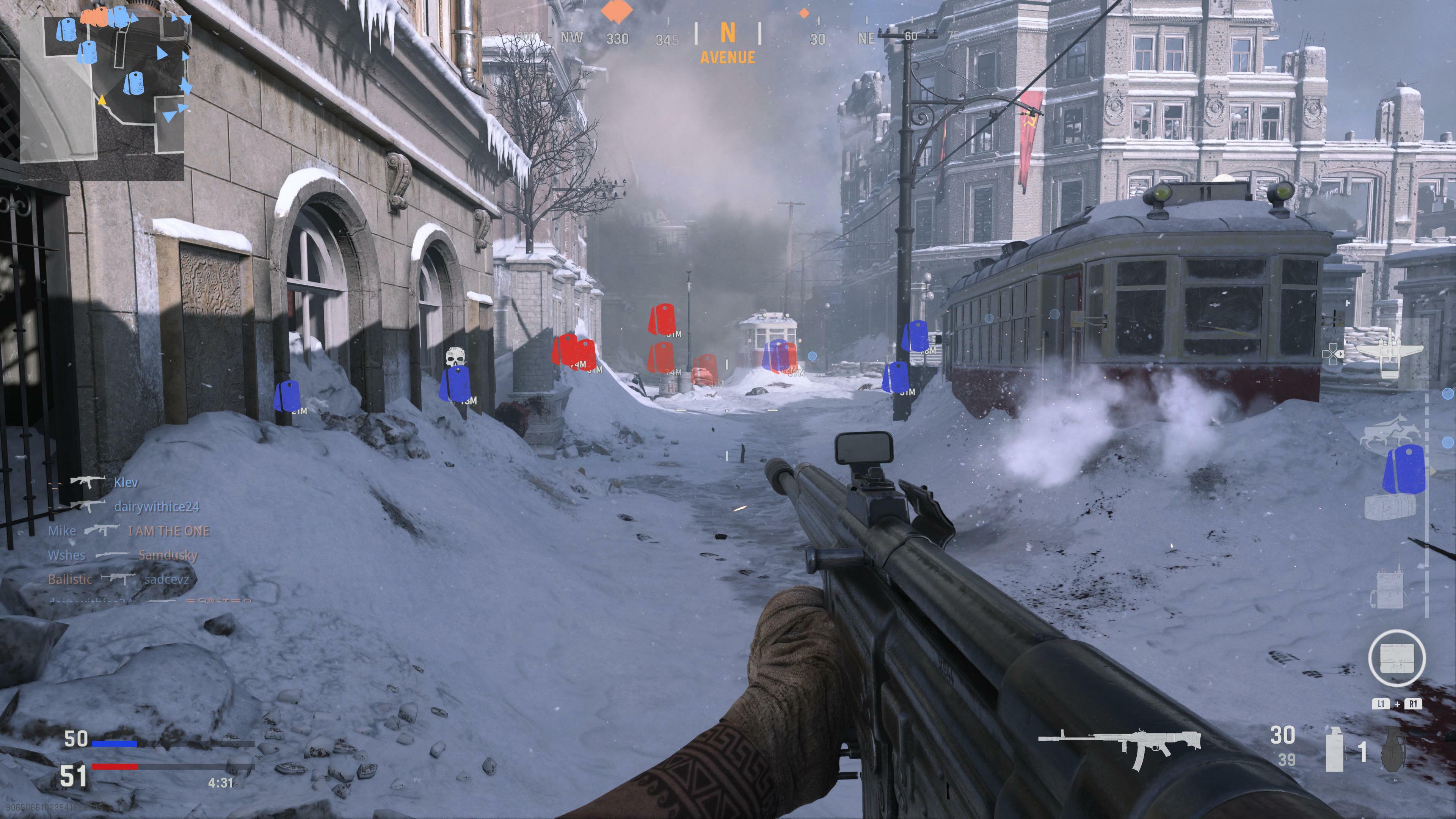
The map that did struggle with visibility issues the most was Red Star, a snowy map with a wintery haze that impacts your ability to see. I heard many complaints from PS4 players struggling to see on Red Star, and my visibility wasn’t much better on PS5.

There’s also a really intense visual effect that happens when firing some assault rifles and light machine guns, as extreme smoke and blurriness appear all around your line of sight. Hopefully this can be toned down before launch.

Developers Sledgehammer Games already responded on Twitter, letting players know it is aware of the feedback around the visibility and audio issues.

Footsteps And Audio Quality

I’m not sure if the footstep audio will remain the same for the release, but as it stands, footsteps are really quiet. This is something maybe not everyone will be happy about, but I think quiet footsteps are a good thing for Vanguard, as this upcoming Call of Duty will not include the Dead Silence perk to quiet footsteps. One downside to 2019’s Modern Warfare was the lack of a Dead Silence perk, especially as the game featured really loud footstep audio. Just like Modern Warfare, Dead Silence is instead going to be available as a Field Upgrade, which gives the user nearly silent footsteps for only a temporary time. This means a player can opt for brief ninja-like footwork, but with the footstep audio already being low, the Dead Silence field upgrade shouldn’t feel like an obligatory perk players need to rely on in Vanguard.

There have been some complaints over inconsistent audio. There were times for me that the footstep audio was the soft but audible footsteps, but then sometimes it seems like there were no footsteps at all. The overall audio could sound a bit muffled as well.

Destructible Environments And Doors

When destructible environments were first announced for Vanguard, there was some unease of how well this would work in a Call of Duty game. Destructible environments work great for games like Rainbow Six Siege and Battlefield, but I questioned if it would fit Call of Duty’s more arcade style.

But after getting hands-on with the beta, I think it’s going to be fine for Vanguard. These destructible environments were on all the maps featured for the weekend, but in terms of destructible cover, it’s still pretty mild. Players aren’t taking down a full-size wall or half of a building like in the Battlefield games. There are just conspicuously boarded-up windows and wall sections that players can shoot, melee, or sprint through to open up new routes or lines of sight. I’m not sure how frustrating this might be for competitive Call of Duty on a pro or amatuer level, but this new feature probably won’t have a big impact for the casual Call of Duty player. I’m surprised by how oddly satisfying it’s been to sprint through these walls like the Kool-Aid man.

Maps

In addition to Champion Hill’s arena maps, the beta introduced three standard 6v6 maps:

  • Hotel Royal takes place at a large Paris hotel with interior and exterior fighting.
  • Red Star is the snowy map with poor visibility, which is set at an urban plaza during the Battle of Stalingrad.
  • Gavuta is a map based on Gavutu Island in Japan, with the island experiencing stormy weather.
Hotel Royal
Hotel Royal

Overall, I really enjoyed Hotel Royal. I think the map design fits with the traditional Call of Duty multiplayer feel with plenty of close-quarters interior space, which is where most of the chaotic action happens, and then there is an exterior flanking route on each side of the hotel. There is also plenty of rooftop space to fight. Hotel Royal definitely has the best lighting and visibility of all the beta maps.

Gavutu is also a nice map layout, and I mostly enjoyed my time on the island, but it does suffer some of the visibility issues. It’s just not nearly as hard to see as Red Star. The wind and rain effects on Gavuta aren’t an awful hindrance like Red Star’s winter weather, but it’s probably not helping much either. Call of Duty: Vanguard is set to launch with 16 core multiplayer maps, and hopefully many of them won’t share the weather elements and visibility issues. Hopefully more of them look and feel like Hotel Royal.

There were some spawn issues with the 6v6 maps, especially on Hotel Royal. I often found myself spawning with the enemy team, while my team was clearly spawning on the opposite side. However, I’m not too worried about spawns in the beta. Those are common issues that generally get tweaked by launch or shortly after.

Modes

In addition to the 2v2 and 3v3 Champion Hill mode from the alpha test, the beta also offered some of Call of Duty’s staple modes with Team Deathmatch, Domination, and Kill Confirmed.

Vanguard’s beta also introduced another new game mode with Patrol. Based on Hardpoint, this objective-based mode features a scoring zone in near-constant motion. Operators rack up points for their team by following and moving around the map within the Patrol point. I think this was a pretty fun mode.It really puts pressure on teamwork, and adds spice to the classic Hardpoint-playstyle. I can’t wait to see how it plays on some of the other maps.

Tags left everywhere on 14v14 Kill Confirmed on Red Star

Kill Confirmed was the biggest disappointment, because it doesn’t really fit the killstreak-style reward system this year. This is a classic Call of Duty mode that requires players to collect enemy dog tags to score points. Players drop tags in death, so it’s important to “confirm” kills by collecting the enemy tags, but also collecting friendly tags to deny the enemy of the point. I honestly don’t think Kill Confirmed is the right mode for any Call of Duty game with a killstreak system instead of scorestreaks. I’d like to think players were just ignoring the tags because it was the beta, but this was an ongoing problem for Modern Warfare as well. Matches often went to time instead of score. This is definitely a mode that works better for Black Ops Cold War’s scorestreak system, but maybe the developers can tweak the mode to better incentivize the players to run out and collect the tags for Vanguard.

TTK And Pacing

As of right now, the time-to-kill in Call of Duty: Vanguard’s multiplayer sits somewhere between Black Ops Cold War and Modern Warfare, and the pacing of Vanguard’s matches can easily depend on the player’s choice of playlists. Vanguard introduces Combat Pacing, which changes up the experience across Vanguard’s map pool based on the amount of players on the map. For the beta, players could choose between three different Combat Pacing options, or choose to play a mix of them.

  • Tactical: This is the standard 6v6 Call of Duty multiplayer experience.
  • Assault: This combat pacing adds more players than the traditional 6v6, but it isn’t quite as chaotic as Blitz. The player count for the beta will vary between 20-28 players.
  • Blitz: Blitz features hectic matches as 28-48 players are crammed on the 6v6 maps. This pacing might be best for fans of modes like Modern Warfare’s Ground War and Black Ops Cold War’s Combined Arms.

Weapons, Gunsmith, And Perks

Vanguard’s weapon selection for the beta was filled with many familiar guns from Call of Duty’s previous ventures into the World War II era. This included the popular STG44 assault rifle, MP-40 submachine gun, and the MG42 light machine gun.

The Gunsmith was a fantastic introduction in Modern Warfare that carried into Black Ops Cold War, but I do worry that Vanguard has overly complicated a good thing. Players can now equip 10 attachments to their weapons, which includes a new host of ammo types to choose from.

This new Gunsmith might not only overwhelm some players with trying to find the best attachments to make the most of their weapon, but it could prove to be a huge grind to unlock good attachments. However, some players may actually love nerding out and creating even more custom weapon builds.

STG44 assault rifle

Despite the more complex Gunsmith, most of the core elements of Call of Duty’s Create-a-Class system remain the same in Vanguard. Players are still able to equip a primary weapon, secondary weapon, lethal equipment, tactical equipment, and three perks. There are no Wildcard perks this year, so players can’t double down with extra perks or attachments. Everyone will have three perks and the choice of 10 attachments.

Players can expect plenty of classic perks such as Ghost, High Alert, and Double Time. There’s also a new Radar perk. Vanguard’s minimap is the same as Modern Warfare’s, meaning it won’t reveal players as red dots on the map when they fire with unsuppressed weapons. The new Radar perk gives that intel back, but at the cost of other useful perks.

Killstreaks

The beta features pretty staple streaks: Spy planes, counter-spy planes, care packages, death machines. Attack dogs also make a return in Call of Duty: Vanguard.

Vanguard moves away from Cold War’s scorestreaks, and returns Call of Duty to a killstreak-based system. This might be a popular change, as many players felt Cold War’s scorestreak system made streaks way too abundant in matches. Vanguard definitely dials it back with streaks. Not only are they only earned for going on a killstreak without dying, but the streaks won’t overlap like Cold War’s multiplayer. Once a player uses all their killstreaks, they won’t earn anymore until death resets the streak.

The one downfall to Vanguard’s system is that it could entice players to camp for streaks and play it safe, while Cold War’s scorestreak system at least rewarded players for actually playing the objective. As stated earlier, my Kill Confirmed matches during the beta were littered with red and blue dog tags, as players on both teams just sat back and earned their killstreaks. Matches like this almost always went to the time limit. I’d love to see a Call of Duty game introduce a split system for streaks, with killstreaks awarded in Team Deathmatch modes, and a scorestreak system for objective modes like Kill Confirmed.

Final Thoughts

Call of Duty has seen many iterations with WWII settings, jetpacks, and the modern era of war, but the initial community response to returning to WWII was not exactly positive. Personally, I was also a little wary of returning to bolt-action rifles and the drab maps like we saw in Call of Duty: WWII, but I think there’s a decent multiplayer experience to be had with Vanguard. I love Champion Hill, and design-wise I think the maps are really good. I just wish the maps were a little more vibrant, and I hope the visibility issues can be better addressed before launch.

Early access to Vanguard’s beta went live on PlayStation for players who preordered, or anyone lucky enough to score a beta code. This PlayStation-exclusive beta ran from September 10-13, but there’s still another opportunity to play. Next weekend will feature a cross-play beta for PlayStation, Xbox, and PC players.

Call of Duty: Vanguard is releasing on Xbox One, Xbox Series X|S, PS4, PS5, and PC on November 5. The release is still on schedule as Activision Blizzard faces a lawsuit from the state of California over harassment and discrimination against women.

GameSpot may get a commission from retail offers.

Deathloop Review: All You Need Is Kill

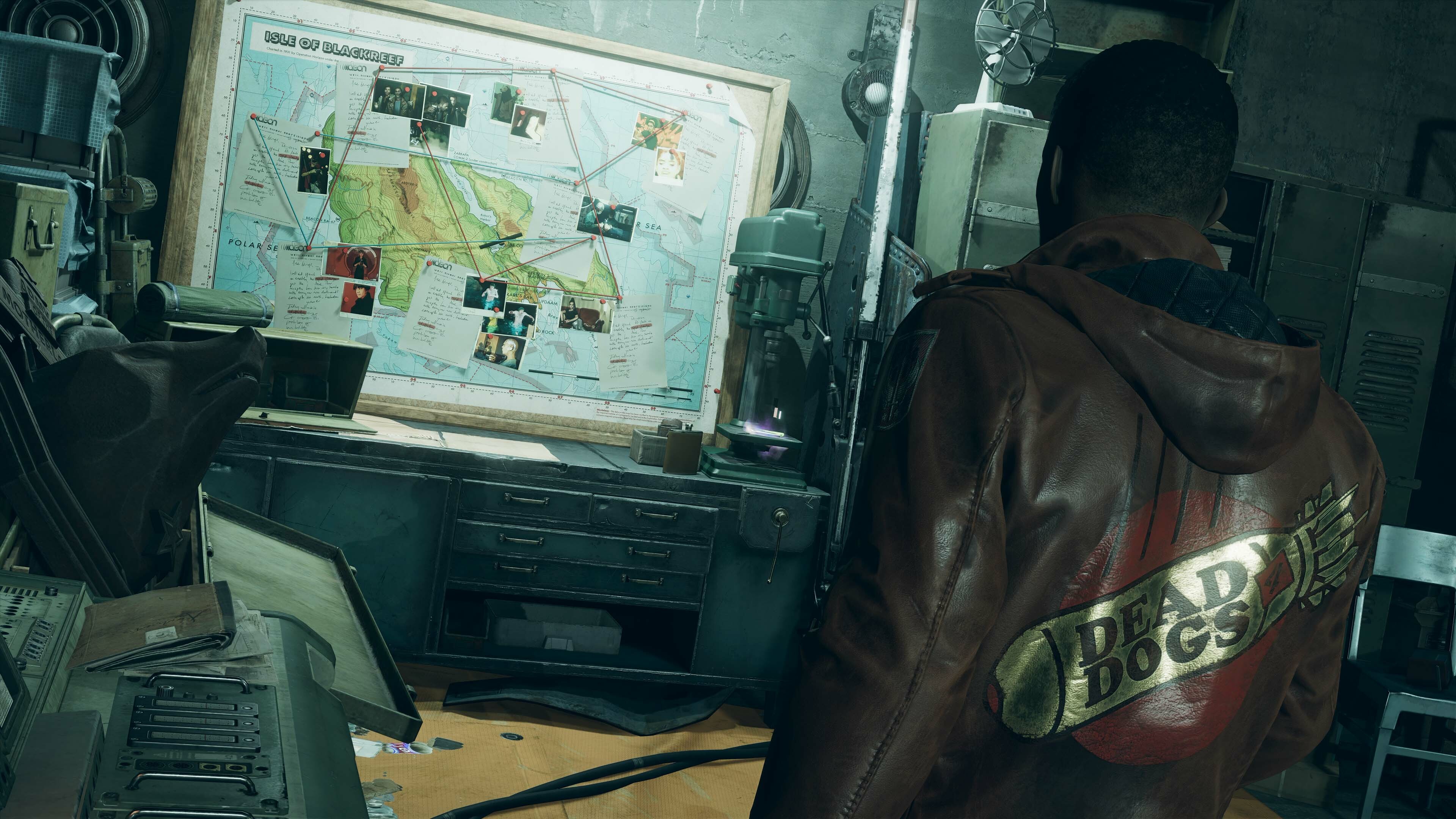
The Isle of Blackreef is a place where lawlessness and debauchery aren’t just welcomed but encouraged. It’s caught in a time loop, so the events of any given day have no bearing on the next. At the end of every sex, drug, and alcohol binge-fueled evening, the slate is wiped clean so it can happen all over again. Memories are lost and harm–self-inflicted or done to others–is always undone. Blackreef changed me. It made me behave in a way that’s not in my nature. Whether it’s Metal Gear Solid, Deus Ex, Splinter Cell, or Dishonored, the role I inhabit is that of a ghost, entering a scenario to achieve an objective and leaving with clean hands and conscience. I’m the pebble thrown into water that makes no ripples.

And yet, in Deathloop, I murdered hundreds of Eternalists and I felt good about doing it. I tried to be true to myself–skulking across rooftops, hiding in dark corners, and carefully moving between people, but the allure of Blackreef’s daily absolution was difficult to resist. I watched the first Eternalist I killed dissolve into nothingness, and a message written into the air in some ethereal ink assured me he’d return in the next loop, completely oblivious to what happened. Killing became second nature, and with no consequence why wouldn’t it?

Now Playing: Deathloop Video Review

The rules of Deathloop’s world created an intoxicating sense of liberation, but this leads to the game’s central question of purpose: When nothing matters, how do you give your actions meaning? That is where developer Arkane Lyon’s gameplay design comes into play, and killing with reckless abandon becomes killing for a reason: to break the loop. The mechanics that govern the world and facilitate your quest to upend it are constructed so masterfully that there’s a tangible sense of growth both in-game and out of it. You begin your first day in Blackreef dazed, confused, and incredibly hungover, and end your final one as the unstoppable architect of its demise.

But what’s most impressive about Deathloop is that it’s also an introspective game. It’s Arkane deconstructing its own brand of open-ended action and laying bare all the pieces crucial to it. The systems are presented as digestible on an individual level, but then the game subtly pushes you to put the pieces together so you can truly appreciate how the clockwork world ticks, before bringing a swift fist crashing down on it. Deathloop is a game where observation and dynamic thinking go hand-in-hand with shotgunning goons in the face and snapping their necks; where throwing a grenade into a soiree for sycophants counts as the right kind of experimentation and derring-do. It delivers bombastic thrills and wince-inducing kills with intelligence and elegance in equal measure.

At the heart of the game is Colt Vahn, a man simultaneously adrift in time and stuck within it. He wakes up on a beach with no memory of how he got there or what’s really going on. However, what distinguishes him from the other hedonistic denizens of Blackreef is that he is able to retain his memories between loops. Dying will force him into a new loop, but the knowledge he has accrued up until his death will return with him. And very soon, he discovers that a strange element called Residuum can be harnessed to give his arsenal of weaponry and supernatural abilities permanence too.

Like Arkane Lyon’s Dishonored games, Deathloop is a fascinating mashup of styles and vibes, both narratively and aesthetically. Underpinning the world is a kind of retro-future science that, as oxymoronic as it sounds, is incredibly effective at giving the world texture–think time travel by way of 1960s computers that fill a room and look like they have less power than an original iPhone. Complementing that is an element of the supernatural that is essentially time science harnessed by a genius mind to give a chosen few the ability to do things like teleport, link the fates of people together, become almost invisible to the naked eye, or throw objects around an environment with a wave of the hand. These abilities are bestowed to the Visionaries, an eclectic group of elites that the rank and file are sworn to protect so that their life of indulgence can remain eternal. Colt’s goal is to kill these Visionaries and, in doing so, break the time loop that keeps him trapped there. The rub is that it needs to be done in one day–a single loop. Easier said than done given that the game operates on a day and night cycle where, over the course of the loop, each Visionary has their own routine and life to lead.

Complicating matters further is the fact that the Visionaries know Colt is out to get them and, in fact, all of them have some sort of pre-existing relationship with him. One in particular, Julianna, takes it upon herself to be a thorn in Colt’s side. She serves the role of antagonist but the situation is clearly complicated between them. Their interpersonal dynamic is placed front and center to drive much of the narrative and characterization, and both characters are realized exceptionally well.

Julianna is the voice in Colt’s ear and also over Blackreef’s loudspeakers, and she does her damndest to get under his skin. She picks at him in a way that only someone with a deep personal connection to you can, using insight into his personality and history to constantly undermine him and poke at his neuroses. She’s always one step ahead, exposing Colt’s habits, analyzing his behaviors, and revealing truths about Colt that, because of his initial amnesia, he’s yet to realize himself. And yet, there’s also a sweetness to their interactions at times, like a couple in the heat of an argument remembering for just a moment why they care about each other. She’s a confusing presence, in one breath chastising him for his actions and in another encouraging them. She guides him to objectives and then lays the guilt on thick when he achieves them.

In a very real sense, she’s a pure agent of chaos and her motivations remain unclear until just the right moment. The voice acting is absolutely crucial to selling this relationship and in that regard, it is achieved exceptionally well thanks to the outstanding delivery by Jason E. Kelley and Ozioma Akagha as Colt and Julianna respectively. Some lines from Julianna have a mischievous tone while others are tinged with spite and growing frustration. For his part, Colt begins unsure of himself and unclear of why this woman has it in for him, but as he learns more, he becomes confident, choosing to engage in the verbal jousts and starting getting under her skin. The constant back and forths between the two is genuinely a joy to listen to and the writing is sharp to make the development of their relationship feel natural.

The main focus of Colt’s attention, however, is the aforementioned Visionaries who need to be offed, and this is where Deathloop’s open-ended gameplay does the heavy lifting. Blackreef is split up into multiple districts, and each one is usually home to at least one of the Visionaries. Colt’s objective is to enter an area and figure out how to get himself into a position where he can kill said Visionary and take their Slab, an item that gives them one of the six unique supernatural abilities. But it’s not as simple as running into a building and gunning them down as each of the Visionaries is… a weirdo. Charlie, for example, has transformed a part of Updaam into a low-budget escape room made up of multiple themed floors, complete with puzzles and a whole lot of weapon-wielding Eternalists standing between the entrance and him. Harriet has taken up residence in a Karl’s Bay hanger, where she’s hosting a group wellness session that is as sinister as it sounds. Wenjie is a super smart scientist who is responsible for harnessing the strange energy of the time loop to create the slabs and rarely leaves her lab in The Complex, but you might find yourself facing an existential conundrum when you’re face to face with her.

Deathloop is a game where observation and dynamic thinking go hand-in-hand with shotgunning goons in the face and snapping their necks … it delivers bombastic thrills and wince-inducing kills with intelligence and elegance in equal measure

Deathloop’s day-and-night cycle also means that these Visionaries are only available at certain times of the day. Although you can manually progress time to your needs, there’s only ever a specific window of opportunity to kill a Visionary. That means you need to play through time loops repeatedly, puzzling out a plan to execute it when the time is right. The game makes this more manageable by giving the player Visionary Leads to follow. These are quest chains that guide the player to key pieces of information necessary to pull off the assassination and will often take Colt through different environments at different times of the day. You may need the code to a door in Fristad Rock, for example, but a ledger with that information is being stored in an office elsewhere that can only be accessed when a worker leaves the door open in the afternoon.

The result of this approach is that you’re slowly trained to develop a meticulous understanding of each area in the game. And as your Colt grows in strength and capabilities, so too does your proficiency in navigating them. After killing a Visionary you gain a power, which can be used in the following time loops, provided you invest in it. This growth comes by way of Residuum that can be extracted from charged objects in the environment or, in more abundance, from the dead body of a Visionary. By channeling this resource into weapons and items, you’re able to hold onto them between loops. Slab powers are the most essential as they give you a significant ability, and killing a Visionary repeatedly to take their slab will evolve the power. The Shift power, for example, lets you teleport much like Dishonored’s Blink. But by repeatedly killing the Visionary wielding it and collecting it, you’re able to upgrade the power to let you travel further or hover in the air briefly. Aether lets you turn invisible but becomes more effective if you upgrade it so its effect doesn’t wear off when you attack.

Along with powers, Trinkets are also littered throughout the world and come in two flavors. Weapon trinkets can be used to augment your combat abilities by improving stats like range, power, and aim-down-sights speed. Personal trinkets, meanwhile, enhance Colt’s performance by improving health regeneration, decreasing the amount of noise he makes when moving, or adjusting how his power meter depletes and recovers, among other things. And these all come in multiple color-coded tiers of effectiveness. The presence of these is what makes each time loop consistently rewarding to play through, even if you fail to achieve a bigger objective. Sometimes it can be good to do a run through an area or even an entire loop to build your Residuum balance and collect some more trinkets, especially since it’s also an opportunity to refine your chosen playstyle a bit more. There’s nothing quite like deciding to run into an area with your guns blazing just so you can chew through Eternalists and a Visionary, knowing that you’re doing it just to grab resources. Since Colt is able to come back from death twice, there is a degree of forgiveness in the game that really encourages doing wacky things when the opportunity arises. That third death will reset the loop entirely though, so some strategy is also required if you want to make the most of your time.

Very quickly, you’ll find yourself developing a level of mastery over the world thanks to the powers and weapons that you’ve accumulated. A Visionary kill that initially took 20 minutes can be reduced to just a couple as you dart around environments, stealthing through one group of enemies, while laying siege to another, and ultimately cutting through your target before they’ve even realized what’s happening. The repetition-based design of Deathloop eases you into creating a flow state that you can enter into and exit from at will. With the character development systems, it gamifies trial and error so effectively that failures almost always still feel like small triumphs. This might sound typical, given the prominence of recent roguelite games such as Hades, but Deathloop’s gameplay feels entirely of its own brand, and that is because it’s built on the foundation of Arkane’s domino-effect design.

That is especially apparent as you uncover dead ends, of which there are many scattered around Deathloop’s various environments. Documents peppered around the world will provide a small lead on something, which is then marked as a discovery, and the game does an excellent job of creating a breadcrumb trail around Blackreef for you to follow, and it always leads to something meaningful. Whether it’s finding the code to open a locked door you stumbled upon hours ago or figuring out how to manipulate two Visionaries into appearing at the same place at the same time, you’re never more than a run or two away from having an epiphany. And when it dawns upon you, the feeling will make you giddy. It’s like using just the right wrench to loosen a nut that felt like it was impossibly tight.

In many regards, Deathloop is a game about being meticulous, and Arkane has done a fantastic job in making just being in the world, looking around, and listening to it enthralling. It should come as no surprise that Blackreef is absolutely stunning to behold, given the strong sense of art direction the studio’s previous games have had. Each of the four areas of the game has a distinct style, which changes depending on the time of day thanks to lighting and even weather effects. There’s a wonderful retro pop-art motif that runs throughout, with eye-catching posters and signs that not only furnish each environment to be visually pleasing, but also serve as a kind of pathway for the player to explore. Architecture is constructed thoughtfully so, in any given scenario, you can see a way in and a way out. On the ground level, a neon billboard may draw your attention, revealing scaffolding that can be clambered up to give you a better vantage point. Or a spotlight on a stone wall may gesture towards an open window, offering a way into a building that otherwise seems impregnable.

Of particular note are the ’60s-esque interiors that are somehow both beautiful and utterly garish in the way only retro furniture can be. Wooden walls, shocking red pleather couches that look like they would make your arse numb after a minute of sitting on them, and oddly contorted lighting fixtures will stop you in your tracks so you can ogle how strange they are. But they also fit into the aesthetic so perfectly that you can’t help but be impressed by the interior design chops being displayed. Needless to say, Arkane’s sense of art direction remains impeccable and, for my money, unmatched.

And complementing it is the raucous soundtrack that is as eclectic and as unexpected as the visual stylings. Continuing the mashup of style and themes, Deathloop transitions effortlessly between disparate styles to suit the needs of the moment from a cinematic standpoint, but also has you tapping your feet along to the chaos happening on screen. One minute you’re creeping through underground tunnels, backed by the bleeps, bloops, and ambient warbles of old sci-fi movies in tense stealth sections, and the next you’re engaged in an all-out gunfight with hordes of Eternalists to the sound of a big band orchestra and off-the-chain sax solos. Deathloop’s gunplay is weighty and satisfying, and a great deal of the thrill that comes from trading lead is elevated by the brilliant, funky soundtrack.

The final piece to Deathloop’s gameplay puzzle is multiplayer, which manifests itself in two ways. The first is technically not multiplayer, as it sees Julianna invade Colt’s game to try and assassinate him. This Julianna is computer-controlled but no less deadly for it. At random points, the game announces that Julianna has invaded and locked the exit points out the area. The only way to escape is to hack a specific point to unlock the exit tunnels, but to do that you have to go through her. These moments are genuinely terrifying, especially when you’re on a good run. Julianna is capable of masking her appearance to look like any random Eternalist, so she could really be anywhere and anyone. And when she does have you in her crosshairs you better hope you have her in yours. She can be ruthless, but the reward for taking her out is massive. She will often drop a Slab, meaning you can acquire powers or upgrades without needing to kill the Visionary who has them. And if you’re smart, you can even set up elaborate traps using turrets and grenades to get the jump on her.

Of course, a human player–someone on your friends list, a random person on the internet, or even you–can choose to protect the loop by assuming the role of Julianna. As the hunter, you invade Colt’s world with the goal of taking him out before he can kill you or escape. Unlike Colt, who has that ability to undo his deaths a couple of times, Julianna has just one shot at her mark, which means you need to be much more considered. However, the ability to mimic NPCs is a devious advantage that is much more effective than you might think, especially if you have a good understanding of the world and can use a player’s knowledge against them.

No Caption Provided

Gallery

For example, you may know that there’s a specific enemy that is always positioned in a specific spot and, if you’re able to swap positions with them, the Colt player may just assume you’re a harmless Eternalist, only for you to strike when they least suspect it. You can also use powers that are unlocked gradually as you continue to invade players. Julianna has her own progression tree that tasks her with completing feats such as successfully killing Colt in a specific way, surviving for a certain period of time, using a particular weapon, and so on. As you complete these, more Slab abilities, weapons, and trinkets become available, making you a deadlier killer. The sense of tension this introduces to gameplay is exhilarating as you never know when a Julianna could appear to turn your world upside down. It harkens back to the kind of hide-and-seek multiplayer introduced in Assassin’s Creed: Brotherhood and the PvP of the Soulsborne games, and it works really well within Deathloop. Of course, you can opt not to allow people to invade if you’d prefer a purely single-player experience.

Perhaps the most laudable part of Deathloop is how it takes so many seemingly disparate things and creates harmony between them. Gameplay systems that feel isolated become pieces of a bigger puzzle, and when you see how they seamlessly connect together, you realize how special an achievement it really is. Similarly, on paper, the different aesthetics should be like oil and water, but they come together effortlessly to be part of a greater whole, and, for me, that’s what Deathloop is really about. By standing back and looking at the bigger picture, the uncharacteristic choices and unexpected behaviors feel necessary–essential even. Maybe it’s just what I need to believe to give all that killing meaning, but when I began the final loop and carved a perfect, bloody path through Blackreef’s Visionaries in a single day, I made no ripples.

Deathloop Review: All You Need Is Kill

The Isle of Blackreef is a place where lawlessness and debauchery aren’t just welcomed but encouraged. It’s caught in a time loop, so the events of any given day have no bearing on the next. At the end of every sex, drug, and alcohol binge-fueled evening, the slate is wiped clean so it can happen all over again. Memories are lost and harm–self-inflicted or done to others–is always undone. Blackreef changed me. It made me behave in a way that’s not in my nature. Whether it’s Metal Gear Solid, Deus Ex, Splinter Cell, or Dishonored, the role I inhabit is that of a ghost, entering a scenario to achieve an objective and leaving with clean hands and conscience. I’m the pebble thrown into water that makes no ripples.

And yet, in Deathloop, I murdered hundreds of Eternalists and I felt good about doing it. I tried to be true to myself–skulking across rooftops, hiding in dark corners, and carefully moving between people, but the allure of Blackreef’s daily absolution was difficult to resist. I watched the first Eternalist I killed dissolve into nothingness, and a message written into the air in some ethereal ink assured me he’d return in the next loop, completely oblivious to what happened. Killing became second nature, and with no consequence why wouldn’t it?

Now Playing: Deathloop Video Review

The rules of Deathloop’s world created an intoxicating sense of liberation, but this leads to the game’s central question of purpose: When nothing matters, how do you give your actions meaning? That is where developer Arkane Lyon’s gameplay design comes into play, and killing with reckless abandon becomes killing for a reason: to break the loop. The mechanics that govern the world and facilitate your quest to upend it are constructed so masterfully that there’s a tangible sense of growth both in-game and out of it. You begin your first day in Blackreef dazed, confused, and incredibly hungover, and end your final one as the unstoppable architect of its demise.

But what’s most impressive about Deathloop is that it’s also an introspective game. It’s Arkane deconstructing its own brand of open-ended action and laying bare all the pieces crucial to it. The systems are presented as digestible on an individual level, but then the game subtly pushes you to put the pieces together so you can truly appreciate how the clockwork world ticks, before bringing a swift fist crashing down on it. Deathloop is a game where observation and dynamic thinking go hand-in-hand with shotgunning goons in the face and snapping their necks; where throwing a grenade into a soiree for sycophants counts as the right kind of experimentation and derring-do. It delivers bombastic thrills and wince-inducing kills with intelligence and elegance in equal measure.

At the heart of the game is Colt Vahn, a man simultaneously adrift in time and stuck within it. He wakes up on a beach with no memory of how he got there or what’s really going on. However, what distinguishes him from the other hedonistic denizens of Blackreef is that he is able to retain his memories between loops. Dying will force him into a new loop, but the knowledge he has accrued up until his death will return with him. And very soon, he discovers that a strange element called Residuum can be harnessed to give his arsenal of weaponry and supernatural abilities permanence too.

Like Arkane Lyon’s Dishonored games, Deathloop is a fascinating mashup of styles and vibes, both narratively and aesthetically. Underpinning the world is a kind of retro-future science that, as oxymoronic as it sounds, is incredibly effective at giving the world texture–think time travel by way of 1960s computers that fill a room and look like they have less power than an original iPhone. Complementing that is an element of the supernatural that is essentially time science harnessed by a genius mind to give a chosen few the ability to do things like teleport, link the fates of people together, become almost invisible to the naked eye, or throw objects around an environment with a wave of the hand. These abilities are bestowed to the Visionaries, an eclectic group of elites that the rank and file are sworn to protect so that their life of indulgence can remain eternal. Colt’s goal is to kill these Visionaries and, in doing so, break the time loop that keeps him trapped there. The rub is that it needs to be done in one day–a single loop. Easier said than done given that the game operates on a day and night cycle where, over the course of the loop, each Visionary has their own routine and life to lead.

Complicating matters further is the fact that the Visionaries know Colt is out to get them and, in fact, all of them have some sort of pre-existing relationship with him. One in particular, Julianna, takes it upon herself to be a thorn in Colt’s side. She serves the role of antagonist but the situation is clearly complicated between them. Their interpersonal dynamic is placed front and center to drive much of the narrative and characterization, and both characters are realized exceptionally well.

Julianna is the voice in Colt’s ear and also over Blackreef’s loudspeakers, and she does her damndest to get under his skin. She picks at him in a way that only someone with a deep personal connection to you can, using insight into his personality and history to constantly undermine him and poke at his neuroses. She’s always one step ahead, exposing Colt’s habits, analyzing his behaviors, and revealing truths about Colt that, because of his initial amnesia, he’s yet to realize himself. And yet, there’s also a sweetness to their interactions at times, like a couple in the heat of an argument remembering for just a moment why they care about each other. She’s a confusing presence, in one breath chastising him for his actions and in another encouraging them. She guides him to objectives and then lays the guilt on thick when he achieves them.

In a very real sense, she’s a pure agent of chaos and her motivations remain unclear until just the right moment. The voice acting is absolutely crucial to selling this relationship and in that regard, it is achieved exceptionally well thanks to the outstanding delivery by Jason E. Kelley and Ozioma Akagha as Colt and Julianna respectively. Some lines from Julianna have a mischievous tone while others are tinged with spite and growing frustration. For his part, Colt begins unsure of himself and unclear of why this woman has it in for him, but as he learns more, he becomes confident, choosing to engage in the verbal jousts and starting getting under her skin. The constant back and forths between the two is genuinely a joy to listen to and the writing is sharp to make the development of their relationship feel natural.

The main focus of Colt’s attention, however, is the aforementioned Visionaries who need to be offed, and this is where Deathloop’s open-ended gameplay does the heavy lifting. Blackreef is split up into multiple districts, and each one is usually home to at least one of the Visionaries. Colt’s objective is to enter an area and figure out how to get himself into a position where he can kill said Visionary and take their Slab, an item that gives them one of the six unique supernatural abilities. But it’s not as simple as running into a building and gunning them down as each of the Visionaries is… a weirdo. Charlie, for example, has transformed a part of Updaam into a low-budget escape room made up of multiple themed floors, complete with puzzles and a whole lot of weapon-wielding Eternalists standing between the entrance and him. Harriet has taken up residence in a Karl’s Bay hanger, where she’s hosting a group wellness session that is as sinister as it sounds. Wenjie is a super smart scientist who is responsible for harnessing the strange energy of the time loop to create the slabs and rarely leaves her lab in The Complex, but you might find yourself facing an existential conundrum when you’re face to face with her.

Deathloop is a game where observation and dynamic thinking go hand-in-hand with shotgunning goons in the face and snapping their necks … it delivers bombastic thrills and wince-inducing kills with intelligence and elegance in equal measure

Deathloop’s day-and-night cycle also means that these Visionaries are only available at certain times of the day. Although you can manually progress time to your needs, there’s only ever a specific window of opportunity to kill a Visionary. That means you need to play through time loops repeatedly, puzzling out a plan to execute it when the time is right. The game makes this more manageable by giving the player Visionary Leads to follow. These are quest chains that guide the player to key pieces of information necessary to pull off the assassination and will often take Colt through different environments at different times of the day. You may need the code to a door in Fristad Rock, for example, but a ledger with that information is being stored in an office elsewhere that can only be accessed when a worker leaves the door open in the afternoon.

The result of this approach is that you’re slowly trained to develop a meticulous understanding of each area in the game. And as your Colt grows in strength and capabilities, so too does your proficiency in navigating them. After killing a Visionary you gain a power, which can be used in the following time loops, provided you invest in it. This growth comes by way of Residuum that can be extracted from charged objects in the environment or, in more abundance, from the dead body of a Visionary. By channeling this resource into weapons and items, you’re able to hold onto them between loops. Slab powers are the most essential as they give you a significant ability, and killing a Visionary repeatedly to take their slab will evolve the power. The Shift power, for example, lets you teleport much like Dishonored’s Blink. But by repeatedly killing the Visionary wielding it and collecting it, you’re able to upgrade the power to let you travel further or hover in the air briefly. Aether lets you turn invisible but becomes more effective if you upgrade it so its effect doesn’t wear off when you attack.

Along with powers, Trinkets are also littered throughout the world and come in two flavors. Weapon trinkets can be used to augment your combat abilities by improving stats like range, power, and aim-down-sights speed. Personal trinkets, meanwhile, enhance Colt’s performance by improving health regeneration, decreasing the amount of noise he makes when moving, or adjusting how his power meter depletes and recovers, among other things. And these all come in multiple color-coded tiers of effectiveness. The presence of these is what makes each time loop consistently rewarding to play through, even if you fail to achieve a bigger objective. Sometimes it can be good to do a run through an area or even an entire loop to build your Residuum balance and collect some more trinkets, especially since it’s also an opportunity to refine your chosen playstyle a bit more. There’s nothing quite like deciding to run into an area with your guns blazing just so you can chew through Eternalists and a Visionary, knowing that you’re doing it just to grab resources. Since Colt is able to come back from death twice, there is a degree of forgiveness in the game that really encourages doing wacky things when the opportunity arises. That third death will reset the loop entirely though, so some strategy is also required if you want to make the most of your time.

Very quickly, you’ll find yourself developing a level of mastery over the world thanks to the powers and weapons that you’ve accumulated. A Visionary kill that initially took 20 minutes can be reduced to just a couple as you dart around environments, stealthing through one group of enemies, while laying siege to another, and ultimately cutting through your target before they’ve even realized what’s happening. The repetition-based design of Deathloop eases you into creating a flow state that you can enter into and exit from at will. With the character development systems, it gamifies trial and error so effectively that failures almost always still feel like small triumphs. This might sound typical, given the prominence of recent roguelite games such as Hades, but Deathloop’s gameplay feels entirely of its own brand, and that is because it’s built on the foundation of Arkane’s domino-effect design.

That is especially apparent as you uncover dead ends, of which there are many scattered around Deathloop’s various environments. Documents peppered around the world will provide a small lead on something, which is then marked as a discovery, and the game does an excellent job of creating a breadcrumb trail around Blackreef for you to follow, and it always leads to something meaningful. Whether it’s finding the code to open a locked door you stumbled upon hours ago or figuring out how to manipulate two Visionaries into appearing at the same place at the same time, you’re never more than a run or two away from having an epiphany. And when it dawns upon you, the feeling will make you giddy. It’s like using just the right wrench to loosen a nut that felt like it was impossibly tight.

In many regards, Deathloop is a game about being meticulous, and Arkane has done a fantastic job in making just being in the world, looking around, and listening to it enthralling. It should come as no surprise that Blackreef is absolutely stunning to behold, given the strong sense of art direction the studio’s previous games have had. Each of the four areas of the game has a distinct style, which changes depending on the time of day thanks to lighting and even weather effects. There’s a wonderful retro pop-art motif that runs throughout, with eye-catching posters and signs that not only furnish each environment to be visually pleasing, but also serve as a kind of pathway for the player to explore. Architecture is constructed thoughtfully so, in any given scenario, you can see a way in and a way out. On the ground level, a neon billboard may draw your attention, revealing scaffolding that can be clambered up to give you a better vantage point. Or a spotlight on a stone wall may gesture towards an open window, offering a way into a building that otherwise seems impregnable.

Of particular note are the ’60s-esque interiors that are somehow both beautiful and utterly garish in the way only retro furniture can be. Wooden walls, shocking red pleather couches that look like they would make your arse numb after a minute of sitting on them, and oddly contorted lighting fixtures will stop you in your tracks so you can ogle how strange they are. But they also fit into the aesthetic so perfectly that you can’t help but be impressed by the interior design chops being displayed. Needless to say, Arkane’s sense of art direction remains impeccable and, for my money, unmatched.

And complementing it is the raucous soundtrack that is as eclectic and as unexpected as the visual stylings. Continuing the mashup of style and themes, Deathloop transitions effortlessly between disparate styles to suit the needs of the moment from a cinematic standpoint, but also has you tapping your feet along to the chaos happening on screen. One minute you’re creeping through underground tunnels, backed by the bleeps, bloops, and ambient warbles of old sci-fi movies in tense stealth sections, and the next you’re engaged in an all-out gunfight with hordes of Eternalists to the sound of a big band orchestra and off-the-chain sax solos. Deathloop’s gunplay is weighty and satisfying, and a great deal of the thrill that comes from trading lead is elevated by the brilliant, funky soundtrack.

The final piece to Deathloop’s gameplay puzzle is multiplayer, which manifests itself in two ways. The first is technically not multiplayer, as it sees Julianna invade Colt’s game to try and assassinate him. This Julianna is computer-controlled but no less deadly for it. At random points, the game announces that Julianna has invaded and locked the exit points out the area. The only way to escape is to hack a specific point to unlock the exit tunnels, but to do that you have to go through her. These moments are genuinely terrifying, especially when you’re on a good run. Julianna is capable of masking her appearance to look like any random Eternalist, so she could really be anywhere and anyone. And when she does have you in her crosshairs you better hope you have her in yours. She can be ruthless, but the reward for taking her out is massive. She will often drop a Slab, meaning you can acquire powers or upgrades without needing to kill the Visionary who has them. And if you’re smart, you can even set up elaborate traps using turrets and grenades to get the jump on her.

Of course, a human player–someone on your friends list, a random person on the internet, or even you–can choose to protect the loop by assuming the role of Julianna. As the hunter, you invade Colt’s world with the goal of taking him out before he can kill you or escape. Unlike Colt, who has that ability to undo his deaths a couple of times, Julianna has just one shot at her mark, which means you need to be much more considered. However, the ability to mimic NPCs is a devious advantage that is much more effective than you might think, especially if you have a good understanding of the world and can use a player’s knowledge against them.

No Caption Provided

Gallery

For example, you may know that there’s a specific enemy that is always positioned in a specific spot and, if you’re able to swap positions with them, the Colt player may just assume you’re a harmless Eternalist, only for you to strike when they least suspect it. You can also use powers that are unlocked gradually as you continue to invade players. Julianna has her own progression tree that tasks her with completing feats such as successfully killing Colt in a specific way, surviving for a certain period of time, using a particular weapon, and so on. As you complete these, more Slab abilities, weapons, and trinkets become available, making you a deadlier killer. The sense of tension this introduces to gameplay is exhilarating as you never know when a Julianna could appear to turn your world upside down. It harkens back to the kind of hide-and-seek multiplayer introduced in Assassin’s Creed: Brotherhood and the PvP of the Soulsborne games, and it works really well within Deathloop. Of course, you can opt not to allow people to invade if you’d prefer a purely single-player experience.

Perhaps the most laudable part of Deathloop is how it takes so many seemingly disparate things and creates harmony between them. Gameplay systems that feel isolated become pieces of a bigger puzzle, and when you see how they seamlessly connect together, you realize how special an achievement it really is. Similarly, on paper, the different aesthetics should be like oil and water, but they come together effortlessly to be part of a greater whole, and, for me, that’s what Deathloop is really about. By standing back and looking at the bigger picture, the uncharacteristic choices and unexpected behaviors feel necessary–essential even. Maybe it’s just what I need to believe to give all that killing meaning, but when I began the final loop and carved a perfect, bloody path through Blackreef’s Visionaries in a single day, I made no ripples.

Raiden, A Whale, And An Anus: Kojima Discusses How Metal Gear Was Influenced By Pinocchio

Legendary game designer and writer Hideo Kojima has discussed how he was influenced by the story of Pinocchio, and it includes Raiden, a huge whale, and an anus.

Posting on Twitter, Kojima said that like film directors Matteo Garrone, Guillermo del Toro, and Robert Zemeckis–all of whom made or are currently making Pinocchio movies–he, too, has been influenced by the story of the wooden boy who comes to life. The Metal Gear character Raiden, like Pinocchio, gets eaten by a whale–but survives. Well, you just have to hear how Kojima puts it all together.

“Raiden, swallowed by the huge white whale of the information society, is digested in his stomach and vomited out through the anus!” Kojima said. “After that, his puppet of information control cuts the strings and starts walking on his own legs. That’s MGS2.”

As for the Pinocchio projects mentioned above, Garrone’s live-action version released in 2019 to much acclaim and multiple Academy Award nominations. Del Toro’s Pinocchio is a stop-motion 2021 film for Netflix featuring the voices of many famous people like Ewan McGregor, Ron Perlman, Tilda Swinton, Cate Blanchett, and Christoph Waltz, among others. And the new 2022 Pinocchio movie from Forrest Gump director Robert Zemeckis features Tom Hanks, Joseph Gordon-Levitt, and Luke Evans.

Kojima’s next game is the Death Stranding director’s cut, which launches September 24 for PS5. A recent trailer for the game was edited personally by Kojima–watch it here.

GameSpot may get a commission from retail offers.