Black Widow actor Florence Pugh, who plays Natasha Romanoff’s sister Yelena, has revealed that the best joke in the movie was improvised.
More specifically, it stemmed from a conversation Pugh had with stunt performers about what her character’s superhero pose in Black Widow could be. After mentioning Scarlett Johansson’s Black Widow pose, the stunt performers told Pugh that Johansson’s pose would actually break every bone in her character’s body if it was done in real life.
“The whole, ‘me taking the piss out of Scarlett’s pose’ was becasue on set, in the stunt rehearsal, the stuntees were like, ‘We gotta figure out your pose,’ and I was like, ‘oh cripes, I have to have a pose,'” Pugh said in an interview with MTV News.
Pugh asked the stuntees what would be realistic and they told her that none of the superhero poses “are correct for landing,” including Black Widow’s. Realistically, her landing pose would leave her with “so many broken bones.” Pugh, shocked to learn of this, asked if Johansson knew that and it was there that she began to “take the piss out of her.”
Black Widow writer Eric Pearson was one set and, after hearing this discussion, wrote the joke into the movie — the one that probably made you laugh a lot if you’ve seen it.
“He was like, ‘I’m sorry…I’ve been listening to this and I love it,'” Johansson said. “And I was like, ‘here we go, ten years of work, flush it down the toilet.'”
Johansson joked that when “these kids come in,” alluding to Pugh’s new placement in the MCU compared to her own 10-plus years in it, things like that joke in Black Widow happen.
“Ten seconds of me prodding you the wrong way and we get juicy material,” Pugh said. “I mean, obviously I’d love to have a pose. I think that’d be a nice wink-wink, but I don’t know. Honestly, I think I’ve been now so terrified of it being posey after I’ve made such a joke about Natasha being posey that now I’m like, ‘oh maybe I should just walk into rooms.'”
It’s safe to say that most everyone is probably thankful Yelena doesn’t have a superhero pose in Black Widow because it gave the world an excellent joke. Now, tell us about the vest with pockets, Pugh.
Japan has a rich tradition of horror that goes back many centuries, so it’s little surprise that the nation has produced some great horror anime over the years. With writers and animators able to put anything–no matter how weird or disturbing–on screen, and very little in the way of restriction on content, horror anime has truly pushed the boundaries of the genre, and consequently found many appreciative fans in the West.
Of course, as with live-action horror, there are many different types of scary anime. Some take influence from Japan’s traditional legends of ghosts and curses, while others deliver disturbing body horror and over-the-top gore. There’s horror anthologies, multi-part ensemble shows with complicated plots, and series and movies that mix horror with other genres, such as sci-fi and high school drama. Some are scary, some funny, and some just plain weird.
We’ve rounded up some of the best, scariest, and most memorable horror anime released over the past couple of decades. Most of these are available on streaming services such as Funimation, Crunchyroll, Netflix, and Hulu, and while not every show will work for every horror fan, this list should provide a comprehensive overview of all the outstanding horror anime available right now.
Nintendo might not have announced the rumored Nintendo Switch Pro earlier this month, but you could make the argument that Valve came in to save the day with its own portable gaming device, the Steam Deck. Like the Nintendo Switch, this is a gaming-first device that can be played on the go or docked to a larger display. Unlike the Nintendo Switch, however, this is an open PC platform, making the two devices rather different to use.
Still, it’s hard not to compare the two, especially when both seem like fantastic platforms for the wide range of games supported on each, from small indie titles to large AAA blockbusters. But just how different are they from a hardware perspective? And just what can you expect when booting them up next to one another?
Click To Unmute
Size:
Want us to remember this setting for all your devices?
Now Playing: Valve’s Steam Deck: Are We Excited For It?
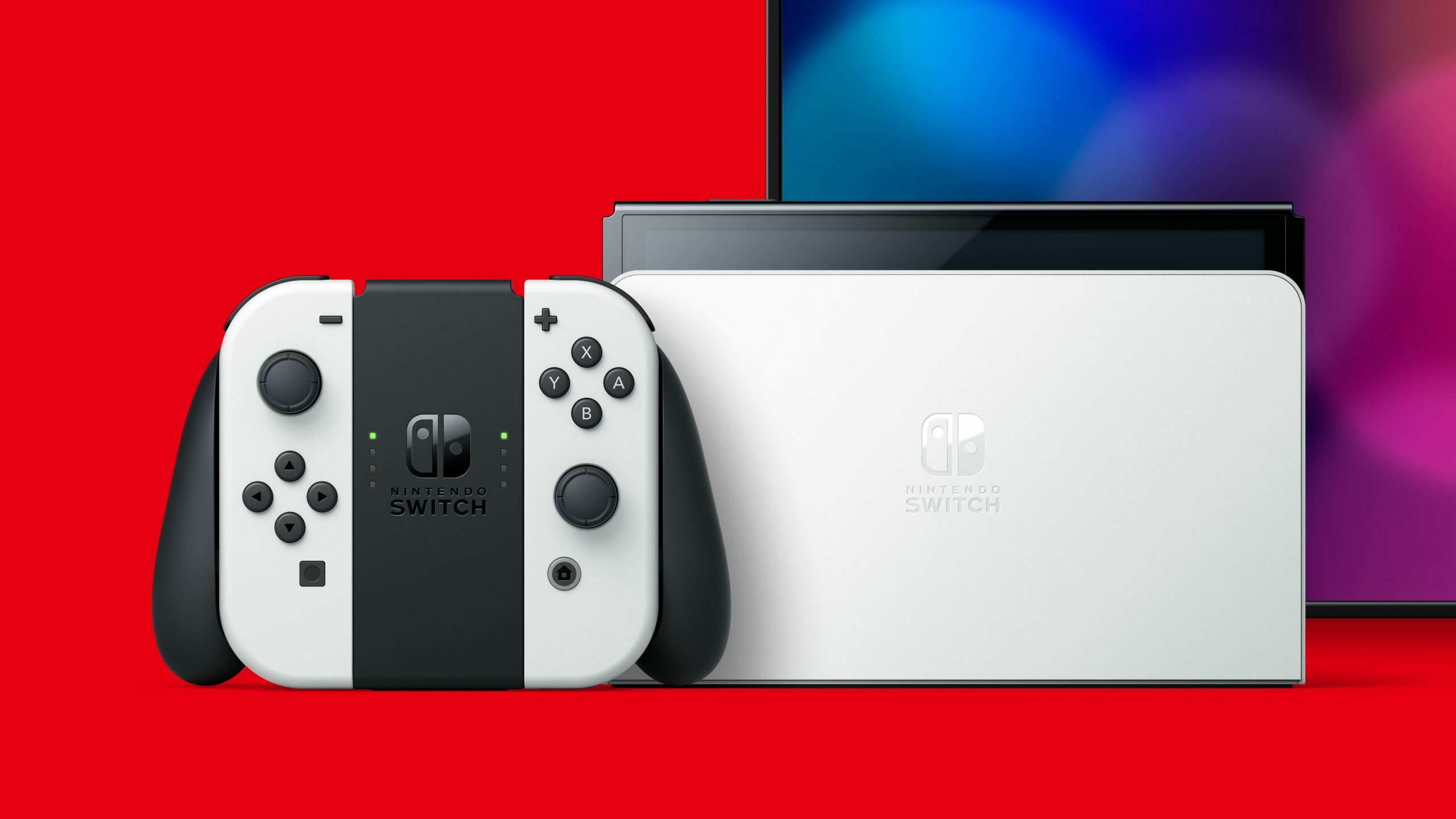
We’re comparing the Steam Deck, original Nintendo Switch, and the new Nintendo Switch (OLED model) to help you make the correct decision, or at least better describe how similar and drastically different these two platforms are.
Display
When playing portably, the differences between the Nintendo Switch and Steam Deck are small. The original Nintendo Switch comes with a 6.2-inch display, while the new OLED model bumps that up to a 7-inch display. That includes a new OLED panel, which will be a huge improvement in terms of color reproduction and contrast levels when compared to the LCD panel of the original model.
The Steam Deck comes somewhere in the middle, then. It’s also a 7-inch display, but the same type of LCD panel as the older Switch model. All three models top out at 60Hz but offer slightly different resolutions. Both Switch models are 1280×720 displays, with a traditional 16:9 aspect ratio, while the Steam Deck offers a slightly taller display with a 1280×800 resolution, which gives it a 16:10 aspect ratio. That might cause some incompatibility with games that don’t cater to different aspect ratios, but it’s not likely to be a big issue.
GPU and CPU
Perhaps the biggest difference between the Nintendo Switch and Steam Deck rests with their respective internals, with Nintendo opting for a GPU from Nvidia while Valve is going with AMD. Both the original Nintendo Switch and new OLED model have the same internal processing units, which is all bundled into a single custom Tegra APU from Nvidia. Nintendo doesn’t offer many details beyond that on its official specifications sheet.
The Steam Deck is a little more forthcoming. It features an AMD APU that contains a Zen 2, quad-core processor that operates between 2.4 and 3.5GHz. More importantly, it also contains a new RDNA 2 GPU (the same architecture present in the PS5 and Xbox Series X|S) with eight compute units and around 1.6 teraflops of processing power. There’s no question that the Steam Deck is a more powerful device on paper, but how that all translates to gaming performance across a range of PC titles has yet to be determined.
Internal and Expandable Storage
The Nintendo Switch was criticized for its lack of internal storage at launch, with the new OLED model only slightly rectifying the matter. The original model features only 32GB of storage, while the OLED model bumps that up to 64GB. This is somewhat offset by the generally smaller game sizes considering they have been optimized specifically for the console, while this won’t be the case for the majority of PC games available for the Steam Deck (at least in the short term.)
The Steam Deck features a lot more storage, especially if you’re willing to pay more. The base model comes with 64GB of eMMC storage, which might not be the best option for games, but the two more expensive options increase this to 256GB and 512GB NVMe SSDs respectively. This will certainly come in handy for the size of modern PC titles which often break triple digits.
Both the Nintendo Switch and Steam Deck can have their storage expanded using microSD cards, with the same SDXC and SDHC formats supported across both. The Steam Deck additional supports the standard SD format.
Controls and Input
Perhaps the most exciting thing about both the Nintendo Switch and Steam Deck is the ability to rely on good controller support for portable play. This has been one of the biggest draws for the Nintendo Switch, with the OLED model not changing anything up in that regard. You still get the segmented D-Pad on the left Joy-Con, four face buttons on the right, and asymmetrically placed thumbsticks across both. The Switch features two triggers and two shoulder buttons, both of which are digital.
The Steam Deck has a similar layout, albeit with thumbsticks that are positioned higher up the device and symmetrical. The D-Pad isn’t segmented, either, but the device features the same four face buttons on the right. Things differ when it comes to the triggers, both of which are analogue to allow for more control (the shoulder buttons are still digital.) The back of the device also features four additionally buttons that will be familiar to users of controllers like the Xbox Elite Controller. On the front, Valve has also included two touchpads that the company says are an improvement over the company’s attempts with the Steam Controller. This is meant to make games that are traditionally played with a mouse easier to control. Valve says both can be used for dual-thumb typing, too, if that’s your thing.
Connectivity
Both being portable devices, the differences between the Nintendo Switch and Steam Deck in terms of connectivity mostly come down to the availability of more modern components. For example, the Nintendo Switch features a Bluetooth 4.2 chip, while the Steam Deck offers Bluetooth 5.0, which will come in handy for Bluetooth headphones and lower latency codecs. The Steam Deck also offers wider support for Bluetooth controllers, although that’s mostly down to its operating system.
Both consoles feature a 3.5mm auxiliary port for output audio, USB-C for charging and docking, and a slot for microSD card expansion. Both feature Wi-Fi connectivity, too, but only the Steam Deck will connect to 5GHz bands if you use them.
Battery Life
Battery life on both the Nintendo Switch and Steam Deck will depend on the games you’re playing, with estimates varying wildly between the two. The Nintendo Switch features a 4310mAh battery, with Nintendo saying it should last anywhere between four and a half to nine hours on a single charge. The Steam Deck battery is rated at 40Whr, which is impossible to compare to the Switch’s mAh rating without knowing the exact operating voltage, but Valve says it’ll last between two and eight hours. So it’s likely both won’t last a long flight.
Dock and TV Output
Just like the Nintendo Switch, the Steam Deck offers a dock that can be used to output the console to a larger display. The Switch Dock is slightly different depending on whether you go for the original or new OLED one. The original comes with three USB-A 2.0 ports (two on the side and one of the back), as well as HDMI out and USB-C for power. The OLED model is virtually identical, albeit with one fewer USB 2.0 port and an included Ethernet port instead. The output of the Switch dock tops out at 1080p, and that hasn’t been changed with the new dock that comes with the OLED model.
Unsurprisingly, the Steam Deck dock is far more versatile. It features two outputs, namely HDMI 2.0 and DisplayPort 1.4. There are also three USB-A ports in total, with two 2.0 ports and a single 3.1 port. As expected for a PC, there’s an Ethernet port, too, as well as USB-C for power. It should be noted that the Steam Deck doesn’t require the dock in order to output to a larger display, with the USB-C port on the Steam Deck itself allowing for a signal to be output directly. Additionally, you will be able to use any USB-C docks that are widely available for laptops, too. This allows for up to 8K, 60fps video output, or 4K at 120fps. The Switch cannot output to another display without its dock.
It should be clear that the Nintendo Switch and Steam Deck are fundamentally different devices despite sharing a common design philosophy, and that’s without even going into the differences between Nintendo’s closed-down Switch operating system and Valve’s open approach to allowing customers to install whatever OS they want. You’re going to have to consider a lot more than raw technical specifications to decide which one will work with your particular gaming use case, but both have their own advantages over one another depending on what you’re looking for. The Nintendo Switch OLED launches on October 8, while the Steam Deck is expected to start shipping in December.
Today’s daily deals include PowerBlock adjustable dumbbells (a more inexpensive alternative to Bowflex SelectTech), Apple AirPods Max headphones, ASUS GUNDAM themed gaming headset, Super Mario 3D: All Stars for the Nintendo Switch, Steam Deck preorder, and ASUS and Lenovo RTX 30 series gaming PCs.
Don’t be fooled by the price; these dumbbells normally cost just more than a pair of Bowflex SelectTech 552 dumbbells. Currently woot (owned by Amazon) is offering a hefty 42% discount. They are built as well as the Bowflex and the specs are similar. Each dumbbell ranges from 2.5lbs to 50lbs in increments of 2.5lbs. These sell out very quickly at Woot so if you’ve been eyeing a pair, you better not hesitate. Woot is owned by Amazon, so you can sign in with your Amazon Prime account to get free shipping.
$100 Off Apple AirPods Max Headphones
[poilib element=”commerceDeal” parameters=”slug=daily-deals-apple-airpods-max”]
Not everyone can afford Apple’s best AirPods, but for those who can, they’ll be treated to a $100 discount from Adorama, making this the lowest price we’ve ever seen. Obviously the sound quality on these AirPods Max headphones are phenomenal, but what really takes the cake is the build quality. There are no other headphones in its price range that is built as well as the AirPods Max. They are literally a work of art.
Hardcore GUNDAM fans rejoice, this very limited edition ASUS ROG Delta gaming headset decked out in GUNDAM color scheme and styling is back in stock. No, it’s not for people who have only a passing interest in GUNDAM because you can get the vanilla version of the same headset for cheaper, but for superfans, Newegg has it in stock and ready to ship immediately.
Super Mario 3D: All Stars for Switch
[poilib element=”commerceDeal” parameters=”slug=daily-deals-ebay-deals”]
This popular mashup of three classic Mario games (Super Mario 64, Super Mario Sunshine, and Super Mario Galaxy) is now 40% off at Newegg but only through eBay. This is the lowest price we’ve ever seen. It stayed at $49.99 for Black Friday, E3, and Amazon Prime Day and recently dropped to $44.99 last week. This is the first time it’s gone below $40.
Today Steam opened up preorders for its new handheld gaming console, the Steam Deck. This nifty console has hardware that’s purportedly as powerful as an Xbox One or PS4 and will be able to play almost the entirety of your Steam PC library. A tentative release date of December is set, although orders may spread out through Q1 2022. It costs $5 to reserve your order. For more information, check out our hands-on impressions of the device.
ASUS and Lenovo RTX 30 Series Gaming PCs
ASUS and Lenovo RTX 30 series gaming PCs are rarely in stock let alone discounted. The ASUS ROG gaming PCs are currently the least expensive desktops you can get that are equipped with RTX 3070 and RTX 3080 video cards. That’s saying something since ASU ROG rigs are often complimented for their build quality and design aesthetics. ASUS also usually makes the best aftermarket video cards on the market. Lenovo Legion gaming desktops are no slouch either. They’re actually very hard to find in stock, but there’s a few today that are not only available, but offered at a nice discount.
Eric Song is IGN’s deal curator and spends roughly 1/4 of his income on stuff he posts. Check out the IGN Deals articles and subscribe to the IGN Deals Twitter page.
Space Jam: A New Legacy is the next Warner Bros. movie to be released in theaters and on HBO Max on the same day. The movie is directed by Malcolm D. Lee (Girls Trip) and stars LeBron James alongside Bugs Bunny, Lola Bunny, and the rest of the Looney Tunes crew.
If you’re wondering how to watch Space Jam: A New Legacy or have any other questions about the movie, we have you covered below.
If you want to watch Space Jam: A New Legacy at home, you’ll need the ad-free HBO Max subscription. It costs $14.99 per month, and you can cancel any time. (The original Space Jam movie is also available on the service).
Unlike the Premier Access movies arriving on Disney+ (including Black Widow), Space Jam: A New Legacy doesn’t cost any additional money to watch on HBO Max. It’s included with your subscription, as are the rest of the 2021 Warner Bros. movie lineup. You can see the rest of the year’s theatrical/HBO Max release dates below.
When Does Space Jam: A New Legacy Come Out?
Space Jam: A New Legacy is out now in theaters and on HBO Max. It came out on Friday, July 16.
How Long will Space Jam: A New Legacy Be on HBO Max?
Like the rest of the 2021 Warner Bros. theatrical releases, Space Jam: A New Legacy will remain on HBO Max for 30 days. That means you have between July 16 and August 15 to watch it.
A sequel to the 1996 movie starring Michael Jordan and the Looney Tunes crew, Space Jam: A New Legacy takes place in modern times. It kicks off when an artificial intelligence kidnaps the star basketball player LeBron James and his son Dom into a digital metaverse.
To escape, LeBron must help Bugs Bunny and the rest of the Looney Tunes crew defeat a team of the AI’s digitized NBA and WNBA players. It’s the Tune Squad versus the Goon Squad.
Space Jam: A New Legacy Reviews
So is this movie any good? If you want to check out IGN’s Space Jam: A New Legacy review, you can get our critic’s full take on it, including why it scored a 7 out of 10. Compared to most other outlets, we were on the high side, so you can google around for alternate takes on the movie’s quality.
Who’s in this movie? It has LeBron James as himself, Cedric Joe as Dom James, and Sonequa Martin-Green as Kamiyah James. Don Cheadle plays the evil AI G. Rhythm. It also features the voices of Damian Lillard, Anthony Davis, Nneka Ogwumike, Diana Taurasi, and Anthony Davis. Jeff Bergman handles voice acting for characters ranging from Bugs Bunny to Fred Flintstone, while Zendaya voices Lola Bunny.
Other Theatrical Releases Coming to HBO Max
Space Jam: A New Legacy – July 16, 2021
The Suicide Squad – August 6, 2021
Reminiscence – September 3, 2021
Malignant – September 10, 2021
The Many Saints of Newark – October 1, 2021
Dune – October 22, 2021
King Richard – November 19, 2021
Matrix 4 – December 22, 2021
Here’s the rest of the Warner Bros. movies landing for no additional cost on HBO Max the same day they hit theaters. Quite a few big-name movies are on the list, including The Suicide Squad, Matrix 4, Dune, and the Sopranos prequel The Many Saints of Newark.
[poilib element=”accentDivider”]
Chris Reed is a commerce editor for IGN. You can follow him on Twitter @_chrislreed.
Loki director and executive producer, Kate Herron, has revealed that she won’t be returning to direct the second season of the show.
Herron announced this news today in an interview with Deadline, stating that she always planned to do just this single season. She even hinted that a second season for Loki might not have always been in the cards.
“I’m not returning,” Herron said. “I always planned to be just on for this, and to be honest, Season 2 wasn’t in the — that’s something that just came out, and I’m so excited.”
It seems like Herron is saying the decision to create a second season of Loki happened later in the process of making the show. Regardless, she said she’s excited to watch the next season as just a fan.
“I’m proud of what we did here and I’ve given it my all,” Herron said. “I’m working on some other stuff yet to be announced.”
Unfortunately for MCU fans, the other stuff that has not yet been announced isn’t Marvel-related. Herron told Deadline she’s currently “focused on my own stuff at the moment,” but that she loves Marvel and would love to work with them again.
Perhaps she’s biding her time and seeing what offers pop up now that Loki has seemingly launched her to new heights. Fellow MCU Disney Plus series alumnus Matt Shakman, who directed WandaVision, fielded several offers following his WandaVision success before signing on to direct the next Star Trek movie, after all.
As of yet, there’s no real info on what the second season of Loki could entail and Herron said she isn’t privy to any details. Considering there’s not even a release window for this second season, it’s possible the loose strings left at the end of the Loki Season 1 finale could be tied up in a movie in between now and Season 2. Or, those loose strings might remain loose until said Season 2.
Dan Harmon has said that the Community movie has presented a few creative challenges, but that hasn’t stopped him from continuing to think about the project.
According to Syfy Wire, Harmon got onto the topic of the long-discussed Community movie when he recently appeared as a guest on an episode of Vulture’s Good One podcast. He revealed he’s still actively thinking about the project, but admitted that he’s faced a bit of a storytelling dilemma when considering the audience it should be aimed at.
“Here’s the biggest philosophical question: Are you supposed to service a mythical new viewer?” he pondered. “The obvious, dogmatic, practical, off-the-street answer is like, no, you don’t. It’s fan service. Why would there be a Community movie? Who do you think is going to walk in off the street and buy popcorn and sit and watch a Community movie like that?”
“Saying that that person doesn’t exist is a lot different from asking yourself structurally if you’re supposed to design the movie for them, because there’s a new viewer inside of all of us,” he explained, likening it to a Marvel movie starting with “inside references to all 90 other Marvel movies” but losing part of the audience because it ends up “speaking in gibberish.”
“Formalistically, you owe a movie that I think the fans can not only enjoy, but they can stand back and go, ‘you know, the crazy thing about this Community movie is that if you didn’t know there was a show, this is an insanely good movie,” he added. “There’s a reason to watch it and then definitely watch the series.”
Harmon added that it’s not only a challenge to create a story for the audience but also for the original cast, who starred in the series as a bunch of mismatched community college students. If they were on board with the idea, they would now be reuniting on-screen more than six years later, and Harmon recognized the difficulty in finding a story to suit them.
“Do you want to see these people play dress-up in their old outfits and come in and go, ‘Look at me. Meep meep, moop moop. Look what I used to do’? Yes, to some degree; no, to some degree,” he contemplated. “Contrary to that, do you want to see these people not doing that and coming in in pantsuits and going, ‘I’m an adult now… Remember when we did this?'”
Despite these creative challenges and dilemmas, Harmon remained positive about the possibility of a Community movie happening in the future. He assured fans that “the gears are turning” and “the locks are coming away” because he’s been actively thinking about the project “at least once a week” and that has kept the conversation flowing.
Actor Olivier Richters says that his cameo appearance in Marvel’s Black Widow saw him playing the MCU’s first confirmed mutant – Ursa Major.
Speaking on Instagram, Richter said, “Marvel Black Widow is out! After two years I can finally tell who my character is: Ursa Major: the first mutant (X-Men) to appear in the Marvel Cinematic Universe.”
“When production on set told me who I really was in Black Widow I let some tears in my hotel room,” he continued, “because my movie dream became true: being a official comic super Hero [sic]. I can only hope Marvel will bring back Ursa in full form.”
If confirmed, it marks a watershed moment for the MCU – mutants are associated with the X-Men series, which Marvel Studios couldn’t use until Disney acquired Fox in 2019. While comic book characters deemed mutants, such as Wanda Maximoff, have appeared in MCU movies before, their backstories have been rewritten. Marvel Studios’ Kevin Feige has previously hinted at the addition of mutants to the MCU, but we so far haven’t seen them appear. Well, until now, I guess.
As for who Ursa Major is, I’ll let Richter explain: “Ursa is part of the Winter Guard, noted for being ‘Russia’s answer to the Avengers’. His power transforms him into an incredible bear, transcending The Hulk in size. Ursa appears many times in the comics [fighting] Wolverine and The Hulk.”
Ursa appears in a short scene in Black Widow, arm wrestling David Harbour’s Red Guardian. While he doesn’t take on the anthropomorphic bear form he can in the comics, Red Guardian does call him a “big bear” as he walks away.
If this is the start of Marvel movie mutants, it would probably still be the smaller of two major changes to the cinematic universe, after the finale of Loki introduced a major shift to the MCU.
[poilib element=”accentDivider”]
Joe Skrebels is IGN’s Executive Editor of News. Follow him on Twitter. Have a tip for us? Want to discuss a possible story? Please send an email to [email protected].
A Happy Gilmore video game that combined golf and fighting was pitched years ago for Xbox, but it never came to be. Developer Mike Mika of Digital Eclipse revealed on Twitter that the studio was, at one point, pitching a “hybrid fighting and golf game” to Adam Sandler’s Happy Madison team.
“Good times,” Mika reflected. “It should have been greenlit because it was a good idea.”
We don’t know why Happy Madison rejected the pitch, if that’s even how it played out. But the concept does sound intriguing, and at the very least, thematically appropriate. After all, Sandler’s Happy Gilmore character is a hot-headed former pugnacious ice hockey player who fights Bob Barker and cracks people with his golf clubs in the movie. One can also imagine playing as the late Richard Kiel’s hulking character, too, as he’s known for his size, strength, and his t-shirt that says, “Guns Don’t Kill People … I Kill People.”
At one point we were pitching this hybrid fighting and golf game with the Happy Madison crew. Good times. It should have been greenlit because it was a great idea. pic.twitter.com/Ty03MNQoP8
Mika added that, with the news that Netflix is getting into gaming, now might be a good time to resurrect the game and make it with Unreal Engine 5. “Get the band back together and finally ship this beast,” Mika said.
Happy Gilmore celebrates its 25th anniversary this year. To mark the occasion, Sandler performed his character’s iconic and unconventional swing in real life, and he’s still got it.
After Happy Gilmore, Sandler’s hot streak continued with The Wedding Singer (1998), The Waterboy (1998), Big Daddy (1999), Little Nicky (2000), Punch-Drunk Love (2002), Mr. Deeds (2002), Anger Management (2003), 50 First Dates (2004), The Longest Yard (2005), and Click (2006), just to name a few. Sandler now has a rich deal with Netflix that covers numerous films, the latest of which was 2020’s spooky movie Hubie Halloween.
Valve made the surprising announcement of its Steam Deck this week: a portable, Nintendo Switch-like device with the flexibility of being a PC. Unlike Nintendo’s Switch, the Steam Deck is being sold in three different variations, all with more storage than the last. But if you’re looking at the cheapest of the lot, you should understand what corners were cut to hit that $400 price point.
At a glance, the only differences between all three versions are the amount of internal storage you get. Starting at 64GB and going all the way up to 512GB, the difference is stark already. But what isn’t clear without going into the Steam Deck’s technical specifications is just how different the type of storage is that you’re getting. Two models, the 256GB and 512GB versions, are both using NVMe drives (the more expensive one having a faster drive, too), which is pretty much still ahead of the curve when it comes to traditional PC gaming.
Click To Unmute
Size:
Want us to remember this setting for all your devices?
Now Playing: Valve’s Steam Deck: Are We Excited For It?
What isn’t is the cheapest model, which uses eMMC storage. Worse yet, this storage is only PCIe Gen2 compatible, with only a single lane dedicated to the storage. The NVMe versions run across PCIe Gen3, with four lanes associated for storage alone. That has a dramatically different effect on the speed at which the Steam Deck’s CPU can access assets on your drive, which can hinder the performance of games where those matters.
For context, the maximum theoretical throughput of the eMMC 64GB model is 500MB/s, according to the official PCIe specifications. By comparison, the other two models have a theoretical throughput of 4GB/s, or around eight times faster. For modern games that are being developed with the assumption of faster memory will become common soon (spurred on by the move to new consoles, with both the Xbox Series X|S and PS5 having extremely fast SSDs) the cheapest Steam Deck might be quickly hindered by its storage if you’re playing any games that are either large sandboxes or graphically demanding.
This isn’t a new problem to portable devices, either. Microsoft’s Surface Go, its cheaper alternative to the Surface Pro, also features eMMC storage for its cheapest models. These were notoriously slow for even simple computing tasks, which lead some reviewers, such as WindowsCentral, to suggest spending more for the faster memory. It’s not clear that the speed of the memory used in the Steam Deck is the same, but given its limits based on its PCIe support alone the picture doesn’t look great.
The Steam Deck can have its storage expanded with MicroSD cards, which are also used with the Nintendo Switch. These come with their own speed compromises, and thus that option isn’t going to make up for the lack of an NVMe drive in the $400 system. The Steam Deck and its native operating system, SteamOS, will still need to run off the internal storage, so choosing its cheapest option will lock you to the eMMC internal drive in one way or another.
Valve’s Steam Deck is available for preorder today in select regions, with a release in December later this year. If you’re planning to secure one, just make sure your use case matches up with the performance you’re purchasing.