Game Scoop! 633: New Assassin’s Creed Game Confirmed

Welcome back to IGN Game Scoop!, the ONLY video game podcast! This week your Omega Cops — Daemon Hatfield, Tina Amini, Justin Davis, and Seth Macy — are discussing the next Assassin’s Creed, Nintendo Switch OLED model, Deathloop, Death Stranding, and more. And, of course, they play Video Game 20 Questions. The music in this episode is from Super Star Soldier on TurboGrafx-16.

Watch the video above or hit the link below to your favorite podcast service.

Listen on:

Apple Podcasts

YouTube

Spotify

Stitcher


Find previous episodes here!

The Witcher Season 2: Seven Episode Titles Revealed

Netflix has revealed seven titles for the eight-episode season two of The Witcher. While no plot details have been revealed, the titles could offer clues on where the next season will take us.

Each episode of The Witcher came with a title and title card, and the second season will continue that tradition. During WitcherCon, Netflix quickly showed the titles for its eight-episode second season, plus the title card logos. But only seven titles were revealed.

  • A Grain of Truth
  • Kaer Morhen
  • What Is Lost
  • Redanian Intelligence
  • Turn Your Back
  • Dear Friend
  • Voleth Meir
  • [Top Secret]

We can speculate on some of the titles given what we already know about season 2 of The Witcher. The season will follow Geralt as he learnes to become a father-figure to Ciri, who he finally meets at the end of the first season. Together they’ll go to Kaer Morhen and meet Geralt’s mentor Vesemir, and this could potentially be the plot of the second episode.

[widget path=”global/article/imagegallery” parameters=”albumSlug=netflixs-the-witcher-season-2-photos&captions=true”]
The other episodes are a little more vague, though the penultimate episode of the season does refer to a key character that’s been teased previously by The Witcher creative team. The final episode’s title is still a secret.

The second season of The Witcher is set to premiere on December 17. Check out the full WitcherCon schedule for everything happening during today’s show.

[poilib element=”accentDivider”]

Matt T.M. Kim is IGN’s News Editor.

Master Chief’s Creator Shows Off Unused Halo Guns, Including a Microwave Rifle

It’s funny how secrets about certain classic games keep turning up years after they release. Halo: Combat Evolved is one of those games, and today, veteran designer and Halo co-creator Marcus Lehto decided to share some of the unused weapon assets from the original Halo.

Sharing the assets via a video on Twitter, Lehto states that these assets were found when he was going through an old PC build of the game from 2000. The weapons are prototypes of Covenant weapons, and include a concussion gun, excavator, particle beam rifle, and a microwave gun.

As you can see in the video, the variety of guns on offer would have added even more versatility to Master Chief’s debut outing, but then Halo: Combat Evolved wasn’t exactly starved for weapon choice. Lehto clearly has his favourites here, as he shares in his tweet that he likes “the meter cooldown on the concussion gun”, whilst thinking that “the microwave gun would have been hilarious”.

It’s been a long journey for Master Chief since the release of the original Halo game 20 years ago, but we’ll finally get to see what’s next for the Chief when Halo Infinite launches later this year. To keep updated with all things Halo, stay tuned to IGN.

[poilib element=”accentDivider”]

Liam Wiseman is a Freelance News Writer for IGN. You can follow him on Twitter @liamthewiseman

Witcher Season 2 Release Date Announced

The Witcher season 2 release date has been announced. Geralt is returning to Netflix on December 17.

As part of Netflix’s first-ever WitcherCon, a release date for the anticipated second season of The Witcher was officially revealed.

The second season of The Witcher will pick up where the first season ended, with Geralt and Ciri finally together after spending a whole season learning how their destinies might interwind.

WitcherCon is an all Witcher event featuring both Netflix and CD Projekt. There are panels and reveals related to both The Witcher TV series, Witcher anime, Nightmare of the Wolf, as well as news on the game’s side.

[widget path=”global/article/imagegallery” parameters=”slug=netflixs-the-witcher-season-2-teaser-easter-eggs-and-references&captions=true”]

While there likely won’t be a Witcher 4 reveal, expect potentially more news on CDPR’s other Witcher games like Gwent and the upcoming AR title, Monster Slayer.

Check out the full WitcherCon schedule plus our recap for everything announced at today’s show.

[poilib element=”accentDivider”]

Matt T.M. Kim is IGN’s News Editor.

The First New Monster of The Witcher Season 2 Has Been Revealed

The cast of The Witcher gave us a tiny, tantalizing tease of a new monster appearing in Season 2 of the Netflix show today at WitcherCon: a Leshy.

During a cast panel, we saw a brief tease of the creature, which Lambert actor Paul Bullion identified as the forest-dwelling Leshy. A haunting, short tease showed off what appeared to be a long, tree branch-like clawed hand sitting on a table, though given how much of the Leshy’s body is made of tree branches it’s possible this was another bit of it too.

The Leshy or Leshen as they appear in the games are forest monsters with deer skulls for heads, branch-like limbs, and enormous antlers. In their Witcher 3: Wild Hunt appearance, they can summon flocks of crows or wolves to help them fight, and can turn into clouds of smoke, making them harder to hit. They have a reputation across The Witcher franchise for hostility toward travelers and for destroying anything they choose to attack in a way that leaves few traces.

More news about Season 2 of The Witcher on Netflix, as well as other Witcher franchise updates, is expected out of WitcherCon today, which is going on now. Expect panels with figures from both the Netflix series and game developers CD Projekt Red, lore deep dives, and of course, more Gwent. We also learned The Witcher Season 2’s release date: December 17.

[widget path=”global/article/imagegallery” parameters=”albumSlug=netflixs-the-witcher-season-2-photos&captions=true”]

[poilib element=”accentDivider”]

Rebekah Valentine is a news reporter for IGN. You can find her on Twitter @duckvalentine.

Universal Studios Sets Haunting of Hill House-themed Halloween Horror Nights

Netflix’s Haunting of Hill House is coming to Halloween Horror Nights at Universal Orlando Resort and Universal Studios Hollywood this year.

Universal Studios’ Halloween Horror Nights were cancelled last year because the theme parks temporarily closed due to the coronavirus (COVID-19) pandemic. This year, however, the nightmarish nights are making a comeback, with attendees invited to journey through terrifying haunted houses, sinister scare zones and exhilarating attractions.

The event will debut several new mazes this year, including one themed around Netflix’s critically-acclaimed series The Haunting of Hill House, which will see guests “attempt to escape the entanglement of the estate’s eternal stranglehold or succumb to the powerful forces of Hill House,” per the press release.

Image credit: Universal Studios

The Hill House experience will transport guests into iconic settings from the Netflix series, including the omni-powerful Red Room and the infamous Hall of Statues, but they won’t be alone as apparitions will appear around every corner. The ghostly figures greeting the guests will include The Tall Man, The Ghost in the Basement, and The Bent-Neck Lady.

The Haunting of Hill House is one of the most celebrated books in the history of horror literature, and it has spawned several adaptations since its original publication in 1959. Flanagan very loosely adapted the tale into a generational saga of supernatural horror for Netflix, delivering 10 emotionally charged episodes centered around the Crain family.

“Some of my favorite memories of Halloween were made at Universal Studios, screaming and laughing with my friends,” Haunting of Hill House creator Mike Flanagan said in a statement. “It is such an honor to be included among such fantastic Haunts, and I’m so glad that fans will be able to walk the halls of Hill House this Halloween. This is – without a doubt – one of the coolest things that’s ever happened to us at Intrepid. We are so excited to visit the Red Room again – we hope to see you all there!”

[ignvideo url=”https://www.ign.com/videos/2020/10/07/a-directors-journey-to-becoming-the-new-king-of-horror”]

Now in its 30th year, the Halloween Horror Nights events will begin on Friday, September 3 in Orlando and Thursday, September 9 in Hollywood – and both events will run for select nights right the way through to Sunday, October 31. Select tickets are now on sale for HHN 2021 at Universal Orlando Resort, with Universal Studios Hollywood’s tickets on sale soon.

[poilib element=”accentDivider”]

Adele Ankers is a freelance writer for IGN. Follow her on Twitter.

How to Get Into the Trails RPGs and What Makes Them So Special

Nihon Falcom’s Trails JRPG series has been slowly and steadily growing its Western fan base since Trails in the Sky was first released in English in 2011. Affection for the series really picked up steam when the franchise began being ported to …Steam… in 2014. With 10 games released and an 11th on the way, there’s about 500 hours of JRPG goodness still being discovered by mainstream audiences. 

Trails isn’t yet anywhere close to the popularity level of something like Final Fantasy or Dragon Quest (or even Bandai Namco’s Tales, with which the Trails games are often confused for obvious alliterative reasons). But when given the chance, players will quickly discover how compelling the interconnected storytelling and ridiculous attention to continuity is within this ever-growing franchise. 

The pitch for what makes Trails so rad is pretty simple: the series is like a huge, JRPG Cinematic Universe, in which everything is connected.

But what does this actually mean? Where did these games come from and which should you play first? What do you need to know before you jump in? Let me explain. No, there is too much – let me sum up.

Publishing History

The publishing history and continuity of the Trails games (known as the ‘Kiseki’ series in Japan) is much less confusing than it appears at first glance. It’s made up of three (soon to be four) interconnected sets of RPGs:

  • Trails in the Sky 1-3

  • Trails from Zero / Trails to Azure

  • Trails of Cold Steel 1-4

Each takes place in the same world of Zemuria and each is set in the same continuity. Usually the next game begins shortly after the previous one concluded, although occasionally the timelines overlap from game to game. All 10 currently take place over a timespan of five or so years. Each set of games has its own cast of characters, and takes place in its own region of the world, but they still loosely interconnect and cross over with each other.

Estelle and Joshua kick off the ongoing Trails story.

Trails in the Sky came first. It was released in 2004 in Japan and 2011 in the United States for the PSP. It takes place in Liberl, a relatively “sleepy” nation in Southern Zemuria, but of course even out-of-the-way Liberl eventually has its share of drama for the heroes to prevent across the trilogy. You won’t have to hunt down a PSP to play, though; Sky came to Steam in 2014 with a variety of quality of life enhancements, including an oh-so-nice “Turbo” function, which lets you fast-forward the entire game with a single button press, zipping through combat wrap-ups or other slow moments. 

Two direct sequels followed, in 2006 and 2007 in Japan and 2015 and 2017 in the US. These serve as direct story continuations for Trails in the Sky and close out the story arc for that cast of characters, and largely for Liberl itself.

Zero and Azure are finally getting official English translations

Trails from Zero and Trails to Azure came next, starring a new cast of characters. These both take place in a large city-state close to Liberl called Crossbell. The two games came out in 2010/11 in Japan but were never released in English, besides a very well-received fan translation. More on this in a bit.

Cold Steel I-IV are the most recent games released in the U.S.

Trails of Cold Steel I-IV were the next Trails games released. These games (you guessed it) star a new cast in a new region of Zemuria – the neighboring Erebonian Empire –  while still featuring crossovers and cameos from the previous games. They were released from 2013-2018 in Japan and 2015-2020 in the US.

The larger series is still ongoing, with Falcom estimating that it is a little more than halfway complete. With the Cold Steel story wrapped up, the next Trails game will once again begin a new sub-series, and features a new cast in a new region of Zemuria – Calvard. This upcoming sequel will presumably still connect and tie back to the previous games, advancing the larger worldwide plotline while still telling its own self-contained story. 

Do I need to know anything about The Legend of Heroes or Dragon Slayer?

The short answer? No. You don’t.

The first Trails game, Trails in the Sky, was released in Japan in 2004 as part of Falcom’s long-running Legend of Heroes RPG series. In fact the game’s full title is Legend of Heroes VI: Trails in the Sky.

Back then the Legend of Heroes games were more like Final Fantasy – sequels weren’t connected to each other. Each game was a fully standalone product with its own separate world, characters, and gameplay. So Trails in the Sky had nothing to do with Legend of Heroes I-V. Sky was the first game to get a direct sequel, and kicked off the shared world of Zemuria. 

Falcom has been making RPGs longer than even Square-Enix. (Image Credit: MobyGames.com)

Further confusing things, the Legend of Heroes series was itself an extension and spin-off of Falcom’s Dragon Slayer RPG franchise, which began in 1984. Falcom has been making RPGs for a long, long time. This has led some players curious about Trails to go wiki diving, see the games started as a spin-off of a spin-off in a franchise that is almost 40 years old, and then simply giving up. 

But the truth is far simpler: Trails in the Sky is the start of the Trails series and the start of the shared continuity and shared game world that is still being expanded on to this day. None of the previous Legend of Heroes or Dragon Slayer games connect to Trails. They can be ignored, if you’re just trying to catch up on Trails alone. A good analogy would be that you don’t need to know anything about Final Fantasy XII to play XIII and its spin-offs and sequels.

So What makes the Trails games so good? 

The Trails games do two things extremely well that you rarely see in RPGs:

1. NPCs have a ridiculous amount to say, and they actually fit into the world

Every random NPC in every town is named, and everyone in the game world “fits together.” You might chat with a weapons merchant who mentions his brother moved to a seaside town. Then, 20 hours later, you’ll, sure enough, meet the brother, who is now running an inn and missing his parents and family. The whole series is like this. Every NPC is a husband, wife, kid, or friend. They all have jobs and a place in the world. No one is mute – not even maids or dockhands. And not only are they not mute, but they have a mind bogglingly large amount to say.

Every NPC has something new to say after every major plot event, including random folks you have to go out of your way to find, like kids playing upstairs in their parents’ house. Every shopkeeper will have a new small comment about what’s happening in the story, and it’s always consistent, providing more insight into their personality or role in the world.

Poor towny NPC Anton has now been looking for love across six Trails games (and counting).

Many of these NPCs also have small side-stories that slowly play out as you check-in on them. They’re totally inconsequential to your main goals but add a huge amount of charm and depth to the world. Someone lost an important necklace. Someone is working up the courage to ask their crush out on a date. Someone is planning a fishing trip. Each time you speak with them after every game dungeon or plot event, their little mini-drama is advanced, or they’ll have something to say about current events.

When there’s a major plot event, like a government coup, you get to find out what the aristocrats think about it, as well as the local thieves, kids, military officers, and even folks in villages far from the capital that barely know or care.

The “ritual” of playing a Trails game is playing the game for an hour, then talking to every single townsperson for another hour, to find out what they think about what just happened. All of this can be ignored, of course, but it adds a ridiculous amount of flavor and depth, and a feeling of deliberateness to Trails’ worldbuilding.

This is why the script of most Trails games can be 700k words or more (the entire Lord of the Rings trilogy is 455k words, for reference!), even though the games themselves offer about the same time investment as most other JRPGs.

2. It’s basically a giant, interconnected JRPG Cinematic Universe

The current map of Zemuria. Calvard is next to be explored. (Image credit: Fandom)

All the Trails games take place on the continent of Zemuria, where several nations are vying for supremacy. They’re either at war, entering into uneasy truces, or concocting ways to backstab one another. 

But each set of games take place in a different nation, with different protagonists. The first trilogy follows Estelle, a young member of an adventuring guild in the relatively peaceful land of Liberl. Meanwhile, a later series – Trails of Cold Steel – follows an entirely new cast of characters attending a Military Academy in a neighboring country. But it’s still set in the same continuity, and still takes place later chronologically.

This setup allows each set of Trails games to tell its own story and feel satisfying as an individual set of games, while also serving as extensions, sequels, and fan-service check-ins on the previous games. It is deeply satisfying to see previous protagonists like Estelle show up as NPCs or mentors in future games, after spending 100+ hours with them across a trilogy. You may even see minor side-characters reappear in future games, too. Previous party members, villains, and locations are always popping up and being referenced in unexpected ways. 

There is an overarching plot brewing in the background, similar to the Infinity Stones in the MCU, but Falcom has done an excellent job ensuring each of these 50+ hour RPGs doesn’t feel like just another mandatory chapter in a single epic story. They all stand on their own, with rewarding character arcs, obstacles to overcome, and villains to defeat. The Trails of Cold Steel quadrilogy deftly walks a tightrope of telling its own self-contained story, while still giving fans that played Trails in the Sky updates on what’s been happening down in Liberl, and having familiar faces reappear in satisfying and surprising ways.

foreshadowing dot jpeg.

This interconnected storytelling isn’t just about looking back and updating players on fan favorite characters, either. There are certain plot threads foreshadowed for multiple games before they burst into the forefront. 

Whether Falcom will successfully stick the landing remains to be seen – there’s reportedly about 10 games to go before the overarching storyline is completed. And some people argue that familiar faces are popping up a little too often, making this huge world feel oddly small. But still – think about your favorite RPG characters – the ones that stuck with you long after the credits rolled. Wouldn’t you love to get occasional glimpses into what they did after your adventure with them was over? That’s what Trails has delivered (and continues to deliver) to fans. 

What’s the catch? Will they be for me?

While the Trails games are excellent, particularly as you get deeper into them and come to appreciate how incredibly consistent the worldbuilding is, they won’t be for everyone.

They’re so dialogue-heavy and can be so slow-paced that it may be more accurate to describe them as half visual novel, half JRPG. I actually bounced off the series a couple of times before getting invested. You may spend an entire evening’s play session just reading dialogue and not actually “playing” much of anything.

It is important to go into them with the right mindset and attitude – that you’re going to spend a lot of time walking around chill JRPG towns talking to people, and a lot of time in non-interactive dialogue scenes, just soaking in the game world and story. These are “lean back” RPGs and not “lean forward” RPGs. It’s relaxing and not particularly challenging. But you’re here to get to know these characters and to appreciate the unprecedented detail found in its worldbuilding.

The first few times I tried to play them I found the series… boring. Once I approached it from more of a VN perspective, and accepted that the game was taking me through a deliberately-paced story, then everything clicked into place and I was hooked. 

What’s the big deal with the Zero/Azure localization news?

If you’re still here, by now you probably have a pretty good understanding that what makes this series so cool is how it all interlocks together in a consistent way. So imagine how unfortunate it is that two of the games set right in the middle of things – the duology set in Crossbell – just never came out in English. It’s a little bit like if Captain America 1 and 2 were just… never released. Sure you could still enjoy the rest of the MCU but you’d be missing out on pretty important context.

The only way to play Trails from Zero and Trails to Azure was through an unauthorized fan translation produced by a group called Geofront. It took the group years to complete the project, and is considered by many to be one of the greatest and most comprehensive fan translation efforts in modern history. But unfortunately distributing, downloading, and playing these fan translations is a legal grey area at best – it is, after all, distributing an unauthorized copy of a game. But Geofront’s efforts served as an extremely important lifeline for English-speaking fans eager to get the full Trails story and to experience that story in the original order. It was made with huge amounts of love.

It remains to be seen how much of the "fan" in the fan translations will be kept...

Many fans have long wished that NIS America, the company currently localizing the Trails games into English, could just work with Geofront directly and make its fan translations official, in order to officially sell the games in English and not have to rely on shady downloads. But it felt virtually impossible. Like many fan groups, Geofront has had people drift onto and away from the project over its many years. Some made minor contributions and others contributed hundreds of hours of their time. How would such an agreement even work?

And yet…. That’s exactly what happened last month. NIS America and Geofront have partnered, somehow, to have the Geofront fan-translation serve as the “basis” for the official English releases of the Crossbell Duology. The fan group is now working with NIS America directly to make the English release a reality, albeit with release dates pushed out to 2022 and 2023. 

So which Trails Game Should I Play First?

Like a lot of things regarding Trails, this is a question that initially seems complicated, but is again actually pretty simple.

I would recommend almost everyone start with Trails in the Sky. It’s the first game that was released in the series. It’s also the first game chronologically in the series. It’s the start of the story! So it’s the best and most logical starting-off point.

Estelle: Perky JRPG heroine and big fan of ULTRA VIOLENCE. (Image Credit: Reddit)

Just about the only reason not to start with Trails in the Sky is its age. If you’re a younger or newer gamer, some elements (graphics, lack of voice acting, inventory system, quest/journal system etc.) in this 17-year-old game may put you off. I want to stress this isn’t a game that’s so old and clunky you have to “power through” it just to get to the good stuff. It’s a fantastic JRPG trilogy with some of the best storytelling I’ve ever experienced. But if someone prefers to play something newer, with HD 3D graphics, I wouldn’t hold that against them.

If you do decide to try Trails in the Sky after reading this, please give the game a real shot. This is not an “it gets good after 20 hours!” RPG, but it does give off a first impression very different from how the game develops and ultimately concludes. It begins by following every single by-the-book RPG trope imaginable. Join an adventurer’s guild! A sleepy village! A perky upbeat hero! Fighting local bandits! But all this tropey storytelling is done deliberately, to contrast with the real, meaningful, satisfying character development and growth the whole crew experiences. The characters start the game as JRPG cardboard cutouts and end it as real, nuanced people.

Characters in Sky start out as tropes, but grow to be far more nuanced and entertaining. (Image Credit: Tumblr)

If Sky just seems a little too old for you, starting with Trails of Cold Steel is also a valid entry point. The lore of this world and its various major players and nations will all be reintroduced to you. But you’ll of course be missing the callbacks and references when characters from the Crossbell or Sky sagas reappear. It’s very gratifying to see them pop back up on screen years (and hundreds of gameplay hours) later. Regardless, you could play Cold Steel first then go back to the older Sky games, if you want more Trails. Which you will.

OK – I’m sold. So how can I play them?

For now PC (Steam, GOG, Humble, etc.) is the only modern platform on which to play all the Trails games. Trails in the Sky 1-3 are all playable by basically any potato PC, thankfully. The original PSP releases are very rare and impossible to find, and Sky 3 is actually only available on PC in English. Trails in the Sky FC (First Chapter) frequently goes on sale for $9.99 on Steam. 

You have more options for Cold Steel 1-4 and the upcoming localizations of Zero and Azure. They’re available on PC, as well as PS4 and in some instances PS Vita or Nintendo Switch. No native PS5 versions have been announced yet. 

There’s nothing else quite like Trails, and with the final two missing games finally announced for an English release, there’s never been a better time to become a fan. Grab a drink, lean back, and give Trails in the Sky a shot. 

Thor: Love & Thunder “Almost” Shouldn’t Be Made, Director Taika Waititi Says

Thor: Ragnarok was radically different from the two Thor films it followed. Director Taika Waititi is returning to the character for 2022’s Thor: Love & Thunder, for which he recently wrapped shooting, but don’t expect it to be just more of the same, the director said in an interview with Empire magazine.

“Well, just between (me and) you and the readers, I’ve done some crazy s*** in my life. I’ve lived like ten lifetimes,” Waititi told Empire. “But it’s the craziest film I’ve ever done.”

Now Playing: Thor: Ragnarok Video Review!

It’s crazy in the “it shouldn’t work, but does” sense, according to Waititi.

“If you wrote down all the elements of this film, it shouldn’t make sense. It’s almost like it shouldn’t be made. If you walked into a room and said, ‘I want this and this and this’ Who’s in it? These people. What are you going to call it? Love and Thunder. I mean, you’d never work again. Maybe I won’t after this.”

What can we expect from the film?

“There’ll be a lot more emotion in the film,” Waititi said before going into detail. “And a lot more love. And a lot more thunder. And a lot more Thor, if you’ve seen the photos [of Hemsworth’s bulked-up look].”

From a bird’s-eye-view, Waititi isn’t wrong. The film has Chris Hemsworth returning as Thor, of course, along with Tessa Thompson as Valkyrie, but Natalie Portman will once again appear as Jane Foster, who will ultimately wield Mjolnir and become Thor herself. Christian Bale is playing Gorr the God Butcher, and Russell Crowe will appear as Zeus, possibly as a small cameo. Guardians of the Galaxy stars Chris Pratt and Karen Gillan are confirmed to appear, and we’re expecting to see others as well. Even the “actor” versions of the characters are making an appearance–Luke Hemsworth, Matt Damon, and Sam Neill return as “actor” Thor, Loki, and Odin, with Melissa McCarthy joining as “actor” Hela.

Thor: Love & Thunder his theaters on May 6, 2022.

Monster Hunter Stories 2 Free In-Game Item Pack Now Available

Monster Hunter Stories 2: Wings of Ruin is out now on Nintendo Switch and PC, and to celebrate its launch, Capcom is giving away a free bundle of in-game items. The free Launch Starter Pack includes a handful of healing items and charms to help get your adventure started.

Once you’ve purchased a copy of Monster Hunter Stories 2, you can claim the Launch Starter Pack by speaking to the Connecticat and selecting the free items from the Downloadable Content menu. The pack includes the following freebies:

  • 10 Potions
  • 3 Gathering Charms
  • 3 Lucky Charms
  • 10 Mahana Dunkers

As Nintendo notes on Twitter, you can only claim the Launch Starter Pack in the full game. You can’t download the free items in the demo version of Monster Hunter Stories 2. However, if you have played the demo, you can transfer any progress you’ve made over to the full game.

Monster Hunter Stories 2 is a turn-based RPG spin-off of the Monster Hunter series. Rather than playing as a hunter, the game casts you in the role of a rider, who can form bonds with monsters and command them in battle. If you’re just setting off on your journey, be sure to check out our Monster Hunter Stories 2 beginner’s guide and Amiibo unlock guide.

Capcom has a wealth of updates planned for Monster Hunter Stories 2, which will add additional monster companions, quests, and other content to the game. The first update is slated to arrive later this month and will add the Palamute from Monster Hunter Rise as monstie. August’s update, meanwhile, will introduce the Hellblade Glavenus and Boltreaver Astalos as monsties, and there will be a new co-op quest to take on the Kulve Taroth.

GameSpot may get a commission from retail offers.

Monster Hunter Stories 2 Amiibo Unlock Guide: What Every Figure Gets You

Like many big-name Switch games, Monster Hunter Stories 2: Wings of Ruin possesses Amiibo support with its own set of unique little figures. The game also supports Amiibo from past Monster Hunter games as well. Below we detail what scanning in the various Monster Hunter Amiibo do for you in the game.

Note: Amiibo functionality only works for the Switch version of the game. Currently, there’s no way for the PC version of the game to get Amiibo-exclusive content.

Where Do I Scan Amiibo?

You can scan Amiibo at any village hub’s Prayer Pot. Interact with the Prayer Pot, and then choose the option to scan an Amiibo. Follow the prompts until you can hold your figure down onto the Switch’s NFC scanner.

Monster Hunter Stories 2 Amiibo Unlocks

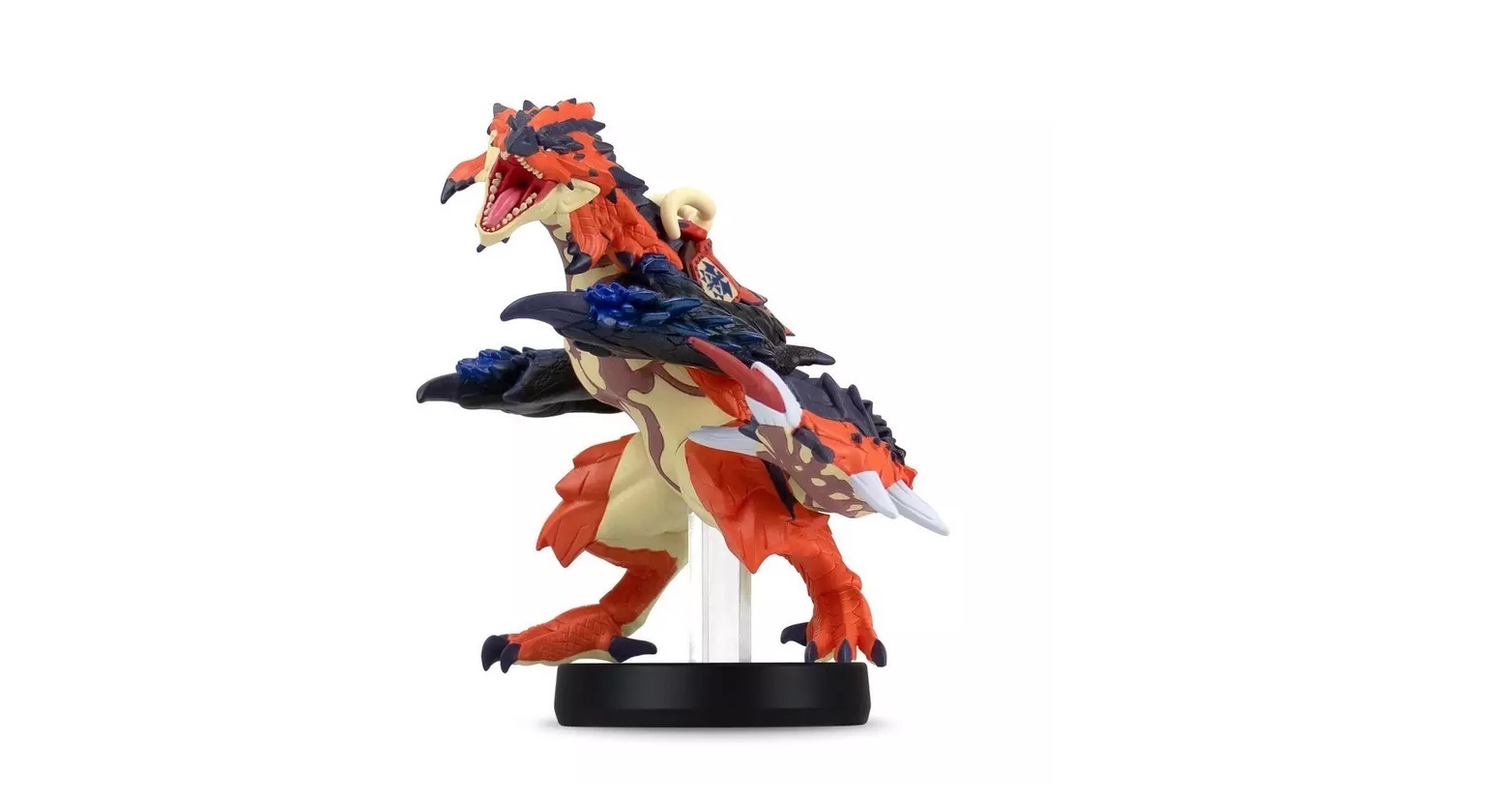
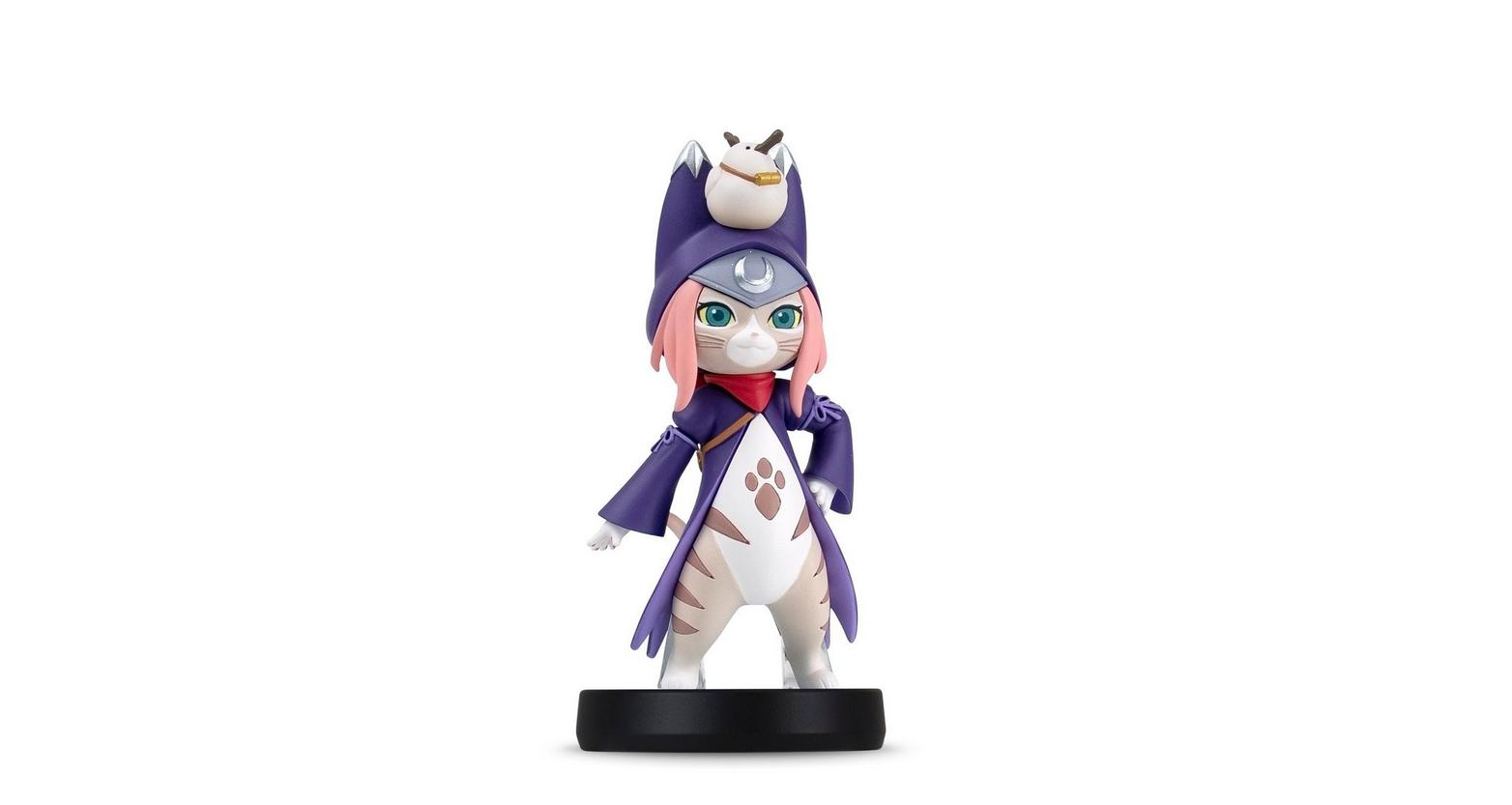
A total of three Amiibo were created based on characters from MHS2, including Ena, Razewing Rathalos, and Tsukino. Scanning in these figures will give you layered armor, which changes your character’s appearance without altering their armor stats. Here’s what you get when you scan in each figure:

Ena

Ena (MSRP: $19.99)
Ena (MSRP: $19.99)

Scanning the Ena Amiibo can unlock two sets of layered armor that make you look like Ena and Kyle. You can wear either set regardless of your character’s gender.

Razewing Rathalos

Razewing Rathalos (MSRP: $22.99)

Scanning the Razewing Rathalos Amiibo gives you layered armor based on the set that Red wears. So if you want to cosplay as your character’s grandfather, this is the way you can do it.

Tsukino

Tsukino (MSRP: $19.99)

Scanning the Tsukino Amiibo gives you layered armor that makes you look like her. Honestly, it’s quite humorous how ridiculous it looks, but it’s your only ticket to resemble the cool, calm, and collected Felyne ninja.

Monster Hunter Stories Amiibo Unlocks

If you’re a longtime fan of Monster Hunter Stories, you’ll be happy to know that the original line of Amiibo released for the first game also works for MHS2. Unfortunately, those figures only came out in Japan, so unless you imported them, you’re out of luck when it comes to accessing what they have to offer. But on the off chance you get your hands on these now rare figures, you can use them without issue, as Amiibo are region-free.

If you were lucky enough to import the original Monster Hunter Stories Amiibo, then you'll be happy to know they can also be scanned in.

As of this writing, details about which layered armor sets you get from each Amiibo are scarce, mostly because these figures are not widely available in the West. Based on the first two Amiibo listed, we have to assume that each one will nab you a layered armor set based on their respective character’s appearance. Regardless, here’s what we know each Amiibo will get you:

One-Eyed Rathalos And Rider (Male)

Scanning in One-Eyed Rathalos and Rider (Male) gets you layered armor based on the Rider set that the male version of the protagonist wears.

One-Eyed Rathalos And Rider (Female)

Scanning in One-Eyed Rathalos and Rider (Female) gets you layered armor based on the Rider set that the female version of the protagonist wears.

Rathian and Cheval

More Details Coming Soon

Barioth and Avinia

More Details Coming Soon

Querupeco and Dan

More Details Coming Soon

Navirou

More Details Coming Soon

Monster Hunter Rise Amiibo Unlocks

Monster Hunter Rise nabs you stickers from that game that you can use in Co-op and PvP.

The amiibo for the recently released Monster Hunter Rise also gives you some extra goodies in MHS2. Scanning in either the Palamute, Palico, or Magnamalo gets you special sticker sets you can use in the game’s Co-op or PvP modes.

GameSpot may get a commission from retail offers.