After being officially revealed last week, PlayStation players will have the first opportunity to try out the next entry in the Call of Duty franchise, Vanguard. An alpha for the game exclusive to PS4 and PS5 owners is set to start this upcoming weekend, complete with the debut of a brand-new game mode, Champion Hill.
The alpha, which will be free and open to anyone on a PlayStation console, starts on August 27 at 10 AM PT / 1 PM ET and runs until August 29 at 10 AM PT / 1 PM ET. PlayStation owners will also be able to play without a subscription to PS Plus, Sony’s online service for its platform.
While a new game mode, Champion Hill, will be available during Call of Duty: Vanguard’s alpha it’s not clear if other multiplayer modes will also be available. According to an announcement post, players will have access to some of the game’s arsenal and even be able to customize weapons with up to 10 attachments.
Champion Hill, according to the same post, is heavily inspired by Call of Duty: Modern Warfare’s Gunfight, which placed two small teams of two or three against each other on close-quarters maps. The game mode pits multiple squads against each other in a round-robin tournament on a large map that’s split into five sections. During Call of Duty: Vanguard’s alpha, squads will be limited to two or three members, but larger games with more players may be included during a beta or when the game launches.
To win a match, players have to compete in a round-robin deathmatch tournament against other squads, reducing their life counts to zero for a full elimination. The game mode is also integrating one of Call of Duty: Warzone’s key features with a buy round between combat where players can spend cash earned by killing enemies on weapon upgrades. Upgrades can also be purchased during a round in a designated buy zone.
PlayStation players who are eager to hop into Vanguard’s alpha can pre-load it starting today. Two other betas are currently scheduled for the game as well, with a beta for PlayStation owners who have preordered the game set to take place from September 10 to 13.
The game’s second beta, stretching from September 16 to 20 will be a mixed bag depending on what platform players are using and whether or not they have preordered the game. This beta will be entirely open for PlayStation owners, while anyone else will have to preorder the game to play on September 16 and 17. From September 18 to 20, the beta will be completely open to players across all platforms.
The Fortnite Week 12 challenges are nearly here. The Legendary Quests will go live on Wednesday, August 25 at 7 AM PT / 10 AM ET, while the bonus Wild Weeks Quests and Epic Quests will follow precisely 24 hours later. As usual, hundreds of thousands of XP are up for grabs if you know where to look. In this guide, we’ll lay out the complete details so you can complete all challenges with ease.
Week 12 Alien Artifacts
Before we jump into the challenges, we want to make sure you know there are once again no Alien Artifacts this week. For reasons only Epic knows, there are no Artifacts you can reliably find this week, meaning you’ll want to focus on knowing how to open Cosmic Chests if you still need to unlock more cosmetics for Kymera.
Week 12 Legendary Quests
Get Slone’s orders from a payphone (1) – 15,000 XP
Deal damage to opponents with alien weapons (150) – 30,000 XP
Deal damage with an alien parasite attached (150) – 30,000 XP
Purchase from vending machines (3) – 30,000 XP
Search ammo boxes at Dirty Docks (5) – 30,000 XP
Hunt wildlife (3) – 30,000 XP
Week 12 Wild Weeks Quests
Deal damage to opponents within 20 seconds of gliding in Solos, Duos, Trios, or Squads (250) – 20,000 XP
Deal damage to opponents within 20 seconds of gliding in Solos, Duos, Trios, or Squads (3,500) – 30,000 XP
Deal damage to opponents within 20 seconds of gliding in Solos, Duos, Trios, or Squads (15,000) – 50,000 XP
You’ll be heading back to Holly Hatchery for several quests this week.
You’re on a mission for Slone once again this week and picking up her orders at any payphone will suffice. Look for payphones near gas stations, or we also like the one in the west end of Misty Meadows. To craft a weapon with nanites, refer to our nanite guide.
We’ll soon have guides on the many story-based one-off quests such as where to destroy target dummies, where to find books on explosions, where to deploy scanners, and where to collect three alien devices, so check back soon and before the challenges go live to get those full details.
Moving onto Epic Quests, the list is, as usual in Season 7, a bit more straightforward. You’ll want to start by dealing damage to saucers piloted by opponents. The best place to do this is any invaded location (written in purple font on your full-size map). It’s there where aliens are already piloting saucers, and they tend to be quickly hijacked by players, whom you can then shoot at.
To deliver a saucer to Rick Sanchez, refer to our UFO locations guide to grab a convenient saucer based on your descent, then use our NPC guide to bring it to Rick at Defiant Dish on the hill east of Weeping Woods. Alien weapons include the Kymera Ray Gun, which you can reliably find at Holly Hatchery in the hands of the patrolling alien NPCs. Take one down, then take his weapon and take out other NPCs in the area.
The same strategy can be used to deal damage with an alien parasite attached. Allow the parasites in the southeast corner of Holly Hatchery to hatch and latch onto your head, then take out the aliens once again.
The last three challenges are all pretty simple. You can buy from vending machines at any gas station. Then you can search Dirty Docks for ammo, which is randomly scattered all across the location–like all locations. Lastly, when hunting wildlife, we recommend looking to the hills west of Misty Meadows, where wolf packs tend to spawn in threes.
The Wild Weeks Quests are intentionally straightforward and are best played in Team Rumble where you can re-drop with every defeat and even re-drop when jumping from any height greater than a few feet. The final tally of 15,000 damage seems like a lot, but remember your teammates will boost your totals too, so you don’t have to do it all alone.
That’s the full slate of Week 12 challenges. Be sure to check out the new J Balvin skin too if you want more reggaeton in your cosmetic library.
It’s impossible to overstate the influence James Cameron’s Aliens has had over video games. From rowdy hoots and hollers of Halo‘s interplanetary Marines to layered rows of gnashing insectoid teeth in Contra, the medium owes a lot to the legendary 1986 film, and Aliens: Fireteam Elite is a long-overdue interactive cover song of sorts. This three-player cooperative third-person shooter from developer Cold Iron Studios excels at frantic firefights with never-ending hordes of xenomorphs throughout a staggering variety of gorgeous landscapes sure to tickle your nostalgia. It’s only the lack of a compelling story and exhausting pacing that keep it from being a classic itself.
Aliens: Fireteam Elite takes place two decades after warrant officer Ellen Ripley gave her life to protect humanity from the xenomorphs in Alien 3. Sadly for any folks keen on keeping their chest cavity intact, the universe’s deadliest species is still thriving — to a point where the USC Marine Corps are regularly sent out on extermination duty. The latest outbreak is on LV-895, a planetoid rife with all sorts of acid-fueled uglies, and it’s your job to mow down as many as possible. Beyond this embryonic set dressing, though, the story never gestates into a tale with anything to say or any nuance to it. Not once in the roughly 10-hour campaign did I care about the events or character motivations because what’s there is either well-tread, cliched ground or thoroughly uninteresting. There’s a great deal of respect for the series, particularly if you’re fond of prequel films like Prometheus, but the whole thing ends up feeling as if you’re just on a somewhat shallow Aliens-themed rollercoaster.
I won’t deny that Aliens: Fireteam Elite’s nostalgic peaks and valleys are a blast to ride out all the same, though, especially with how joyously vicious combat is. Xenomorphs will spill into rooms emitting a raging torrent of spine-chilling shrieks, seeking to drown anyone caught in their sea of acidic lifeblood and head bites. Staying afloat means keeping them at a distance with the firearms at your disposal, be it M56 Smartguns that automatically lock onto most anything that moves or ol’ fashioned pump-action shotguns that come in handy for close encounters, how the weaponry and xenomorph behaviors coalesce might be my single favorite aspect of Aliens: Fireteam Elite. There’s something wildly satisfying about pumping a bunch of cannon fodder xenomorphs full of lead, then witnessing their exoskeletons explode into dark green hunks of cartilage and flesh.
I came to adore the Demolisher’s shoulder-mounted rocket cannon.
The more formidable xenomorph breeds are not so easily disposed of, however. Take, for example, Warriors: hulking brutes that serve as tanky bullet-sponges. Whenever one of these behemoths showed up early in the campaign, my co-op partner (I played through most of the campaign with one friend and a relatively intelligent AI companion) and I would inevitably exhaust several magazines of ammo just to keep them from punching a hole through our skulls. Until we learned of a better way, that is; Aliens: Fireteam Elite periodically introduces new enemy types that force you to make the most out of your class toolkits, and out of the five available classes, I came to adore the Demolisher’s shoulder-mounted rocket cannon, while my co-op partner opted for the Technician’s proficiency with mines and turrets. Couple a rocket barrage with a steady stream of turret spray, and even the mighty Warrior xenomorph goes down pretty quickly.
My only gripe with the classes is they introduce unnecessary progression systems. It’s weird having experience points, levels, and RPG-like elements when all of it amounts to little more than boring passive buffs. Sure, slight increases to a pulse rifle’s damage are fine, but it’s not compelling enough to make me want to replay missions ad nauseam as if this was Destiny and no new strategies open up as a result. Not to mention, there’s no cool loot system to make that prospect more alluring.
Aliens: Fireteam Elite offers glimpses of iconic sights from across the Alien saga.
However, should you wish to take another stroll or two through the campaign, there’s a decent amount of visual variety and optional objectives to spice things up. Aliens: Fireteam Elite has four chapters, each with three missions apiece, offering glimpses of iconic sights from across the Alien saga. From cold, moisture-caked metal corridors of an atmosphere processor to Engineer ruins commemorating long-forgotten battles with the xenomorphs, there’s plenty to feast your eyes on. Better yet, selectable challenge cards introduce unique modifiers to keep subsequent playthroughs relatively fresh. My co-op buddy chose one that would frequently spawn Drones, a fierce hit-and-run type of xenomorph, resulting in laugh riots for both of us. In one instance, as I looked away for mere seconds to restock ammo, a drone firmly planted its foot on my chest and gleefully wailed on me until my friend was able to shoo the bugger off with a few pulse rifle rounds.
I welcomed any opportunity to tweak mission ebb and flow with open arms, as stagnation sets in quickly without it because Aliens: Fireteam Elite’s level design is dismally repetitive otherwise. You’re either funneling along narrow pathways or triggering wave-based defense sections, and essentially… That’s it. Neither is terrible on its own, but by the 30th “press E to trigger the horde” prompt, I couldn’t help but sigh in exhaustion. Regrettably, any deviation from this formula usually results in distinctly irritating encounters.
Aliens: Fireteam Elite forgot all about the importance of safe rooms to mark progress and avoid frustration.
Roughly halfway through the campaign you’ll run into armed synthetic androids, and that’s when Aliens: Fireteam Elite becomes a Gears Of War-like stop-and-pop affair. While I appreciate breaking up the monotony of persistent xenomorph ripples, the alternatives aren’t exactly fun either. You’ll run into several other species (that will remain unnamed for the sake of spoilers) to wrestle with later on, but they run into the same issue as the synthetics: it makes me wish the xenomorphs were all I had to contend with, repetition be damned.
What bugs me the most is while Aliens: Fireteam Elite lifts countless ideas from Left 4 Dead, it forgot all about the importance of safe rooms to mark progress and avoid frustration. Nothing takes the wind out of my sails like failing one of these bafflingly long missions: if the whole squad goes down, then it’s back to the very beginning for the entire lot of you. That doesn’t sound like a big deal on its own, but when each mission takes upwards of 45 minutes on more challenging difficulties, the margin for error transforms into a cavernous precipice where patience goes to die.
That’s especially true when it’s not immediately clear how you’re supposed to survive. In one of the early missions, you have to repair a dropship while simultaneously fending off an encroaching swarm of xenomorphs — ending with a scenario where multiple Warriors, Drones, and several other special breeds spawn at once. My co-op partner and I failed this section a couple of times, and no matter how we adjusted our plan of attack, there were just too many of them to deal with, and trying again meant fighting through the same 40 minute level all over again. It wasn’t until our third attempt that it became clear that we had to run behind the dropship to trigger an ending cutscene, and that standing and fighting the horde was a bad call, despite every shootout beforehand training us to do so.
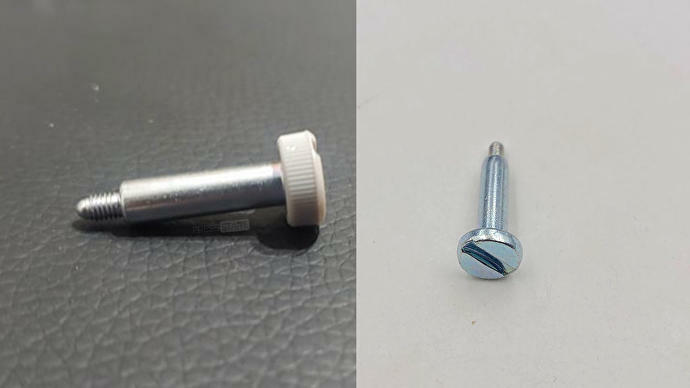
Sony has updated the PlayStation 5, though the differences are so subtle you may have never noticed them. The new model is very slightly lighter than the original PS5, and it uses a new screw to attach the base stand that no longer requires the use of a screwdriver.
The Australian site Press Start noticed the models in the wild in the region, followed by Eurogamer finding them in the UK. According to those reports, the new model is roughly 0.6 pounds lighter than the original PS5 model, though it’s unclear what Sony may have changed about the production to make the weight difference. The more noticeable change from a consumer angle is the addition of a thumbscrew so you can adjust it by hand, whereas the previous model required a screwdriver.
The new PS5s are called by a new model number, CFI-1102A, as opposed to the originals, which were CFI-1000. We had previously heard about this revised model, but now it appears they’re going out into the wild, at least in some regions.
Image Credit: Eurogamer
The stand is required to help the PS5 stand in place in either horizontal or vertical configuration due to its odd shape–though the system looks as if it could simply sit on its own if laid upside-down, a mistake Sony marketing has made.
Note that while this makes it easier to swap between vertical and horizontal orientations without a screwdriver, you will still need hardware to make any bigger changes like swapping out the solid-state drive. Sony recently started testing that functionality in beta, but if you want to try upgrading your PS5 with a bigger SSD you can check out our picks for the best PS5 SSDs. And if you’re still trying to score the system at all, keep an eye on our PS5 restock guide.
The Fortnite Icon Series grows one superstar bigger this week with the introduction of the J Balvin skin. The Colombian singer was previously featured in Fortnite’s Halloween event last year, Fortnitemares, and now he’ll be heading to the Item Shop with several cosmetics. Eager players can unlock the Fortnite J Balvin skin early. Here’s all you need to know.
Fortnite J Balvin Skin
J Balvin will debut in the Fortnite Item Shop on Thursday, August 26 at 5 PM PT / 8 PM ET. Included in his cosmetic set will be several additional items for players who buy the bundle, though the character skin will be sold individually as well. Prices have not yet been revealed, but precedent suggests the J Balvin skin complete bundle will be sold for about $20. Included in the J Balvin set are the following items:
Two additional styles: Energia Balvin and Skeleton Balvin
Real back bling
Real pickaxe
Balvin Cruiser glider
Each style even includes the real-life Balvin Jordan 1 sneakers. There will also be an In Da Party emote featuring the song In Da Getto by J Balvin and Skrillex.
How To Unlock J Balvin Skin Early
As is now customary, Epic is giving competitive players the chance to earn a new high-profile skin not just for free, but early too. Before J Balvin appears in the Item Shop on Thursday, players can take part in the J Balvin Cup on Tuesday, August 24. In this Duos mode tournament, players will have three hours to accumulate as many points as they can across up to 10 matches.
Points are scored by outlasting and eliminating opponents and the top-scoring duos in each region will earn J Balvin, plus his back bling and pickaxe totally free. You can find the full rulebook on the game’s website.
Fortnite never rests, so before you catch up with the J Balvin skin, make sure you’re all done with the outgoing Week 11 challenges, or grab Wonder Woman in the Item Shop before she disappears.
Halo Infinite’s technical test — a preview of its free-to-play multiplayer — gave players an early look at some of the new features being added with the game. What they might not have been expecting were bots that could strafe, shoot, and body players as if they were humans themselves. According to a report from Kotaku, developer 343 Industries managed to make bots perform at such a high level by basing them on actual Halo players.
Speaking to Kotaku, 343 Industries senior lead gameplay engineer Brie Chin-Deyerle and multiplayer designer Sara Stern carefully observed how players move and interact during internal playtests. “We tried to figure out why people do what they do in multiplayer, and then how we could model those choices,” said the developers.
The team at 343 first figured out how to get bots to perform basic actions like moving and shooting. However, more advanced tactics came later down the line, along with more challenging development. To get bots to perform like advanced players, developers had to get them to recognize the things that players familiar with a map would understand, whether those are shortcuts, hidden passages, or tight angles for shots.
Click To Unmute
Halo Infinite Technical Alpha Gameplay Livestream
Size:
Want us to remember this setting for all your devices?
By the end of Halo Infinite’s technical test, the game’s bots were at their most difficult. After defeating 1.2 million bots, 343 turned the difficulty up from Marine, the second-lowest, to ODST. However, 343 gave bots one more boost to Spartan difficulty, letting the AI read the same in-game radar that players use.
While its new-and-improved AI will let players get some decent practice in multiplayer (and without getting tea-bagged), the big question here is if these new AI systems will extend to the game’s campaign. Enemy AI that uses tactics and reacts to player actions has been a staple of the Halo franchise since it began with Combat Evolved, and Halo Infinite could be the next big step forward in that regard. Another technical test for Infinite is also on the way, and getting into it is as easy as signing up for Halo Insider.
Netflix has shared the first images of its upcoming live-action Cowboy Bebop series starring John Cho. As an added bonus, Netflix announced that the live-action series will debut on November 19.
In the first images revealed for the upcoming Cowboy Bebop series, the three main members of the Bebop crew are front-and-center. There’s John Cho as Spike Spiegel, a gun-toting, martial arts expert bounty hunter; Mustafa Shakir as Jet Black an ex-cop and Spike’s partner; and Daniella Pineda as Faye Valentine an erstwhile ally of the crew when she’s not off pulling off one of her own scores.
Check out the first-look images in the gallery below:
Also in the cast but not shown are Alex Hassell as Spike’s nemesis Vicious, and Elena Satine as Spike’s former lover Julia. No look, however, at Ed the Bebop’s resident hacker who the showrunners have confirmed will appear in the live-action series. But so far no casting has been announced for the role.
The first images, which you can see in the gallery above, are all very Bebop-y for sure. Cho is rocking Spike’s classic blue and yellow outfit, while Jet’s metal prosthetics are in full view. Faye has just the slightest bit of a wardrobe update where it seems like she’s just wearing the jacket she always has around her elbows. And if you peak closely you can see Ein the Corgi.
Based on the casting announcements so far, Netflix’s Cowboy Bebop series will be adapting episodes from the original anime. Though we won’t know how closely these adaptations will adhere to the anime until the live-action series premieres in November.
Sixteen years ago, Psychonauts made a cartoonish, comically lopsided world feel believable and weighted thanks to its loveable characters and earnest storytelling. Now, Psychonauts 2 builds upon this foundation to reach ambitious new heights, while equally deepening its roots to impressive depths. It takes already well-realized characters and makes them more complex, even if that means traveling to the darker corners of their minds.
It’s a dazzling display of Double Fine’s signature humor and creativity, but underneath the whimsical, action-platformer is a game about choices and forgiveness. Psychonauts 2 does more than just fill the shoes of its beloved predecessor, it sets itself apart as a classic in its own right.
Click To Unmute
Size:
Want us to remember this setting for all your devices?
After a snappy catch-up for newcomers, the story picks up only days after the first game, and moments after the VR sequel-interlude Psychonauts in the Rhombus Of Ruin. 10-year-old psychic-prodigy Razputin Aquato (you) has saved the leader of the Psychonauts, Truman Zanotto, from the grips of dentist/amatuer brain surgeon Dr. Loboto.
In an effort to discover who hired Dr. Loboto to kidnap Truman, Raz and the other Psychonaut agents–Sasha Nein, Milla Vodello, and Coach Oleander–enter Loboto’s mind, only to uncover a far more menacing antagonist has been pulling Loboto’s strings: Maligula–a great enemy of the Psychonauts. Maligula was assumed dead after a great battle that, tragically, also left one of the Psychonauts’ most acclaimed members, Ford Cruller, traumatically scarred and mentally broken. This leads the Psychonauts to believe there is a mole within their operation, and in order to unpack the mysterious return of Maligula, Raz must enter the minds of the Psychic 6, the founders of the Psychonauts, to piece together a dark, hidden truth.
What unravels is an unexpected turn of events, with a story constructed and driven by the misjudged choices of its characters; it’s a heady theme that remains constant, and is hammered home through Raz’s own mistakes early in the game. Raz learns a few new abilities, one being Mental Connection. This can be used to interconnect a person’s thoughts, which creates new forms of traversal for the player, and can even be used to completely change a character’s mind. However, when Raz uses it to completely change the view of a mind he inhabits for his own benefit, he is forced to reckon with the consequences and carry the burdens of them.
The narrative events are intertwined with a spectacle of platforming and action. As I jumped, climbed, and punched through the inner mind of this character, I was able to see it from two different perspectives: as it once was, and then how dramatically morphed it had become based on Raz’s mistake. The level I was once familiar with was re-contextualized through a completely different lens to reflect the changed mind.
Everything about Psychonauts 2, from its environments, to its history, the Psychonauts themselves, its enemies, and mechanics, all work in tandem and feel wholly realized. It feels rich and dense with detail, and it’s all defined by its eclectic cast of characters. It’s bewildering to step back and take it all in at times, but thankfully its quirky and colorful world makes it as disarming as it a joy to ingest.
As you bounce through the minds of characters, each level’s concepts and artistic direction is reflective of the mind in which it takes place, often putting mental conditions like addiction, PTSD, and anxiety front-and-center in a lighthearted manner that doesn’t demean them, but rather treats them in an approachable and empathetic way.
One level in particular features depressing themes and undertones of excessive drinking as a design motif. The level takes place on a big open sea to sail across, with sandy islands to visit and a beautiful clear sky overhead. The moment I stopped to take it in, however, I realized the trees were shaped like bottles, and platforms were beer cans, and the rails I grinded on were drinking straws. Suddenly, the bright colorful world I gleefully jumped through was instilled with a very different and serious tone–one that could go missed if I didn’t stop to take it in.
It was all nuanced, balanced with bizarre and quirky conversations, but bookended with a serious look at someone’s inner struggles, with the intent of better understanding who they are as a person, and why. With every twist and turn, the level added a completely new layer to the mystery of Maligula and the past of the Psychic 6, leading to some unpredictable revelations.
[Psychonauts 2 is] a dazzling display of Double Fine’s signature humor and creativity, but underneath the whimsical, action-platformer is a game about choices and forgiveness
While its representation of mental conditions may be complex, engaging with the game isn’t and Psychonauts 2 is truly a joy to play, with its action and platforming returning from the first game, albeit much more fine-tuned and streamlined. Many abilities from the original will be familiar to returning players: Telekinesis, PSI Blast, Pyrokinesis, and Levitation, all of which have been given a welcome overhaul.
Telekinesis, for example, now operates more closely to how it functions in Remedy Entertainment’s Control, where items nearby will automatically come to you, making it easy to launch them at an enemy; Pyrokinesis forms an area-of-attack bubble to better visualize its execution; and PSI Blast has a cooldown rather than having to collect ammo. All of these quality-of-life improvements make Psychonauts 2’s combat feel tight and refined, especially with the addition of a dedicated dodge button.
Abilities can be upgraded by ranking up, which itself is done by collecting things: Nuggets Of Wisdom, Figments of Imagination, or PSI Cards. Thankfully, collecting doesn’t come off as a chore–it often comes naturally in the exploration of the level, making it feel more like a natural progression. If you opt to seek out 100% of collectibles, it certainly does lean into the menial design philosophy from collect-a-thons of yesteryear, but the optional nature of this meant it was never a bother and didn’t stunt my progression in any way.
Psychonauts 2 features mainstay enemies like the Censors (who remain damage sponges), but it also introduces an array of new enemies like Regrets–flying creatures that carry a heavy weight to drop on you. With the introduction of each new enemy, I was conditioned to change my playing style, often switching out abilities to control the onslaught. Out of the eight abilities, you can have four at a time assigned to the shoulder buttons. It was a bit overwhelming at times to occasionally reassign all my abilities to handle certain enemies, but after some time, it became intuitive to assign a rotation of powers. Thankfully, the cadence of learning new abilities is well-paced throughout the game, giving me enough time with each one to fully understand their use.
Most impressive is Double Fine’s interlacing of conceptual design with its enemies–like using feelings of regret, doubt, and enabling–as literal interpretations for enemy types, which is an example of how Psychonauts 2 harmonizes serious concepts with whimsical delivery to present a cohesive and impactful whole.
But no matter how good its level design is, or how imaginative its concepts get, some of the level-concluding boss fights fail to reach the same heights. Some are better than others–the vomiting hand puppets from Compton’s cooking level are a standout fight–but not all of them stick the landing. More often than not, fights involve a towering enemy throwing projectiles at you while you fend off hordes of enemies, and the formula rarely changes. Mechanically they’re fine, but can be rather cliche in comparison to its otherwise inspired levels.
Thankfully, even after some less-than-favorable conclusions to these levels, what then awaits is a welcome degree of freedom and exploration. Between each level, I was given the chance to explore the world, tackle levels at my own pace, talk to its many characters, or do things completely out of order.
Exploring the hub areas, which are broken up into four sections, is a distraction from the main quest but a delightful one. With no waypoints to clutter my screen or lead me, exploring felt organic, and driven by natural intrigue and my constant curiosity to see what was around every corner of the bustling Psychonauts HQ, or to climb to the top of the trees in the woodsy Questionable Area. I was often completely sidetracked finding PSI Cards, scavenger hunt items, or even just hearing Raz’s commentary on the environments around him.
Hub areas all felt thoughtfully designed and tailored to incentivize natural exploration, with identifiable characteristics that made it a breeze to navigate. I never once had to use a map through the many sprawling open areas, nor was I ever lost or confused as to where I was–a testament to the game’s distinct art direction. Exploring and wandering around is a standout highlight, and a lot of that is owed to characters you meet along the way.
Whether it was one of the other interns, like Sam Boole making questionable pancakes in the Lumberjack Diner, or the lonely obnoxious receptionist at the Psychoisolation chamber, there’s never a wasted line or interaction. Psychonauts 2 is bursting with a diverse cast of characters, with representation that deserves to be held on a pedestal.
Every interaction deepened the world, and the introduction to Raz’s gypsy circus family, the Aquatos, is the cherry on top. Meeting other members of his family and getting more time to talk to his father gives rewarding context to Raz’s past, and the family that was relegated to murmurs in the previous game. Chatting with his family is charmingly relatable–even embarrassing at times (as having your gypsy circus family crash your time at a psychic secret organization should be).
Additionally, each area is given exuberant life thanks to composer Peter McConnel’s musical diversity, hitting tones of jazzy mystery in parts of the Motherlobe, while exploring a campfire-fueled bluegrass jig in the Questionable Area. Still, McConnell subtly inserts interlacing melodies throughout, making it all cohesive and whole, despite the many different styles on display.
Gallery
The game packs a lot in its 15-hour runtime, but the result is something that feels carefully considered, tailored, and deliberate in everything it gave me, from the story to its gameplay to its exploration to, of course, its writing. No two levels were the same, each bursting with imagination, whether it was climbing a lighthouse entirely made up of strands of hair, or the constant reimagining of level design based on a character’s psyche–the variety never ceased to inspire me.
After the credits rolled, I sat satisfied, having gone on a roller coaster of unhinged creativity, emotional storytelling, and unforgettable characters I hope to see again in the future. During my time, I grew attached to every character, and I knew it’d be hard to move on from its world, which is why I was very thankful to see the world remained open to explore, with characters to talk to, and new conversations to be had after the main story had concluded.
On the surface, Psychonauts 2 is an engaging, ambitious, honed-in take on colorful 3D platformers. However, the most rewarding aspect hasn’t just been mastering its platforms or combat, but peeling back the layers to see what’s beneath it; to take a closer look at its characters, the depth of their struggles, fears, and regrets, all of which serve as the game’s foundation. It’s an emotional, hilarious, and, at times, devastating story, but a story about forgiveness and second chances. It’s an astonishing achievement in nearly every regard and the quintessential display of Double Fine’s mastery in story, gameplay, and distinct direction, making it the studio’s best game to date.
Netflix’s live-action version of the hit anime series Cowboy Bebop will be arriving on the streaming service on November 19. With this announcement of the premiere date, Netflix has released images from the upcoming show as well, and they look surprisingly good, which is refreshing as Netflix’s history with live-action adaptations of anime series has been lackluster.
The look of an adaptation of an anime series is exceptionally important, and it looks like Cowboy Bebop has nailed it. Below, you can see the first images of Spike, played by John Cho (Searching). He has his signature blue suit with yellow shirt underneath, and yes, the headphones are there as well. Check out Cho and the rest of the cast below.
Gallery
The original anime followed a group of bounty hunters who are “on the run from their pasts as they hunt down the solar system’s most dangerous criminals,” reads the official synopsis. “They’ll even save the world…for the right price.”
Cowboy Bebop has an impressive cast. In addition to Cho as Spike, it stars Mustafa Shakir (Luke Cage) as Jet Black, Danielle Pineda (Jurassic World: Fallen Kingdom) as Faye Valentine, Alex Hassell (The Boys) as Vicious, Geoff Stults (12 Strong) as Chalmers, Tamara Tunie (Better Call Saul) as Ana, Mason Alexander Park (Acting for a Cause) as Gren, Rachel House (Thor Ragnarok) as Mao, Ann Truong (Romper Stomper) as Shin, and Hoa Xuande (Top of the Lake) as Lin.
The original anime ran in Japan for 26 episodes in 1998. In 2001, the series debuted on Adult Swim, and in the summer of 2001, Cowboy Bebop: The Movie was released. The upcoming show will also feature new music from the anime’s original composer, Yoko Kanno.
Sixteen years ago, Psychonauts made a cartoonish, comically lopsided world feel believable and weighted thanks to its loveable characters and earnest storytelling. Now, Psychonauts 2 builds upon this foundation to reach ambitious new heights, while equally deepening its roots to impressive depths. It takes already well-realized characters and makes them more complex, even if that means traveling to the darker corners of their minds.
It’s a dazzling display of Double Fine’s signature humor and creativity, but underneath the whimsical, action-platformer is a game about choices and forgiveness. Psychonauts 2 does more than just fill the shoes of its beloved predecessor, it sets itself apart as a classic in its own right.
Click To Unmute
Size:
Want us to remember this setting for all your devices?
After a snappy catch-up for newcomers, the story picks up only days after the first game, and moments after the VR sequel-interlude Psychonauts in the Rhombus Of Ruin. 10-year-old psychic-prodigy Razputin Aquato (you) has saved the leader of the Psychonauts, Truman Zanotto, from the grips of dentist/amatuer brain surgeon Dr. Loboto.
In an effort to discover who hired Dr. Loboto to kidnap Truman, Raz and the other Psychonaut agents–Sasha Nein, Milla Vodello, and Coach Oleander–enter Loboto’s mind, only to uncover a far more menacing antagonist has been pulling Loboto’s strings: Maligula–a great enemy of the Psychonauts. Maligula was assumed dead after a great battle that, tragically, also left one of the Psychonauts’ most acclaimed members, Ford Cruller, traumatically scarred and mentally broken. This leads the Psychonauts to believe there is a mole within their operation, and in order to unpack the mysterious return of Maligula, Raz must enter the minds of the Psychic 6, the founders of the Psychonauts, to piece together a dark, hidden truth.
What unravels is an unexpected turn of events, with a story constructed and driven by the misjudged choices of its characters; it’s a heady theme that remains constant, and is hammered home through Raz’s own mistakes early in the game. Raz learns a few new abilities, one being Mental Connection. This can be used to interconnect a person’s thoughts, which creates new forms of traversal for the player, and can even be used to completely change a character’s mind. However, when Raz uses it to completely change the view of a mind he inhabits for his own benefit, he is forced to reckon with the consequences and carry the burdens of them.
The narrative events are intertwined with a spectacle of platforming and action. As I jumped, climbed, and punched through the inner mind of this character, I was able to see it from two different perspectives: as it once was, and then how dramatically morphed it had become based on Raz’s mistake. The level I was once familiar with was re-contextualized through a completely different lens to reflect the changed mind.
Everything about Psychonauts 2, from its environments, to its history, the Psychonauts themselves, its enemies, and mechanics, all work in tandem and feel wholly realized. It feels rich and dense with detail, and it’s all defined by its eclectic cast of characters. It’s bewildering to step back and take it all in at times, but thankfully its quirky and colorful world makes it as disarming as it a joy to ingest.
As you bounce through the minds of characters, each level’s concepts and artistic direction is reflective of the mind in which it takes place, often putting mental conditions like addiction, PTSD, and anxiety front-and-center in a lighthearted manner that doesn’t demean them, but rather treats them in an approachable and empathetic way.
One level in particular features depressing themes and undertones of excessive drinking as a design motif. The level takes place on a big open sea to sail across, with sandy islands to visit and a beautiful clear sky overhead. The moment I stopped to take it in, however, I realized the trees were shaped like bottles, and platforms were beer cans, and the rails I grinded on were drinking straws. Suddenly, the bright colorful world I gleefully jumped through was instilled with a very different and serious tone–one that could go missed if I didn’t stop to take it in.
It was all nuanced, balanced with bizarre and quirky conversations, but bookended with a serious look at someone’s inner struggles, with the intent of better understanding who they are as a person, and why. With every twist and turn, the level added a completely new layer to the mystery of Maligula and the past of the Psychic 6, leading to some unpredictable revelations.
[Psychonauts 2 is] a dazzling display of Double Fine’s signature humor and creativity, but underneath the whimsical, action-platformer is a game about choices and forgiveness
While its representation of mental conditions may be complex, engaging with the game isn’t and Psychonauts 2 is truly a joy to play, with its action and platforming returning from the first game, albeit much more fine-tuned and streamlined. Many abilities from the original will be familiar to returning players: Telekinesis, PSI Blast, Pyrokinesis, and Levitation, all of which have been given a welcome overhaul.
Telekinesis, for example, now operates more closely to how it functions in Remedy Entertainment’s Control, where items nearby will automatically come to you, making it easy to launch them at an enemy; Pyrokinesis forms an area-of-attack bubble to better visualize its execution; and PSI Blast has a cooldown rather than having to collect ammo. All of these quality-of-life improvements make Psychonauts 2’s combat feel tight and refined, especially with the addition of a dedicated dodge button.
Abilities can be upgraded by ranking up, which itself is done by collecting things: Nuggets Of Wisdom, Figments of Imagination, or PSI Cards. Thankfully, collecting doesn’t come off as a chore–it often comes naturally in the exploration of the level, making it feel more like a natural progression. If you opt to seek out 100% of collectibles, it certainly does lean into the menial design philosophy from collect-a-thons of yesteryear, but the optional nature of this meant it was never a bother and didn’t stunt my progression in any way.
Psychonauts 2 features mainstay enemies like the Censors (who remain damage sponges), but it also introduces an array of new enemies like Regrets–flying creatures that carry a heavy weight to drop on you. With the introduction of each new enemy, I was conditioned to change my playing style, often switching out abilities to control the onslaught. Out of the eight abilities, you can have four at a time assigned to the shoulder buttons. It was a bit overwhelming at times to occasionally reassign all my abilities to handle certain enemies, but after some time, it became intuitive to assign a rotation of powers. Thankfully, the cadence of learning new abilities is well-paced throughout the game, giving me enough time with each one to fully understand their use.
Most impressive is Double Fine’s interlacing of conceptual design with its enemies–like using feelings of regret, doubt, and enabling–as literal interpretations for enemy types, which is an example of how Psychonauts 2 harmonizes serious concepts with whimsical delivery to present a cohesive and impactful whole.
But no matter how good its level design is, or how imaginative its concepts get, some of the level-concluding boss fights fail to reach the same heights. Some are better than others–the vomiting hand puppets from Compton’s cooking level are a standout fight–but not all of them stick the landing. More often than not, fights involve a towering enemy throwing projectiles at you while you fend off hordes of enemies, and the formula rarely changes. Mechanically they’re fine, but can be rather cliche in comparison to its otherwise inspired levels.
Thankfully, even after some less-than-favorable conclusions to these levels, what then awaits is a welcome degree of freedom and exploration. Between each level, I was given the chance to explore the world, tackle levels at my own pace, talk to its many characters, or do things completely out of order.
Exploring the hub areas, which are broken up into four sections, is a distraction from the main quest but a delightful one. With no waypoints to clutter my screen or lead me, exploring felt organic, and driven by natural intrigue and my constant curiosity to see what was around every corner of the bustling Psychonauts HQ, or to climb to the top of the trees in the woodsy Questionable Area. I was often completely sidetracked finding PSI Cards, scavenger hunt items, or even just hearing Raz’s commentary on the environments around him.
Hub areas all felt thoughtfully designed and tailored to incentivize natural exploration, with identifiable characteristics that made it a breeze to navigate. I never once had to use a map through the many sprawling open areas, nor was I ever lost or confused as to where I was–a testament to the game’s distinct art direction. Exploring and wandering around is a standout highlight, and a lot of that is owed to characters you meet along the way.
Whether it was one of the other interns, like Sam Boole making questionable pancakes in the Lumberjack Diner, or the lonely obnoxious receptionist at the Psychoisolation chamber, there’s never a wasted line or interaction. Psychonauts 2 is bursting with a diverse cast of characters, with representation that deserves to be held on a pedestal.
Every interaction deepened the world, and the introduction to Raz’s gypsy circus family, the Aquatos, is the cherry on top. Meeting other members of his family and getting more time to talk to his father gives rewarding context to Raz’s past, and the family that was relegated to murmurs in the previous game. Chatting with his family is charmingly relatable–even embarrassing at times (as having your gypsy circus family crash your time at a psychic secret organization should be).
Additionally, each area is given exuberant life thanks to composer Peter McConnel’s musical diversity, hitting tones of jazzy mystery in parts of the Motherlobe, while exploring a campfire-fueled bluegrass jig in the Questionable Area. Still, McConnell subtly inserts interlacing melodies throughout, making it all cohesive and whole, despite the many different styles on display.
Gallery
The game packs a lot in its 15-hour runtime, but the result is something that feels carefully considered, tailored, and deliberate in everything it gave me, from the story to its gameplay to its exploration to, of course, its writing. No two levels were the same, each bursting with imagination, whether it was climbing a lighthouse entirely made up of strands of hair, or the constant reimagining of level design based on a character’s psyche–the variety never ceased to inspire me.
After the credits rolled, I sat satisfied, having gone on a roller coaster of unhinged creativity, emotional storytelling, and unforgettable characters I hope to see again in the future. During my time, I grew attached to every character, and I knew it’d be hard to move on from its world, which is why I was very thankful to see the world remained open to explore, with characters to talk to, and new conversations to be had after the main story had concluded.
On the surface, Psychonauts 2 is an engaging, ambitious, honed-in take on colorful 3D platformers. However, the most rewarding aspect hasn’t just been mastering its platforms or combat, but peeling back the layers to see what’s beneath it; to take a closer look at its characters, the depth of their struggles, fears, and regrets, all of which serve as the game’s foundation. It’s an emotional, hilarious, and, at times, devastating story, but a story about forgiveness and second chances. It’s an astonishing achievement in nearly every regard and the quintessential display of Double Fine’s mastery in story, gameplay, and distinct direction, making it the studio’s best game to date.