Madden NFL 22 Review — Momentum Shift

Seattle Seahawks fans have caused minor earthquakes in the past, such is the raucousness of the aptly named 12th Man. The crowd at CenturyLink Field has also earned two Guinness World Records for the loudest roar recorded at a sports stadium, once registering a deafening 137.6 decibels back in 2014. Of course, Seattle isn’t the only city known for its boisterous fans and intimidating atmosphere, and this is reflected throughout the various stadiums in Madden NFL 22. After criticism that last year’s game was light on new content–particularly as it relates to Franchise mode–developer EA Tiburon has introduced a number of sweeping changes this time around, with the crowd being the most prominent right out of the gate.

The new Gameday Atmosphere feature brings crowds to life with new animations and remastered fan recordings that more accurately replicate what you’re likely to see and hear on any given Sunday. It also extends beyond the cosmetic side, too, as the ball will fly further in Denver’s high altitude, while the wind will play havoc with your field goal team in Chicago. On top of this, the intensity of the home fans will have an impact on the way games can play out. This feature is called Gameday Momentum, and it introduces a momentum meter to the top of the screen that will shift back and forth like a tug-of-war depending on the performance of each team. If momentum is on your side–because of a big sack or crucial touchdown, for instance–you’ll gain access to various bonuses (called M-Factors) that give your team an edge in certain situations. This works in tandem with Gameday Atmosphere to ratchet up the significance of home field advantage, especially when playing in front of crowds known for their vociferousness.

Now Playing: Madden NFL 22 Video Review

No Caption Provided

Gallery

The aforementioned 12th Man of the Seattle Seahawks will cause the opposing team’s pre-snap play art to be distorted on 3rd and 4th down, turning each receiver’s route into a squiggly mess. Elsewhere, Vikings players will gain a small speed boost in the red zone when the “Skol” chant reverberates around the U.S. Bank Stadium. It looks and sounds a tad gamified on the surface, but Gameday Momentum and Atmosphere are crucial additions that capture the unique fandom of each team and accurately reflect the wild swings in momentum that can occur during the course of a heated football game. It gives rivalries that big game feel and intensifies those drives where the home fans are fervently working against you. The impact of home field advantage in the NFL is tangible, and can often be the difference between winning and losing, yet Madden 22 marks the first time the series has truly emulated such an integral part of the sport.

Next Gen Stats also contribute to the gameday experience by snazzing up the broadcast package. Replays will show how many seconds it took a blitzer to collide with the quarterback, or count up how many yards a receiver racked up after the catch on a big play. Aside from adding to the presentation, however, Next Gen Stats have a much more significant impact on gameplay in comparison. Madden 22 utilises the NFL’s Next Gen Stats data to drive its AI behaviour, resulting in more dynamic games against the CPU. Quarterbacks will react differently from each other when under pressure, some are more likely to attempt throws into tight windows, and ball carriers will differ when it comes to attempting to evade tackles or break through them. You’ll also see superstar wide receivers use signature cuts and releases off the line to try and get open when the defence presses, while a suite of new animations make everything feel more fluid and responsive, whether you’re throwing the ball downfield or bursting through a hole at the line of scrimmage. Tackling, in particular, looks more natural and varied, and is more satisfying as a result. And throwing those 50/50 balls isn’t a waste of time anymore thanks to more dynamic reactions between receivers and defensive backs.

In Franchise mode, these improvements to AI help diversify each week of the gruelling NFL season. Each team has its own personality and play calling style so no one game is similar to the last. To counteract each team’s strengths and exploit their weaknesses, Franchise has been overhauled with new weekly strategies. Now, Next Gen Stats will give you a breakdown of how good a team is in a number of specific areas on both sides of the ball, from executing outside runs and medium passes, to blitzing the quarterback and defending short passes. With this information on hand, you can choose a game plan that gives you the best chance to win. Against the Steelers, for instance, you might opt to counter their aggressive blitz, then in the next game, you might focus on containing the quarterback in an attempt to stop the Cardinals’ Kyler Murray from scrambling for yards on the ground.

While you spend the week leading up to a game working on strategy, the half-time break gives you a chance to alter the plan if things aren’t working or you want to adopt a different approach because you’re, say, up big or trailing behind. Managing your player’s fatigue and injuries is another part of the weekly strategy, too. You might want to go all out in practice before facing a rival team to boost your player’s XP, but you need to weigh up the risks with the reward in case one of your key players ends up injured on the eve of the contest.

One of Franchise’s other new features can at least mitigate injuries to some extent. Your head coach, offensive coordinator, defensive coordinator, and player personnel all have their own RPG-style skill trees. By meeting gameday and longer-term goals, you’ll unlock Staff Points that can be spent on improving your staff in multiple areas, such as decreasing injury recovery time. Improving your staff results in better development of your players, giving Franchise a rewarding loop as better players means you’re more likely to complete goals to in turn improve your coaches again. Each of these new and revised systems gives Madden 22 greater strategic depth beyond simple roster construction. No two games are the same, and Franchise manages to strike a sweet spot where what you do off the field has a rewarding impact on what you do on it, to the point where it has fundamentally changed how you’re expected to approach each match-up.

If you’re playing as a head coach, Franchise also introduces storylines over the course of each season to reflect the ups and downs a team must endure. These scenarios add faint narrative elements to the game, but mostly it’s another way to improve players by setting them dynamic goals. If a player performs well during pre-season, you might talk to them about having a big game to start the regular season. This will give you a game day goal to continue their breakout, earning more Staff Points if you’re successful. Scouting, on the other hand, is unchanged at the moment, but Tiburon expects to launch a new scouting system for free in September. This will allow you to assign national and regional scouts to find the best college prospects and accrue more information ahead of draft day. This all sounds good, but obviously it’s impossible to know for sure until the free update is released.

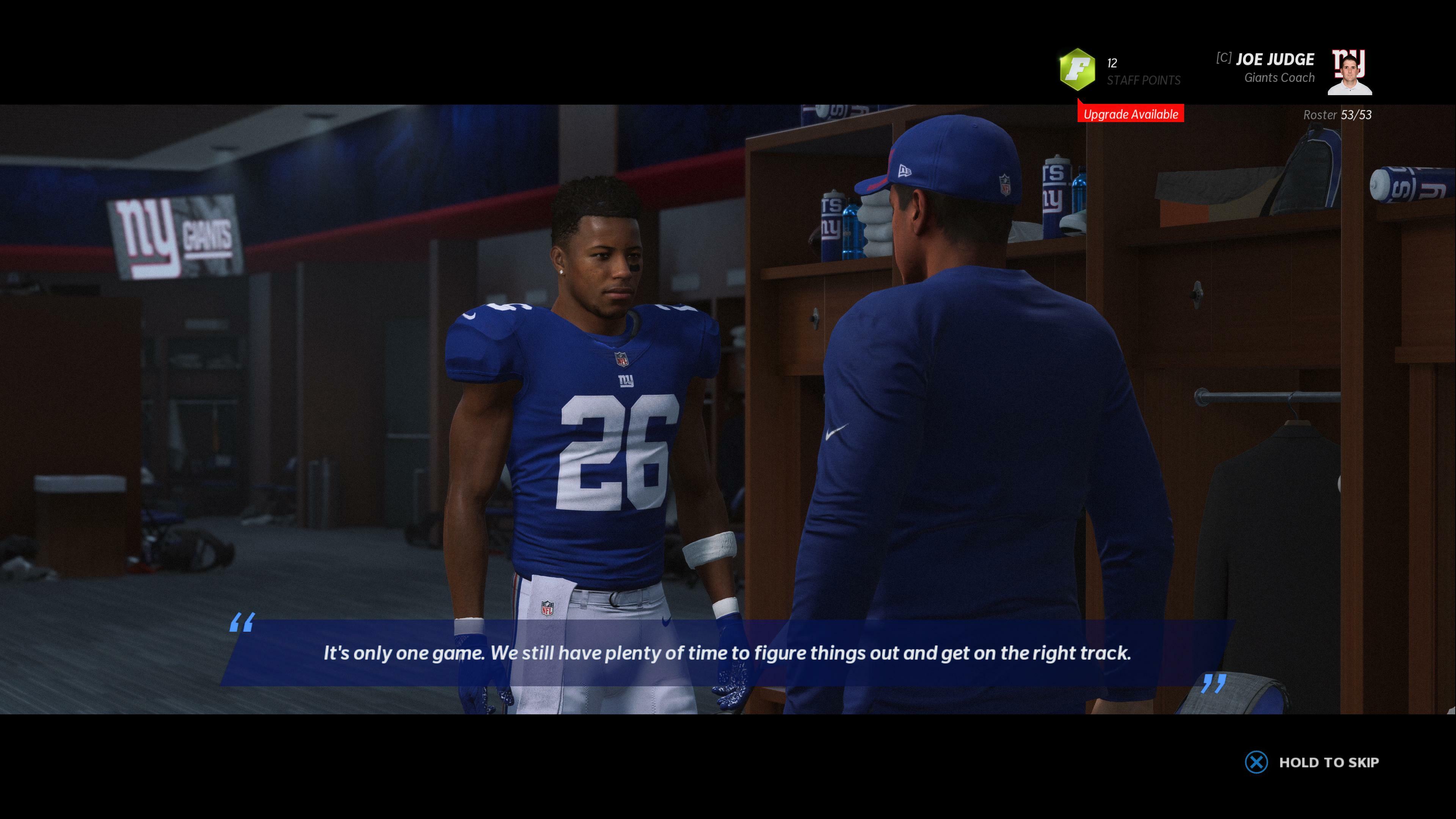
Ultimate Team and The Yard also return, but are mostly untouched from last year. The latter–a unique six vs. six backyard football experience–adds new fields, including Hawaii, and a new ranked mode so you can test your skills against other players. Progression in The Yard is also unified across Face of the Franchise: United We Rise, so all player progress, rewards, and gear are shared between the two modes. Face of the Franchise is also similar to last year, only now you’re able to play as either a quarterback, running back, wide receiver, or linebacker. The story here is cliched and stale, with stilted cutscenes and a lack of chemistry amongst its small cast. Watching a young player go through college before entering the draft is an overused plot at this point, even if Madden 22’s version focuses on the relationship between a player and his agent as opposed to something like a teammate rivalry. There just isn’t enough here to warrant playing Face of the Franchise over the regular Franchise mode. The addition of a new class-based system that defines your play style is a nice touch, giving you specific X-Factor abilities to work towards unlocking. But unless you like taking a created character through an NFL season, there’s isn’t enough depth nor incentive to devote time to Face of the Franchise.
No Caption Provided

Gallery

It’s not without its fair share of glitches either. The subtitles during cutscenes often disappear, music will sometimes overpower dialogue, and your created character’s face has a tendency to completely change at random. Madden 22 also has a habit of crashing throughout all modes, giving the impression that it’s not quite ready to launch yet. You can pick back up where you left off after most of these crashes, but occasionally it will freeze at the end of a game and wipe all of your progress. Leaving a game in progress and returning to it later will also reset your game day goals, even if you’ve also completed them, and sometimes a win will count as a loss in Franchise.

These technical issues put a damper on Madden 22, particularly since it finally addresses Franchise with a number of meaningful additions. Hopefully these glitches, and particularly the crashes, can be ironed out soon.

When everything’s working as intended, Madden 22 marks a recent high point for the series. The gameplay doesn’t move the needle much mechanically, but changes to the AI make for a more interesting and varied challenge, while Gameday Atmosphere and Momentum brings every team’s fans to life to palpable effect. With Franchise making the moments between these games more engaging, it’s relatively easy to sink hours into building a team to challenge for the Super Bowl. It’s just unfortunate that this comes with the caveat that technical problems might prove to be the biggest obstacle standing in your way.
Ghost Of Tsushima Iki Island Expansion Guide – Haiku Locations

Ghost of Tsushima‘s Iki Island expansion sees the return of its familiar open-world game activities, one of which you should be well acquainted with: Haikus. This calming side-activity allows you to choose phrases to form a Haiku that best reflects Jin’s current feelings about a particular matter. Completing a Haiku earns you a special headband themed after what was written about.

The Iki Island expansion adds a total of three new Hakiu to write, which earns you three new headbands you can use to accessorize. Below, we detail the locations of every single Haiku on Iki Island.

Waterfall Haiku

Gallery

The Waterfall Haiku spot is located directly south of Lone Spirit Falls. You’ll see it on a perch by a tree just before the waterfall. It’s always lovely how flowing water can bring a sense of inner peace.

Reward: Headband of Solace

Mountainside Haiku

Gallery

The Mountainside Haiku spot is located slightly northeast of Tatsu’s Ladder. You’ll see it on a large rock atop a mountain overlooking the ocean–nothing like the ocean to help you accept your place in the world.

Reward: Headband of Acceptance

Wisteria Haiku

Gallery

The Wisteria Haiku spot is located south of Senjo Gorge in the southern part of Iki island. You’ll see it on a rock overlooking the gorge and some distant purple trees. It’s a beautiful sight in which to meditate upon one’s regrets.

Reward: Headband of Regret

For more about Ghost of Tsushima’s Iki Island expansion, be sure to read our full review. Otherwise, be sure to check out our other Iki Island guides roundup and our guides roundup for the base game.

GameSpot may get a commission from retail offers.

Ghost Of Tsushima Iki Island Crimson Dye Guide – How To Find The Red Dye Merchant

Throughout Ghost of Tsushima, you can find special characters who will let you purchase dyes for your armor sets. There’s a new dye merchant in the Iki Island expansion, who sells special red armor customizations you can otherwise get. You can’t just come across the Crimson Dye Merchant by exploring the island, however–you need to complete certain other objectives in order to unlock it.

Here’s everything you need to know to find the Crimson Dye Merchant in the expansion. Check out our Iki Island guide roundup for more info to find everything the expansion has to offer.

How To Find The Crimson Dye Merchant

Unlock Fune’s Refuge

First, you’ll need to work your way through the Iki Island Tales that unlock when you first arrive on the island. Continue through them until you meet Tenzo and he takes you to Fune’s Refuge. Once you have access to the town, you’ll find a dueling tournament in the back corner. The Crimson Dye Merchant is one of the participants in the competition.

You'll have to beat all four combatants in the Hidden Cove Tournament to unlock the Crimson Dye Merchant.
You’ll have to beat all four combatants in the Hidden Cove Tournament to unlock the Crimson Dye Merchant.

Complete The Hidden Cove Tournament

Next, you’ll have to win the dueling tournament so that you can get a chance to talk to the Crimson Dye Merchant. There are four combatants to beat in total, and in each fight, you’ll have to land five total blows against your enemy before they land five blows on you. All the fights are pretty tough, with the combatants using special moves to get in under your defenses and requiring you to play fairly reactively.

The trick, generally, is to use Perfect Parries and dodges to get clear of your enemies’ attacks and to hit them while they’re off balance. Spend some time practicing dodging each enemy’s attacks to see what they’ll throw at you–each one has a specific fighting style and only uses a few key attacks.

Take Down The Crimson Dye Merchant

After you beat the first three combatants, the Crimson Dye Merchant will show up for your challenge. He fights a lot dirtier than the other characters you’ve seen up until now. His main move is to drag his katana across the ground to spray sand in your face, then to follow up with a quick blow you can usually block. Use your dodge to stay clear of the sand attacks–you’ll often find the Dye Merchant is vulnerable after he throws a handful of sand at your face, which you can sidestep fairly easily. After that, parry his incoming attack to open him up for a strike.

Visit The Crimson Dye Merchant’s Shop

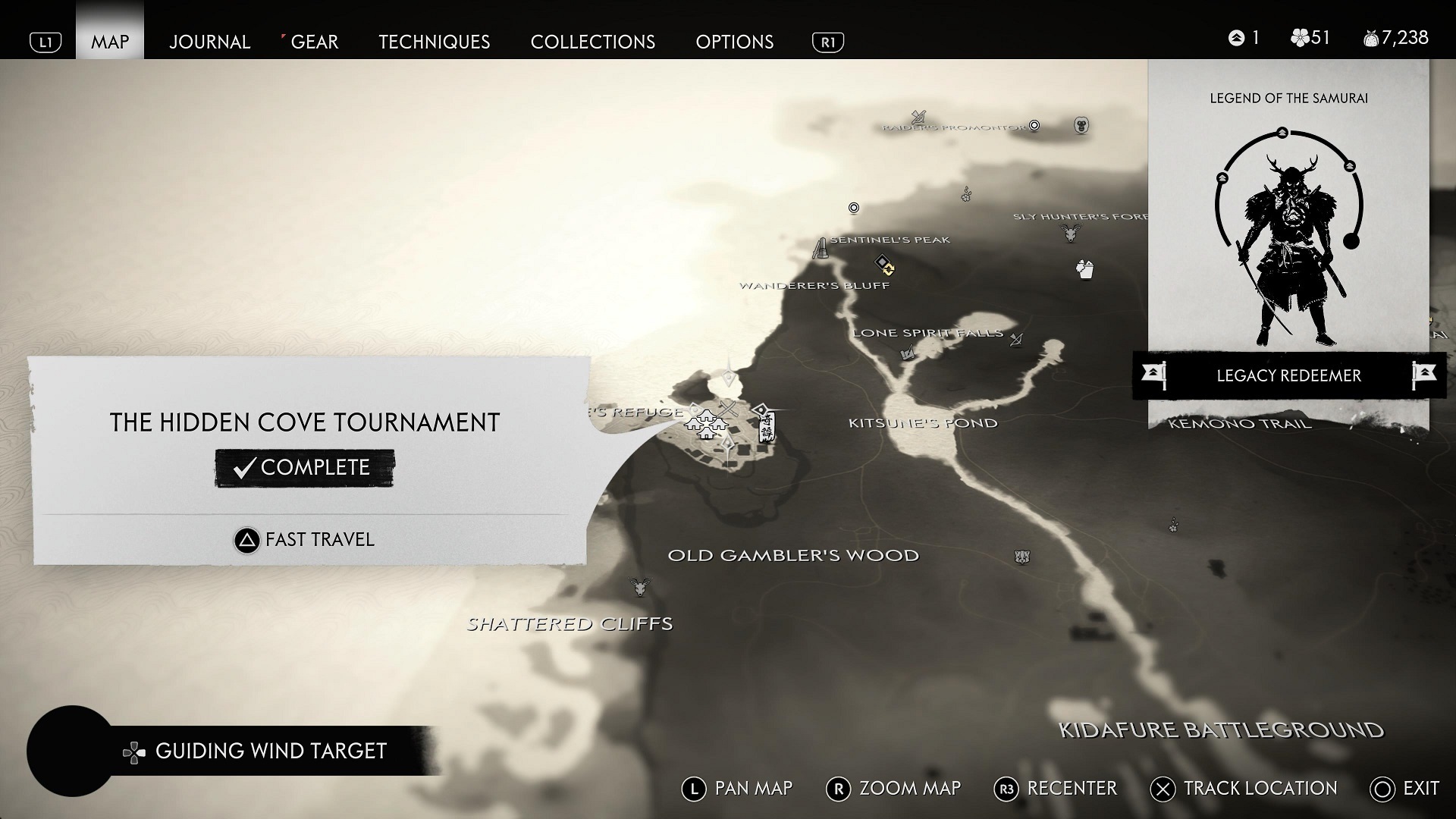
The location of the Crimson Dye Merchant's shop appears on your map after you complete the dueling tournament in Fune's Refuge.
The location of the Crimson Dye Merchant’s shop appears on your map after you complete the dueling tournament in Fune’s Refuge.

After you win the final duel, the Crimson Dye Merchant’s shop will appear on your map. Fast-travel to the location, which is east of Fort Sakai and just north of Tatsu’s Ladder. Travel there and the merchant will offer you one free armor dye. Once you’ve picked a freebie, you’ll be able to get more armor customizations from the merchant, but you’ll have to buy them with flowers like usual.

Buying something from the Crimson Dye Merchant is the first step in unlocking the Blood On Your Hands Trophy. The second step is to visit the Horse Armor Dye Merchant and buy something. To do that, you’ll first need to complete the Legacy of Kazumasa Sakai Mythic Tale, then bring five Sakai Clan Banners to the Horse Armor Dye Merchant to earn a look.

GameSpot may get a commission from retail offers.

Naraka Bladepoint Review — House of Flying Daggers

If absolutely nothing else, be grateful to Naraka Bladepoint for being one of a scant few battle royale titles where getting one-shotted by someone hiding in a shrub three football fields away isn’t a danger. That by itself makes it welcoming in a way the genre tends to ignore. But lurking beneath that relative ease and approachability is a shrewd game of wuxia-inspired combat that demandsfar more steelfrom its players–and we’re not just talking about swords and spears.

The basic premise of Naraka Bladepoint involves a secret island where warring gods once battled to their deaths, and warriors now battle for the smallest part of the gods’ power. But that story all but evaporates after the tutorial stage, aside from some skimpy lore cards for each character unlocked after reaching a certain XP level. All you really need to know is you’re on an island of abandoned villages, scattered weapon caches, and an undulating purple wall of death that ushers 60 brave warriors closer and closer together. Your sole mission is to be the last person standing, by any and all means necessary.

Now Playing: Naraka Bladepoint Video Review

Survival means combat, but instead of the usual pistols/shotguns/assault rifles, you’re primarily looking at melee weapons. Ranged options do exist, from crossbows and slow-firing muskets to environmental hazards that can be triggered by the right slice or shot at the right time. You also have a grappling hook that not only allows you to zip across the map and onto higher ground, but also harpoon and fly at opponents Attack on Titan-style.Aside from the hook, each ranged option exists to merely soften up opponents from a distance as they close in. Getting the big fat kill involves getting up close and personal with something sharp, and here, showdowns with opponents have more in common with Dynasty Warriors and SoulCalibur than Fortnite.

Each weapon has a number of melee combos, fancy uppercuts, charge maneuvers, and parries, which is augmented by power-up shards of jade you can either find or purchase while out in the field. While button-mashing the first enemy you see works when you’re starting out (there are currently bots thrown in with actual players to ease you in at first) your first encounter with a player who knows what they’re doing will teach you some brutal lessons.

You start learning that your parry has a Sekiro-like margin of success, and even that’s predicated on a poorly-explained color system that tells you if your character has the ability to parry a specific attack altogether. Dodges are effective, but can be easily adjusted for by a smart, forward-thinking player. You’ll even run into the dreaded mechanic of weapons and armor degradation, which sounds like the dealbreaker on paper. However, repair items are widespread, and the push and pull of every player–regardless of how skilled they are–needing to find respite in order to be successful creates a rather nice tension to every match. You’re dealing with all of this while also wondering if the next warrior to finish you off hasn’t been waiting in the trees for you the whole time. Everyone is vulnerable here, as long as you catch them at the right moment.

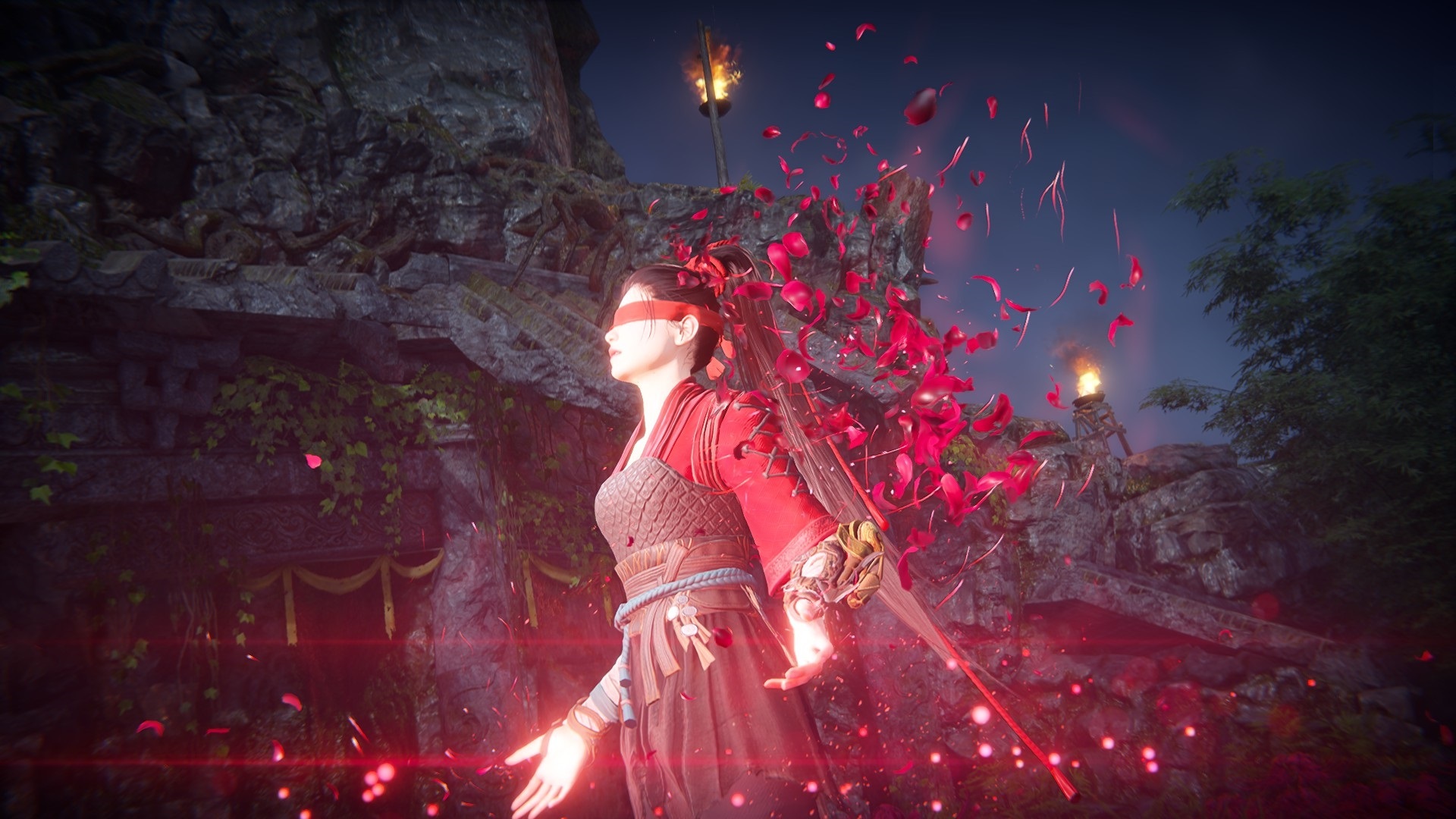
Viper Ning is one of many characters you will get to play as in Naraka Bladepoint.

Gallery

That’s a solid and exciting foundation to build a battle royale game onto, but like most games of the sort there’s a lot of overhead room to grow. There are a few nitpicks with the game as a set of mechanics. The control scheme, in particular, occupies an awkward middle ground where actual combat is best with a controller, but equipping/switching items and managing your loadout damn near requires a mouse and keyboard. And switching back and forth effectively feels awkward, no matter how you decide to configure the layout.There are only a few game modes at the moment: a typical Battle Royale Mode, with an option for Apex Legends-style Trio matches included, and a free-for-all Deathmatch mode. That’s typically fine for a game that has more going on mechanically or narratively to keep you engaged, but that’s just not where the game is at right now, and the grind can get a little rote as a result.

Right now, the game’s biggest issue is one of personality. The world of Morus Island is absolutely gorgeous, a place of sun-kissed golden valleys, haunting shipwrecks, and derelict temples.There are more than a few moments so painterly, and evocative of Chinese mythology and ancient art I had to stop in my tracks to appreciate them, which typically resulted in someone I didn’t see deciding to try and snag a free hit. The environment of the game is very much on point as far as immersion goes.However, characters are a different case. With only two exceptions–the blind swordswoman Viper Ning, and the possessed witch Yoto Hime–the warriors of Morus Island are rather generic martial artists whose personalities don’t shine through, visually or mechanically. Each does have their own set of special moves and an Ultimate ability, but many of them are unwieldy in a hectic fight, at least until you’ve stuck it out with them enough to unlock the far more effective enhanced versions of those moves. There is some level of skin customization, where you can adjust a hero’s face and costumes to an extent, but because there isn’t really a reason to care about these people, you’re stuck making flimsy cosmetic changes. Most of the options for those changes are locked behind–you guessed it–a loot system, where there are multiple currencies, none of which are fully explained, and the most effective way to earn them comes from spending real money.

The world of Naraka Bladepoint pulls from folklore and ancient myths, which gives its environment a mystic and otherworldly aesthetic.

Gallery

Naraka Bladepoint’s UI is already a cluttered mess of things you don’t and shouldn’t worry yourself about until you’ve put several hours into the game, but once you’ve put in the time to try and understand, you realize just how much of the information boils down to “here are ways to spend coins, and you’ll need a lot of them.” The good news is that this doesn’t apply to anything that would make winning matches any easier, as you get XP no matter what, and leveling up to unlock each character’s alternate moves is fairly quick. The bad news is having to wade through all the other noise to do so.

There are issues for sure, but this early in, Naraka Bladepoint has room to grow and iron out its kinks. You can see the potential more than the problems when you’re in the thick of it, grappling from rooftop to rooftop, clanging swords with enemies, drums and wind instruments filling the air as you consider the best way to move in for the kill.There’s a forethought and shrewdness required to be successful here that gives it a very different feel than any other battle royale title that’s out there at the moment, and the ancient Chinese aesthetic is a dazzling one. If nothing else, it’s enough to want to see what the game looks and feels like in the months to come.

The Activision Blizzard Lawsuit Could Be a Death Blow for World of Warcraft

World of Warcraft is struggling.

For how long, exactly, is up for debate, but for the past couple of years, at least, player morale has been a downward trend. And while a few weeks ago this could have been a story about the ascendance of WoW’s rivals — most notably Final Fantasy 14 — the story has lately taken a sharp turn in the wake of the bombshell lawsuit against Activision Blizzard.

Now some of WoW’s biggest content creators say they’re leaving the game for good.

“It’s been nauseating to learn of all that’s been allowed to go on at Activision Blizzard,” Zepla said in an email to IGN. “I feel betrayed. World of Warcraft was all I cared about from 2004 until 2015. I was obsessed with, in love with the game — I mourned when members of the cherished “Old Guard” left the company.”

With over 200,000 subscribers, Zepla is one of the largest Final Fantasy 14 content creators on YouTube. And though she primarily produces Final Fantasy 14 videos, her channel has been one of the biggest resources for new players looking to make the change from WoW. And Zepla’s early WoW fandom allows them to help players make the transition.

Even before the lawsuit scandal broke, World of Warcraft was already in the news. Several high-profile streamers and YouTubers who primarily focused on World of Warcraft content were trying out Final Fantasy 14: A Realm Reborn for the first time.

“It’s been nauseating to learn of all that’s been allowed to go on at Activision Blizzard.”

This led to talk about a “WoW Exodus.” After a history of unpopular gameplay changes and strange story decisions, longtime players were fed up and seeking different games to play. And while Final Fantasy 14 director Naoki Yoshida downplayed any rivalry, the fact that many of WoW’s top streamers were defecting to Square Enix’s MMORPG was a big deal.

Unlike WoW, Final Fantasy 14 began from a place of relative disarray, but year after year has improved with new, beloved expansions. One of Final Fantasy 14’s biggest advantages over WoW is its relative flexibility, allowing players to play as much or little as they want without punishing them for the lack of grinding. In fact, this philosophy is sometimes a criticism from FF 14 players who want more hardcore content.

In contrast, WoW has spent the last couple of years complicating its base systems like items, making players feel like they have to do more work for even the most basic endgame rewards. And most players agree that WoW has hit something of a storytelling drought.

But it’s one thing for WoW to be losing players over differences in game design philosophy. On July 21, the California Department of Fair Employment and Housing filed a lawsuit against Activision Blizzard for repeatedly discriminating against female employees and fostering a workplace where sexual harassment went unpunished.

Since the lawsuit, stories have emerged about exactly how bad working for Blizzard was for women and women of color. While the lawsuit lays out examples of extreme pay disparity between male and female employees, and lack of upward mobility, investigative reports have shed light on an insidious workplace culture.

Senior Blizzard developers known within the community like Alex Afraisabi were directly implicated in stories about making aggressive, unwanted advances toward female employees, or hosting drinking parties during BlizzCon in private hotel suites the developers themselves nicknamed “The Cosby Suite” after comedian and convicted rapist Bill Cosby.

These reports confirmed to some streamers and creators that maybe now is the time to leave WoW behind for good. Several creators IGN originally spoke to followed up with new responses regarding their relationship with World of Warcraft, a game some have loved since it launched in 2004.

Zepla says developers like Afraisabi were like heroes to them. “To learn that they may have been guilty or complicit in the abuse of women… It’s been difficult to process. I feel like a fool for believing I ever knew then. And when I think back on my affection for them, it turns my stomach.”

While Zepla has made FF 14 their primary focus years ago, WoW content creators who’ve only recently dabbled with the Square Enix MMORPG face a difficult dilemma on whether they can continue to support a game made under conditions they fundamentally disagree with.

Twitch streamer Quazii, who was already experimenting with Final Fantasy 14 after spending over a decade playing WoW, hosted a farewell stream at the beginning of August where he deleted every one of his Warcraft characters.

“As a company, they use that passion to underpay employees and lowball contracted content creators, especially women.”

In a stream titled, “The Last WoW Stream? THE LAST ONE FOR THE ROAD. It’s been 10 great years,’ Quazii talked through his decision to quit WoW. While he spent time talking about the gameplay and creative decisions that were already unpopular with lots of longtime WoW players, Quazii tells IGN that the recent lawsuit helped solidify a decision he was already flirting with.

“I am really disappointed with the recent developments,” Quazii says in a statement. “And it has led me to decide to part with the franchise, a franchise that has given me so many memories. Deleting my characters is symbolic, and yes, I know I can restore them — but it’s an act that gives me closure. And I am looking to move on to happier things here.”

The decision to quit making videos around WoW isn’t an easy one. The devotion Blizzard cultivates around its games extends to employees and players alike. And for over ten years WoW was a cornerstone of that devotion.

“The thing is, I haven’t just been a long-time WoW player — I’ve been a fan of the companies since the Lost Vikings days,” says YouTuber Jesse Cox. “Blizzard games have been a consistent part of my life and I’ve played every single one of them. There are very few developers I can say that about.”

Cox says that Blizzard games are more than just entertainment. His early YouTube career began because of his Warcraft videos and he has made numerous friends around this shared passion, including Blizzard employees.

But Cox also says that this passion can be taken advantage of. Cox says he’s seen first-hand as a content-creator the way Blizzard utilized this passion for abuse. “As a company, they use that passion to underpay employees and lowball contracted content creators, especially women,” Cox says. “I’ve had numerous conversations with female friends over the years about their unfair treatment and how they’ve felt stuck in impossible situations.”

A coalition of Activision Blizzard employees has put out a public list of demands they’d like from company leaders in hopes of building a better workplace. Although CEO Bobby Kotick issued a statement promising to address these issues, employees say they are unsatisfied with the steps taken so far and that Kotick’s statement did not go far enough. Employees at Blizzard also staged a walkout in protest.

It remains to be seen whether WoW will regain the trust of its players, but it’s clear now that the game’s goodwill is no longer tied to just gameplay improvements but meaningful changes to the company’s culture as well.

Meanwhile, Cox says he has chosen to not play Blizzard games anymore until the employees are properly heard.

“Fans love these games and have a hard time saying goodbye to something that’s been such an important part of their lives for so long. But I think moments like this we have to make a choice and take a stand for something we believe in,” Cox says.

“It’s why I’ve chosen to no longer play Blizzard games until the employees — be they my friends or total strangers — are actually listened to and properly heard.”

Matt T.M. Kim is IGN’s News Editor. You can reach him @lawoftd.

Sweet Girl Review

Sweet Girl is now on Netflix.

Sweet Girl, an action thriller with a relevant political bent, starts out great before plateauing for a while, until eventually, it tumbles downhill. It begins as a straightforward tale of a man seeking revenge against a pharmaceutical CEO, but it eventually throws too many ideas at the wall, few of which stick and almost none of which follow through on what the film is supposedly about. It’s a shame, too, since everyone involved is working at their optimum in one scene or another.

The central revenge story doesn’t get going until the film has dispensed with four different prologues, which vary from a poorly composited foot chase in medias res, to a series of impressionistic flashbacks in which Ray Cooper (Jason Momoa), his wife Amanda (Adria Arjona) and their teenage daughter Rachel (Isabela Merced) hike through the woods. The disconnect doesn’t matter too much, since the film is still laying its groundwork. However, Momoa is clearly more suited to the action and naturalistic dialogue later on, than the initial Terrence Malick-esque voiceover about time and family during these nature scenes.

The two more important prologues follow Amanda’s illness, and Ray and Rachel coming to terms with her death from cancer, after a potentially life-saving drug is yanked out of reach by dead-eyed, vest-wearing pharma bro Simon Keely (Justin Bartha) despite the efforts of a left-leaning, pro-Universal Healthcare politician, Diana Morgan (Amy Brenneman). Momoa digs deep for this section, as a man torn between white-hot rage and full-bodied anguish — watching him keel over from afar is just as effective as closeups of him suppressing full-throated wails — though the film rarely returns to these emotional highs. Before long, Ray’s revenge mission against Keely, and his Indian billionaire benefactor Vinod Shah (Raza Jaffrey), reveals an even wider conspiracy, which leads to Ray and Rachel having to go on the run from various hitmen and mercenaries.

The father-daughter duo are trained kickboxers, and the film’s fight scenes pack a punch. The camera captures hand-to-hand combat in close proximity, and while it shakes around to capture mood and momentum, it’s never disorienting. The sound design makes each hit feel appropriately painful — Ray and Rachel may know how to fight, but they also bruise and bleed — and while the editing has a zippy quality, it almost never cuts during the moment of contact, the way Hollywood movies often do, so each kick and punch lands with the appropriate impact.

The action feels most fun when Momoa wields a fire extinguisher, and it feels most dangerous when he’s up against final-boss hitman Amos, played by Manuel Garcia-Rulfo. Director Brian Andrew Mendoza and cinematographer Barry Ackroyd capture Amos with an air of mystery, especially during fights. The character’s identity isn’t a secret — if anything, who he is doesn’t really matter — but his face is often obscured by the camera’s movement, even when he’s technically in full view. The result is an obscuring of his intentions, and it makes him feel inhuman and otherworldly.

Steven Price’s music is propulsive too. The score maintains a combination of momentous percussion and heavy, heartfelt strings, simultaneously enhancing the action and the grief that underlies Ray and Rachel’s journey. However, while the fight scenes range from competent to explosive, the story begins to lose momentum after a while. The film is front-loaded with enjoyable moments, but the physical and dramatic beats begin to repeat themselves in the second half, which eventually veers off course.

The story of a family devastated by the American healthcare system remains, but it fades into the background of a different story of a man consumed by revenge and a daughter who tries to pull him back from the brink, which would be far more engaging were it not for a pair of bafflingly handled plot turns. One is thuddingly obvious, and it gives the film’s politics a cynical and simplistic new layer that it clearly didn’t need. Meanwhile, the other arrives so suddenly and unpredictably that it feels like a cheat.

Worse yet, it retroactively re-frames the entire movie, but in a way that makes the presentation of the preceding story far less interesting in retrospect. It becomes immediately clear that the film should have gone down this road in the first place, rather than trying to pull a fast one on its audience; the reveal in question doesn’t impact the characters in the slightest, and it only serves to rob Isabela Merced of a potentially star-making turn. Sweet Girl may very well be the first film to advertise its own superior alternate cut.

Boba Fett’s Ship Officially Has a New Name

In a press release that revealed Paolo Villanelli’s Bounty Hunter Ship Blueprint Variant Covers for the ongoing War of the Bounty Hunters comic event, it has seemingly been revealed that Boba Fett’s ship’s name has been changed from Slave I to Firespray.

As reported by GamingBible, the previously mentioned press release for these September 2021 comic issues described the variant covers that feature not only some of the greatest bounty hunters from that galaxy far, far away, but blueprints and images of their ships. In the list that shares which bounty hunters were chosen, the one that catches our eye is “Boba Fett and Firespray.”

Back in June 2021, a Star Wars LEGO set called “Boba Fett’s Starship” caused a bit of a stir as the bounty hunter’s iconic ship has always been known as Slave I. The move to change the name is most likely related to the term “slave” being associated with a Disney character, especially one who is set to have his own series on Disney+.

While Firespray may be a surprise name for some, it actually is in the model classification name of Slave I, which is Firespray-31-class patrol and attack craft. The reason many believe this to be Slave 1’s new name is that all the other bounty hunters are listed with the names of their ships and not their classifications;

  • Bossk and The Hound’s Tooth
  • Boba Fett and Firespray
  • IG-88 and IG-2000
  • Zuckuss and The Mist Hunter
  • Valance Beilert and The Broken Wing
  • Dengar and The Punishing One

The Firespray name may be making its official debut in comics this September, but it will be very interesting to see if it is called that in The Book of Boba Fett on Disney+, which is apparently taking a wait-and-see approach in regards to a second season.

For more, check out which major movie character Star Wars: War of the Bounty Hunters revealed in its pages and the exclusive first details on Star Wars: Crimson Reign – a new comic series that is set to feature Solo’s Qi’ra and continue the story that began in War of the Bounty Hunter.

Have a tip for us? Want to discuss a possible story? Please send an email to [email protected].

Adam Bankhurst is a news writer for IGN. You can follow him on Twitter @AdamBankhurst and on Twitch.

Here’s How Horizon Zero Dawn’s Aloy Looks and Plays in Genshin Impact

Horizon Zero Dawn’s Aloy will be available in Genshin Impact during the game’s “Floating World Under the Moonlight” update coming on September 1. Ahead of her debut, the team at Genshin Impact have been keen to show off some of her skills.

Genshin Impact’s Studio Technical Director shared further details about the Horizon-famed protagonist’s long-awaited arrival in the game through the PlayStation Blog. The Nora huntress will debut as a powerful, five-star cryo archer. During Genshin Impact’s Version 2.1 and 2.2 updates, players who have reached Adventure Rank 20 will receive the “Saviour From Another World” Aloy character and her four-star bow Predator when logging on to the game on either PS4 or PS5.

PlayStation’s official Twitter account showed off a short clip of Aloy in action to tide fans over in the week or so wait before her arrival. miHoYo explains that upon reaching Teyvat, Aloy acquired Cryo Vision, giving her a number of new powers which are shown off in the tweet below.

Aloy will come to Genshin Impact with a number of skills that make her a force to be reckoned with. Her Elemental Burst, “Prophecies of Dawn” sees Aloy hurl a Power Cell filled with Cryo towards her foes, which she then detonates with an arrow in spectacular fashion, dealing AoE Cryo damage.

Aloy’s Elemental Skill, “Frozen Wilds” is not only a nice nod to the Horizon Zero Dawn DLC expansion but it’s useful in-game too. The skill sees Aloy throw a Cryo bomb that explodes on impact. After detonation, the bomb scatters into multiple Chillwater Bomblets that subsequently explode dealing additional Cryo damage, decreasing her opponent’s attack and gifting Aloy a Coil stack. Aloy’s unique Predator bow, meanwhile, comes with a number of additional bonuses including an overall increase of 66 to her attack and additional Cryo damage based features.

“We’ve been very excited to work with Genshin Impact, especially when we have fans of each other from both teams,” said Horizon Zero Dawn director Mathijs de Jonge in the Blog post. “Aloy is a proven agile hunter and warrior who never hesitates to fight for a cause. We can’t wait to see her teaming up with the Traveler who is also from another world to continue their adventure together in the Genshin Impact universe!”

Version 2.1 isn’t just about Aloy though. The update will also conclude the main storyline of the nation of Inazuma and introduce three new playable characters to the game: The Raiden Shogun, Sangonomiya Kokomi, and Kujou Sara. The upcoming chapter for the nation, “Omnipresence Over Mortals” will also add two new major islands to the game – Watatsumi Island and Seirai Island – as it looks to close off Inazuma’s narrative arc.

For more on Genshin Impact, make sure to check out this piece where we detail how the game’s plans to add its four remaining locations over the next few years. Alternatively, you can browse through our dedicated Genshin Impact page for the latest news, clips and trailers from across Teyvat.

Jared Moore is a freelance writer for IGN. You can follow him on Twitter.

Mike Richards Fired as Jeopardy Host, 9 Days After Getting the Job

Mike Richards has been fired as the host of Jeopardy just nine days after taking over as the host of the iconic quiz show.

As reported by Variety, Sony Pictures TV confirmed that Richards, who also serves as an executive producer on Jeopardy, would be stepping down from his role as co-host. The news of Richards’ departure came just one day after an investigation was called for by the Anti-Defamation League, following a report by The Ringer of offensive and sexist comments that Richards had made during his time on the Randumb Show podcast.

Speaking to Variety, Sony spoke about Richards’ decision to step down as a host on the show. The company said, “We were surprised this week to learn of Mike’s 2013/2014 podcast and the offensive language he used in the past. We have spoken with him about our concerns and our expectations moving forward.” The studio confirmed that they supported the former host’s decision to step down from the role before talking about their decision to keep him on as an executive producer on the show.

“Mike has been with us for the last two years and has led the ‘Jeopardy!’ team through the most challenging time the show has ever experienced. It is our hope that as EP he will continue to do so with professionalism and respect,” Sony said.

After the death of show host Alex Trebek in November 2020, Sony’s search for a long-term host on the show has been turbulent. The series has run with a number of guest stars over the past year the likes of which include Aaron Rodgers, Joe Buck, Mayim Bilak, and LeVar Burton.

Sony had finally announced last week that its solution in search of a new host would be to see Richards take up the mantle alongside co-host Mayim Bialik. The latter, known for her portrayal of Amy Farrah Fowler on The Big Bang Theory, became the first woman to serve as a permanent host for the show after her appointment.

It is now likely that Sony will set out in search again to find a replacement for Richards and a new co-host for Bialik. Perhaps an obvious choice for the candidacy could be in Star Trek’s LeVar Burton, who guest-hosted the show after weeks of fan campaigning.

Jared Moore is a freelance writer for IGN. You can follow him on Twitter.