Anne Rice’s Interview with the Vampire will be coming to AMC and AMC+ as a new series in 2022.
According to a press release producer Mark Johnson, who previously worked on shows like Breaking Bad, Better Call Saul, and Halt and Catch Fire, will lead the development of the full Anne Rice collection that AMC has acquired.
Friday Night Lights’ Rolin Jones will serve as creator and showrunner for Interview and will lead the eight-episode first season.
“The challenge of adapting for television the groundbreaking and immensely compelling work of Anne Rice is both intimidating and exhilarating,” says Johnson in a statement.
“In 1973, a grieving mother and extraordinary writer began what would become the finest Vampire novel ever written (all respects to Mr. Stoker),” Jones adds. “Nearly fifty years later we know what’s expected of us. We know how much this book and the ones that follow mean to their massive fan base.”
Interview With the Vampire is the first in a series of Vampire novels written by Anne Rice starting in 1976. The series primarily follows Lestat de Lioncourt, a French nobleman-turned-vampire who stars in several of Rice’s Vampire novels.
A movie adaptation of Interview with the Vampire was released in 1994 starring Tom Cruise as Lioncourt and became a box-office success.
AMC’s president of original programming Dan McDermott says the Anne Rice series will sit alongside The Walking Dead and an upcoming Agatha Christie adaptation as part of a growing library of franchises for the network.
Cross-play lets users on PC, Stadia, Xbox One, and Xbox Series X|S play together through SHiFT Matchmaking. Because of that, players must create a display name–which has to be unique, between 3-16 characters long, and contain no special symbols–to enable the feature. The display name can be changed on the SHiFT website or in the game’s menu. Back in May, publisher Gearbox Software said cross-play would not launch on PlayStation consoles, and it remains unclear if the feature will hit PS4 and PS5.
Click To Unmute
Size:
Want us to remember this setting for all your devices?
Now Playing: Tiny Tina’s Wonderlands Full Presentation | Gearbox E3 2021
The new update also bumps up the maximum level cap to 72. There are now 70 more skill points for players to play around with.
The Revengeance of Revenge of the Cartels, a riff on the 2020 seasonal event Revenge of the Cartels, debuts. Players must eliminate various Cartel Operatives in the game before taking down Joey Ultraviolet. Again. Completing the challenges unlocks cosmetics for characters and weapons.
As part of the cross-play update, seasonal events no longer have “end dates,” meaning the fan-favorite Revenge of the Cartels is here to stay. Events can be perused on the main menu, where players can replay them endlessly. However, this infinite replayability only applies to seasonal events; players cannot go back into previous mini-events like the Arms Race and True Trials.
Elsewhere, the True Trials is set to wrap up on July 1, with all six of the mini-event’s effects active until its conclusion. This means all Trials bosses will get significant buffs and drop their respective Legendaries when defeated. Furthermore, the end chest for each Trial will be full of Legendary loot.
CI Games, the developers of the Sniper: Ghost Warrior series, have apologized for a recent press event that had members of the media pretend to shoot “bad guys” dressed as Arab stereotypes.
The event, which took place earlier this month, was intended to promote Sniper: Ghost Warrior Contracts 2 as written about by TheGamer. It took place at a tactical training facility for police and military in San Diego called Strategic Operations, Inc. and was led by a group called Incredible Adventures, which advertises “extreme military counter-terrorism training” for civilians. TheGamer said it was not informed of the nature of the event prior to arriving.
The group was guided through a day of military training exercises in a mock-village that TheGamer described as “the Middle-East as we’re often shown it via Western media – a gross, twisted doppelganger that doesn’t actually represent life in that part of the world at all.”
Activities included using airsoft-like guns to fire at actors described as “bad guys” or “enemies” wearing white robes and keffiyehs, culminating in a photo opportunity where the media participants were asked to raise their fists at the actors, who were “instructed to put their hands in the air and ululate like a jihadist.” A flag displaying “Trump 2024: The Revenge Tour” flew from the facility’s main building.
According to the article, Sniper: Ghost Warrior Contracts 2 review codes had already been sent out at this time and the game had been released the day before. While there were stations to play the game at the event, there was no time allotted to do so.
CI Games’ apology for the event notes that it is based in Poland, and because of the COVID-19 pandemic, the studio was unable to be directly involved in the event. Its intention, it says, was to provide an authentic US Navy Seal training experience akin to what players might experience in Contracts 2. It added that CI Games had asked the event company to change enemy outfits to be more in keeping with what is seen in the game, but its request was declined to preserve the training event’s “authenticity.”
It’s worth noting that Contracts 2 is still set in the Middle East and involves fighting off a local crime syndicate, as other games with similar settings and premises draw criticism for their depictions of Arabs as enemies.
“We try very hard to ensure we’re avoiding stereotypes or representing cultures in any negative way,” the apology reads. “Respect and tolerance are keystones of our company’s culture and we were distressed to discover that an event meant to be fun and engaging for participants had instead caused offense for some attendees.”
“…We would like to apologize directly to Eric Switzer from The Gamer and to any other attendees who found the event offensive. Although the COVID restrictions made arranging the event unusually difficult, we take full responsibility and will work hard to ensure that in future any events associated with the Sniper Ghost Warrior franchise live up to the standards of respect and tolerance that we set ourselves.”
Update: IGN reached out to UberStrategist PR, the PR firm through which the event was organized, for additional comment, but was referred back to CI Games’ original statement.
[poilib element=”accentDivider”]
Rebekah Valentine is a news reporter for IGN. You can find her on Twitter @duckvalentine.
Pokemon Go developer Niantic has outlined a slate of changes it will be making to Raid Battles. Beginning this summer, the studio will introduce a new feature called Trainer Achievements, and it will also implement various other quality-of-life improvements.
As detailed on the official Pokemon Go blog, Trainer Achievements “are designed to celebrate Trainers of all levels for taking part in a raid.” Players will receive a commendation after the battle for certain criteria, such as using a Mega-Evolved Pokemon or dealing the most damage. Niantic has outlined some of the feats that will net you a Trainer Achievement after the Raid:
Delivering the final attack
Dealing the most damage overall
Keeping a single Pokemon in battle for the longest time of all participants
Using the tallest Pokemon among all participants in battle
Joining the raid from furthest distance
Using a Mega-Evolved Pokemon during the battle
Changing your avatar’s clothing or pose
Using the most Charged Attacks of all participants
According to Niantic, you’ll receive a medal the first time you earn a Trainer Achievement. The medal will initially be bronze and can be upgraded to silver and, eventually, gold.
In addition to Trainer Achievements, Niantic is going to give Raid Battles a visual makeover. The studio says it will implement new art and UI to make Raids “look better than ever.” In particular, Niantic says that the stadium in which Raid Battles take place will sport a “whole new look.”
Pokemon Go’s current five-star Raid boss is Regigigas, which began appearing as part of the game’s recent Solstice event. You’ll be able to encounter Regigigas until July 1. Mega Gyarados has also returned to Mega Raid Battles until July 2.
In other Pokemon Go news, the game’s July Community Day is set for Saturday, July 3. The featured Pokemon this time is Tepig, the Fire-type starter from Pokemon Black and White. Pokemon Go Fest 2021 is also on the horizon. The two-day global event takes place July 17-18.
Watch live streams, videos, and more from GameSpot’s summer event. Check it out
During Microsoft’s “What’s Next for Windows” event, the software giant unveiled its latest operating system, Windows 11, following months of teasers and an accidental leak a week before the event. Windows 11 will offer a free upgrade, according to Microsoft.
A successor to Windows 10, Microsoft’s latest operating system introduces some improvements to the user interface, such as a new Start menu that is now located at the center of the taskbar. At first glance, Windows 11’s user interface resembles the canceled Windows 10X, which was an OS that was planned for dual-screen devices like the Surface Neo.
Windows 11 will also integrate and built-in several other Microsoft-owned products, such as the Xbox App plus the communication platform Microsoft Teams.
Developing…
[poilib element=”accentDivider”]
Taylor is the Associate Tech Editor at IGN. You can follow her on Twitter @TayNixster.
Writer-director James Gunn is getting deserved kudos for helping to promote comic shops with his upcoming film adaptation of DC’s Suicide Squad. On Twitter, an eagle-eyed Mitch Gerads (the comics artist behind Mister Miracle and Strange Adventure) called appreciative attention to a message encouraging fans to “get DC comics at comic shops” on a poster shared by Gunn.
Responding to the thanks, Gunn explained that he “was so freaking happy to do that” and that “post-pandemic I want to support our movie theaters and our local comics shops and all the wonderful comic book publishers, writers, and artists out there.”
That Gunn is using his considerable platform for a noble cause–especially as we’re winding our way back from the pandemic–only makes him a cooler dude than we already assumed him to be. Gunn’s fondness for comics is also no mystery, just going by his upcoming projects alone. We’re quite sure how he finds time to sleep with the upcomingSuicide Squad movie(due in theaters and on HBO Max on August 6), aPeacemakerspin-off from that movie (expected on HBO Max in January 2022),Guardians of the Galaxy Vol. 3(releasing May 2023),andaGuardians Holiday Special(landing on Disney+ in late 2022).
Speaking of busy dudes, wrestler and movie star John Cena–who plays Peacemaker in both the movie and upcoming TV series centering on the character–has announced he’ll be returning to the WWE for more matches at some point, pending a cooperative schedule.
Watch live streams, videos, and more from GameSpot’s summer event. Check it out
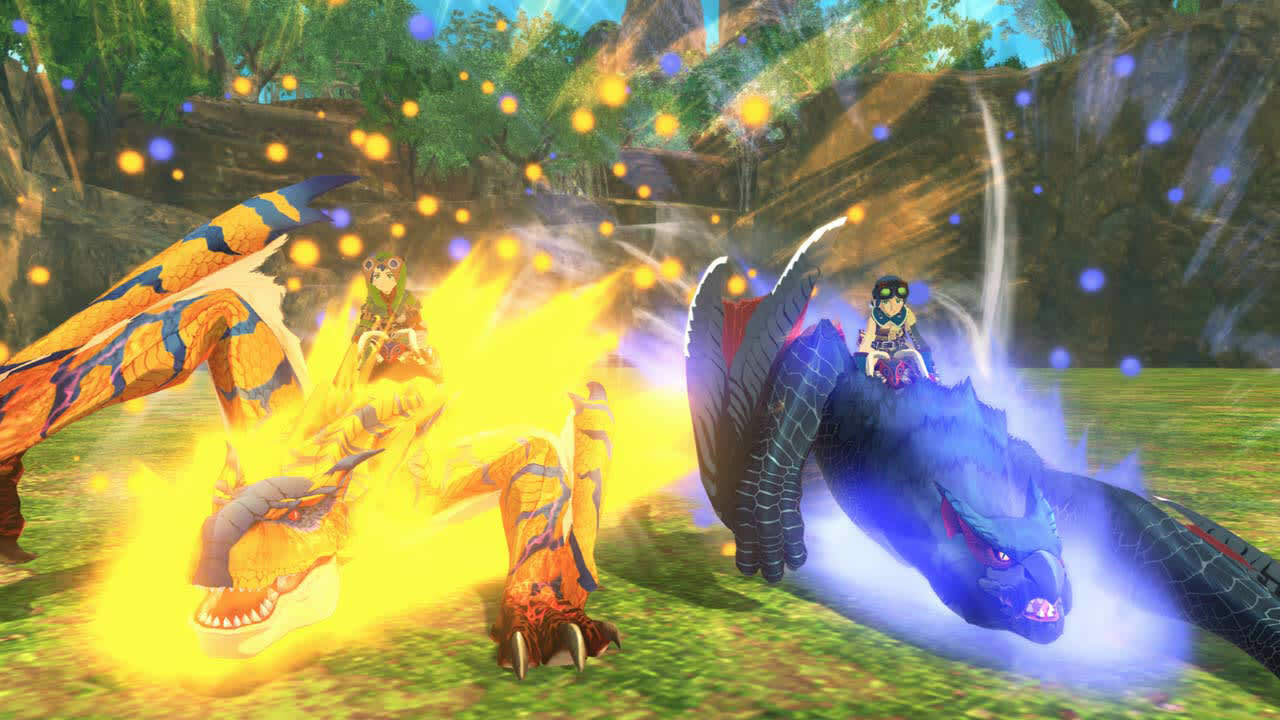
Real-time action has long been a defining element of Monster Hunter, but the series attempted to branch off into more traditional RPG territory with 2016’s Monster Hunter Stories for the 3DS. Eschewing real-time hunts for turn-based battles and colorful, more overtly anime-inspired visuals, Stories was a marked departure for the franchise both stylistically and thematically, offering a different perspective on the Monster Hunter universe.
Five years later, Capcom is following that spin-off with a sequel, Monster Hunter Stories 2: Wings of Ruin, which launches for Nintendo Switch and PC next month. Through an interpreter, we recently spoke with series producer Ryozo Tsujimoto, game director Kenji Oguro, and art director Takahiro Kawano about their goals with the sequel, the decision to age up the art style, and expanding the game’s multiplayer options. The following interview has been edited and condensed for clarity.
How long has Monster Hunter Stories 2 been in development?
Ryozo Tsujimoto: It’s been about three years.
How would you describe Monster Hunter Stories 2 to somebody who may not be familiar with the first game?
Tsujimoto: Monster Hunter is an action game where you can hunt monsters, slay them, collect materials, forge armor, and continue on your quest on this gameplay loop. However, Stories, as the name indicates, has more of an emphasis on the narrative, and so it’s an RPG, not an action game. So for players who maybe don’t like the real-time battles, they can enjoy these turn-based battles that are offered in the Stories series.
We are very proud of the quality and character of the monsters [in the Monster Hunter series], and in Stories, we wanted to express that even more. So in the Stories series, you are not a hunter, you are a rider, which is a character who lives among monsters and goes on adventures with them. There’s a breeding system, and you can gather more monsters for your party, so it’s not only a story-based game, but it also has the element of going out on adventures with monsters.
Since Monster Hunter Stories is conceptually different from the core Monster Hunter series, was it difficult to find a way to branch away from the core series and establish its own identity, while still keeping it recognizable as a Monster Hunter game?
Kenji Oguro: When the original [Monster Hunter] Stories was created, we aimed to do something with a completely different identity from a typical Monster Hunter game. So first off, we changed the perspective from a hunter to a rider. Hunters go out and slay monsters, but riders ride the monsters and go on adventures together. So from the start, our main objective was to change the perspective, and from the start we had a different identity. We wanted to focus on giving Monster Hunter fans and other players the chance to experience the worldview of Monster Hunter in a new way, in a deeper way, and focus on the narrative.
Click To Unmute
Monster Hunter Stories 2 Story Trailer | Summer Game Fest 2021
Size:
Want us to remember this setting for all your devices?
When you set out to make a sequel to the original Monster Hunter Stories, what was your main goal?
Tsujimoto: When we decided to make a sequel, we wanted to go back and look at the feedback we received from Stories 1, which came out five years ago. And so one of our goals actually was the same as when we created Stories 1, which was that we wanted to take the Monster Hunter franchise and make a game that appeals to a wide audience. And for Stories 1, with the art direction we went in, we received some feedback that the characters looked maybe younger–they looked maybe like [the game was made] for children. So when we began development on Stories 2, we wanted to course correct there and make it appeal to a wider audience.
With that in mind, we said, “Well, what can we do in order to appeal to more people?” So one of the first things we did was we built out the environments with deeper lighting and visuals, and also the characters themselves are more grown-up. We believe that we have addressed the issue of the game feeling like you can’t play it if you’re an adult. We believe that it will appeal to a lot of players, both young and old, and we hope everybody will enjoy it.
Were there any gameplay features that you wanted to incorporate in the original Monster Hunter Stories, but weren’t able to because of hardware limitations? And did you reuse those in Monster Hunter Stories 2?
Takahiro Kawano: We believe that we have made vast graphical improvements for Stories 2, from characters and their proportions, to the expressions that they’re able to make with their movements. In terms of the environments, there is the lighting, the shading, the expression of water. This is, we believe, something that the 3DS was not capable of [due to] the hardware limitations, so we wanted to implement as many graphical improvements as possible in this game. That also, we believe, helped in terms of fleshing out the world and making it appeal to more people as well.
Oguro: We also believe that these graphical improvements immerse you deeper into the world itself. As an RPG, when you are exploring, you can experience the environment more, like when you step on various items, and you can really interact with the world in a way that will deepen your experience. As an RPG, we believe that this graphical improvement will help players be transported into that world easier.
Are you able to talk a little bit more about how the Monster Hunter Stories 2’s multiplayer mode works?
Oguro: In Stories 1, we had a unique mode to Stories [called] Versus Battles, where you can take your Monsties and pit them against the Monsties of another player. In Stories 2, we wanted to implement a co-op mode, which is, in fact, not unique to Stories–it’s a Monster Hunter core element. And so we have a co-op mode and you can also do a two-on-two tag match in Versus Battles mode, which we think fans will really enjoy.
We think that only having a battling option for multiplayer was not exactly fitting for Stories, so we wanted to also include another option for co-op, which is Co-Op Expedition Quests. You can go with another player and collect eggs, because we believe that one of the biggest appeals and the most fun you can have in Stories is gathering eggs [and finding out] what’s in the egg. You go into a monster nest, you collect an egg, then you bring it back to the village, and then you hatch it and you see what’s inside. We believe this is one of the most fun aspects of the Stories series, so we wanted to incorporate that into a co-op element. And so we have quests that are multiplayer-only, so there are areas that you can only access through multiplayer. Also, there will be some updates that may include these elements as well, so please look forward to that.
Tsujimoto: We just wanted to make clear that, for multiplayer, you don’t have to play with another player. You can also play by yourself. So there are many different ways to play that we think, in any situation, that lots of players can enjoy.
We’ve seen a few returning characters from Monster Hunter Stories 1 appear in a couple of trailers for Monster Hunter Stories 2. Would you say you’d get the most enjoyment out of the game if you’ve played the previous Monster Hunter Stories, or are you able to still enjoy the story if you jump in without playing the previous game?
Oguro: When we created this game, we wanted to make sure that players could play Stories 2 without having to play Stories 1; they could jump right in and enjoy the game fully. That being said, as you noted, there are characters from the previous game in this one as well. So there will be a connection, points here and there that the players who’ve played Stories 1 will pick up on and will get an extra kick out of. So when you’re out on your adventure and you meet a character that you saw before, you can say, “Oh wow, look how much they’ve grown,” or you can get that extra thrill. But that will not impede players from playing this game without playing the previous game at all.
This is a bit of a sillier question, but what is everybody’s favorite Monstie in the game?
Kawano: I like Zinogre. From a design perspective, it’s really beautiful.
Oguro: I can’t tell you my favorite because it hasn’t been announced yet. But I will say that next up is the Velocidrome. In the beginning of the game, you are introduced to a Velocidrome, and you develop a bond with this monster. But then as you progress through the story, you veer away from this monster. And that was kind of a bittersweet, touching element that I really enjoyed.
Tsujimoto: I like Nargacuga. It has an action that you can use out in the field that can conceal your presence from other monsters, and it’s really useful.
Do you have any final message for fans?
Kawano: We received feedback from the fans that they wanted a sequel, and we know it was a long time for Stories 2 to finally come out. We put a lot of effort into the development and the graphics, and we worked really hard on this game, so we hope that players will feel the love that we put into it.
Oguro: We are hoping that players will feel the essence of Monster Hunter, the action game, in this RPG. We’re really proud and think that we captured the essence of Monster Hunter and the action in it. Also, we worked really hard to make it easy for players to play, just to jump into the world and have no experience with this sort of game and be able to pick it up and learn all the elements in the game naturally and progress through the game without any sort of issues. So we worked really hard to make it fun and easy to get into, and it’s an RPG that we think players will enjoy.
Tsujimoto: Monster Hunter Stories 1 was released five years ago, but eight years before that was when we originally had the idea for a game that would be Monster Hunter but different. And so we have spent a lot of time thinking about this game and the elements. And what we really wanted to express when we developed this game, we wanted to make sure that we captured the Monster Hunter feel in an RPG. But we also wanted to make sure that we didn’t just transmit the Monster Hunter feel, we wanted to build on that with the characters–fleshing out the characters, developing feelings with monsters, and just deepening the lore and the story of the Monster Hunter world. So we worked hard on the graphics and the visuals and really expressing the monsters, and we think that Monster Hunter fans, of course, will enjoy all those elements. But we also believe that players who aren’t necessarily into action games or [Monster Hunter’s] real-time battles, maybe they’re more interested in story, especially if they like JRPGs–we think this can appeal to lots and lots of players, and we hope that everybody enjoys it.
Monster Hunter Stories 2: Wings of Ruin releases for Nintendo Switch and PC on July 9. A free demo will be available on the Nintendo eShop beginning June 25, and any progress you make will carry over to the full game after it launches.
The SteelSeries Nimbus+ is barking up the wrong tree. SteelSeries’ latest Apple-only gamepad does a lot of things right: It has a good shape, well-made inputs, and very good battery life. But it has a critical flaw, too: It comes with a phone mount that doesn’t hold an iPhone in place very well. Increasingly, mobile-focused peripherals aren’t just buttons and analog sticks but a means of transforming your phone into a portable console. And while it works with Macs, it is no better than other, more popular gamepads. Thus, while the Nimbus+ is a pretty great controller, it is hard to recommend.
The Nimbus+ looks about as generic as they come. The design seems hellbent on splitting the difference between the PlayStation and Xbox controller styles: It has Xbox face button lettering – “A,” “B,” “X,” and “Y” – but the bumpers and triggers are labeled “L1”, “R1,” “L2,” and “R2.” Its wide body and large handles scream “Xbox,” but the symmetrical thumbsticks read as “PlayStation.” There are three buttons in the middle – “Menu,” “View,” and a “Home” button marked with a picture of a house. There’s nothing wrong with trying to blend the two styles, in theory, but Nimbus+ makes only a few logistical changes to distinguish itself from its influences, giving it a strong knock-off vibe.
That vibe is purely aesthetic, though. In fact, the Nimbus+ is a well-made controller with a comfortable shape and strong design. Measuring 5.88 by 4.63 by 2.63 inches (WDH), it’s wide with long handles that sit well in your hands. The handles feature the same matte plastic finish SteelSeries uses on many of its mice, which acts as a very effective grip. It’s also very sturdy and well balanced: Given that, you might be surprised to hear that it’s lighter than average: At 246 grams, it weighs slightly less than the Xbox Series X controller (287 grams) or the DualSense (282 grams).
That’s just the gamepad. The full controller-and-phone-mount device weighs considerably more. The controller with the mount attached weighs 282 grams, the same as the modern Xbox and PlayStation controllers. But that’s before you add your phone. The weight will vary by model, but my iPhone 12 Pro weighed in at 233 grams, so you’re almost doubling the weight. I wouldn’t describe the controller as “heavy,” per se, but it’s enough that you may start to feel the weight in your arms if you play for hours on end without supporting yourself.
Likewise, the core buttons and inputs all feel very good, especially for a mobile-only gamepad. The face buttons are snappy, and I’m a fan of the clicky, tactile response you get from the unibody D-pad. (Even though it tends to wiggle a bit). The triggers, perhaps the highlight, feature magnetic resistance that enables smooth action for the full length of their travel. Lastly, the clickable analog sticks are tall and snap back to position quickly.
There are a few extra elements on the controller, most of which are for system-level actions. There are two system buttons on the top of the controller. One triggers pairing mode, or you can hold down the Home button to pair, which is easier and makes the top button a bit superfluous. The other shows you the controller’s battery status using the four-part LED indicator light on the front of the controller, just above the home and menu buttons. The LED also shows pairing status and, by default, lets you know whether the controller is on or off.
Speaking of power, the Nimbus+ gets great battery life. According to SteelSeries, it should last up to 50 hours on a single charge. After using the controller regularly for over two weeks, I never had to charge it. On the other hand, when you do need to charge it, you’ll need to find a Lightning cable because it doesn’t come with its own charging gear.
Next to the pairing and battery buttons, there are two small holes, which allow you to connect the Nimbus+’s included phone mount. The phone mount, which clamps around your iPhone and attaches to the controller via two slim metal rods that slide into the controller, is something of an Achilles’ Heel for the Nimbus+. Even when fully inserted, the rods feel flimsy and unstable when carrying the weight of a phone, which makes sense when you note that some iPhones (like mine) weigh almost as much as the controller itself.
Under ideal conditions, with your arms resting on a table, the phone feels balanced and sits perfectly in front of your face. But if the controller shakes even slightly, the mount starts to wobble and your phone almost always winds up dropping off the controller. Sitting on my couch, I could shift my grip on the controller, but if I ever readjusted my sitting position, the phone started rocking. On the off chance it doesn’t, you’ll still need to reconnect the mount to the controller. Given that, using the Nimbus+ on a bus or train, in a car, or even standing still while holding it freeform is a nonstarter. All it takes is one involuntary tilt and the phone falls down and goes boom.
The Nimbus+’ mounting issues force us to consider a certain elephant in the room. Using a mount to let your phone hang above a traditional gamepad has been the most popular approach to creating a makeshift phone-controller combo console, but a pair of high-profile wrap-around controllers, the Razer Kishi and Backbone One, suggest that a gamepad and phone mount isn’t the best approach for dedicated mobile hardware. A phone locked in the embrace of the Kishi or Backbone never shakes loose. I prefer the buttons on the Nimbus+, but phone stability (and security) are higher priorities.
SteelSeries Nimbus+ – Gaming
Setting aside the mount stability issues, the Nimbus+ is a very solid controller. Despite connecting over Bluetooth, which tends to add a small, but noticeable amount of input lag, I had no problem playing a fairly wide range of iOS games, including Sneaky Sasquatch, World of Demons, Oceanhorn 2: Knights of the Lost Realm, and Exit The Gungeon. It likely helps that the Nimbus+ supports Apple’s IAP2 wireless protocol, which presumably syncs the controller and phone better than Bluetooth would on its own.
Across all the games I tested, the Nimbus+ felt good in hand and delivered snappy inputs. I had no trouble parrying enemy attacks in World of Demons, a character action game, or dodging through bullets in Exit the Gungeon, both of which require relatively precise timing. Even more impressive, you can perfectly keep time in rhythm games like Sayonara Wild Hearts and Taiko no Tatsujin Pop Tap Beat.
Obviously, the phone mount can create some issues for playing any game with the Nimbus+, but they’re conditional and not related to playing any specific game. When you’re set up properly, with your arms braced, you can hold the controller up and close enough to your face to make the experience of playing on a phone feel immersive. Even small text is easy to read. Outside of that scenario, any game session is subject to outside interference: I didn’t test the Nimbus+ phone mount on a bus or train but, frankly, I wouldn’t use the phone in a public place where dropping your phone could lead to it getting stepped on or stolen.
On MacOS, the Nimbus+ often works fine, but is a tad unpredictable and requires more work than pairing an Xbox or PlayStation controller. I played a little Destiny 2 via Stadia but found that Stadia didn’t recognize the controller, so the menu and home buttons didn’t work. (You can access the menus using the keyboard). I was able to play Dead Cells and Into the Breach on Steam, but only after creating my own custom controller profile. In all of these cases, the controller worked well once the issues were resolved – or the limitations were established – but it was more of a process than it had to be.
Ironically, Apple Arcade games seemed to have the most problems. In a couple of instances, I also experienced some wonky connection issues. Sneaky Sasquatch, an Apple Arcade game, frequently reverted to mouse and keyboard mode until pressed the D-pad to “resync” the controller. World of Demons simply wouldn’t detect the controller on Mac. These issues seem to be at least partially game-specific – Grindstone, another Apple Arcade game, works fine with a controller – but the increased probability of problems makes you question the merits of pairing any gamepad with your Mac, let alone buy one specifically for that purpose.
Ignore the Hot Wheels Forza Horizon 3 expansion for a moment: has there ever been a good standalone Hot Wheels game? Like, properly good – not just good enough for a six-year-old who’s never played a racing game before. I don’t know if there has. If you say ‘toy car’ and ‘video game’ to me, I’d say Micro Machines; that’s the iconic marriage of miniature racing and video games.
However, now I’ve gotten my hands on Hot Wheels Unleashed I’m not so sure about that anymore, because this tiny 1:64 scale racer has just made a fantastic first impression.
Straight away the decision to present the vehicles as 1:1 reproductions of the actual toy cars pays enormous dividends. They’re not fanciful renditions of what these cars would look like in real-life, nor are they exaggerated or cartoon-like. They’re toys, presented as toys, down to their tiniest details. Not only can you spot the mould lines and the differences in materials (from the plastic windscreens and accessories to the die cast metal bodies) some of them even carry fingerprints that can be seen under the right light, like the characters in The LEGO Movie. They’re even stamped with the Hot Wheels logo and model name underneath their chassis.
It took me a long while to even enter a race because I lost a huge amount of time looking through the car list and just inspecting them. I know my sons got particularly excited whenever they saw one they knew was in the Hot Wheels bucket tucked away in their wardrobe. There were 28 different cars available in the preview version, all of which hit pegs within the last 10 years (the menu notes when the model was released). That said, reissues like the classic Twin Mill obviously date back a lot further. At any rate, the full game will reportedly feature over 60 cars, so hopefully some older Hot Wheels cars will also be included. It would be cool to see some of the ’70s and ’80s models with the Redline and Ultra Hots wheels I remember from my own childhood, for instance.
Out on the tracks themselves, though, the cars arguably look even better – even after they’ve been scratched up and chipped during a race. They just look fantastically seated into the environments, and that seems thanks to some seriously impressive lighting that’s doing a very convincing job of really showcasing the contrasting scales on display here – the tiny cars and the mammoth, life-sized worlds.
This initial build of Hot Wheels features several of the games environments, including the garage, the skyscraper, the skate park, and the college campus. Some of the environments only had a single track available for this preview, but that was enough to experience how different the backdrops are from one another. The garage is quite a dark environment, but in a good way, because Hot Wheels Unleashed looks particularly slick in low light. The skyscraper boasts a lot more verticality, and a really impressive outdoor space that stretches out to the horizon with a fluffy layer of low cloud beneath. This is probably where the cars seemed at their absolute tiniest.
The tracks themselves are made up of big spans of plastic Hot Wheels track and sections of the world itself, so a circuit may utilise benches, vents, the floor, or indeed any other surface you could whip a die cast car across. The preview build didn’t feature the track editor planned for the game but I suspect the potential of that will be huge.
I don’t know that I’d say yet that there’s a big difference in the fundamental feel of the racing itself depending on the environment I was racing through, but I think the backdrops are very good, and notably varied.
Of course, speaking of the feeling of the racing itself, I’m impressed here, too. With classic Burnout-style brake-to-drift arcade handling mixed with a little Rocket League-inspired in-air control, Hot Wheels Unleashed is instantly playable for arcade racing veterans and seems easy to learn for newbies. Off-boost it may be a little slower than the average arcade racer but the positive side effect is that boost seems to feel a bit more meaningful as a result, because of that arguably more profound difference in speed. Boost builds nice and quickly, too, so it didn’t seem like a resource I needed to be stingy with.
IGN spoke with developer Milestone recently about Hot Wheels Unleashed, and one of the key takeaways was that the studio is really seeking to capture that spirit of playing with toy cars as a young child. I can see that. More importantly, however, after this hands-on I can feel it, too.
[poilib element=”accentDivider”]
Luke is Games Editor at IGN’s Sydney office. You can find him on Twitter every few days @MrLukeReilly.