Thor: Love and Thunder: ‘Craziest Thing I’ve Ever Done,’ Taika Waititi Says

After helming Jojo Rabbit and the upcoming soccer comedy Next Goal Wins, Taika Waititi is returning to the Marvel Cinematic Universe with Thor: Love and Thunder. The director has teased that his follow-up to 2017’s Thor: Ragnarok is “the craziest thing [he’s] ever done.” In a recent interview with Empire, Waititi expanded on what he meant by that statement.

“I’ve done some crazy shit in my life. I’ve lived, like, ten lifetimes. But it’s the craziest film I’ve ever done,” Waititi said. “If you wrote down all the elements of this film, it shouldn’t make sense… It’s almost like it shouldn’t be made. If you walked into a room and said, ‘I want this and this and this.’ Who’s in it? These people. What are you going to call it? Love And Thunder. I mean, you’d never work again. Maybe I won’t after this.”

[ignvideo url=”https://www.ign.com/videos/2017/10/21/taika-waititi-responds-to-ign-comments”]

While plot details are still under wraps about Thor: Love and Thunder, the film will mark the return of Natalie Portman’s Jane Foster, a character who has been absent from the MCU since 2013’s Thor: The Dark World. The narrative will involve Foster becoming the new goddess of thunder. The cast also includes other MCU mainstays, like Chris Pratt’s Star Lord and Tessa Thompson’s Valkyrie, as well as franchise newcomers. Russell Crowe will play Zeus, while Christian Bale will play the villainous Gorr the God Butcher.

While Waititi struck a different, more comical tone from other MCU movies with Thor: Ragnarok, the director assured that Love and Thunder would have a mood all its own.

“It’s very different from Ragnarok,” Waititi said. “It’s crazier. I’ll tell you what’s different. There’ll be far more emotion in this film. And a lot more love. And a lot more thunder. And a lot more Thor, if you’ve seen the photos.”

[widget path=”global/article/imagegallery” parameters=”slug=the-cast-of-thor-love-and-thunder&captions=true”]

Thor: Love and Thunder wrapped filming last month, with Waititi announcing the end of production through a post on Instagram. The film is set to hit theaters on May 6, 2022. For more, read our rundown of the release dates for every announced MCU project.

[poilib element=”accentDivider”]

J. Kim Murphy is a freelance entetainment writer.

FFXIV Endwalker Gameplay Benchmark Previews What’s Happening In The Expansion

If you want a bigger tease for what’s to come in Final Fantasy XIV: Endwalker, the upcoming expansion to the critically acclaimed MMORPG, you got one through the newly revealed PC benchmark sequence. During the latest Live Letter from the Producer, Square Enix showed off the benchmark which contains snippets from new zones and battles from Endwalker and have some story implications for the expansion. You can watch it in the video below.

The benchmark sequence shows battles between tempered beasts and Garlean Empire soldiers on a snowy field with the Warrior of Light intervening. It then takes you through the new major hub area of Old Sharlayan with Alphinaud wondering about before meeting with the Warrior of Light. Things kick up with a major battle in the ruins of Garlemald between many tempered beasts and an alliance of familiar faces like the main characters from Scions of the Seventh Dawn and the leaders of FFXIV’s various regions. You then get a taste of the new, colorful open zones of Thavnair as various flying mounts head towards one of those ominous towers that appeared in the patch 5.5 story quests. The benchmark concludes with a major battle against longtime villain Zenos yae Galvus with Alphinaud and Alisaie by the Warrior of Light’s side, which also shows off some skills from the new Reaper and Sage jobs.

Of course, FFXIV benchmark sequences aren’t always entirely indicative of what’s happening in the story–the Shadowbringers benchmark setup scenarios to simply test your PCs capabilities rather than showing off actual in-game events. However, these are accurate representations of the new regions and zones coming in Endwalker, and a tease of what kinds of battles we could be fighting in the expansion.

Endwalker (aka FFXIV 6.0) will conclude FFXIV’s ongoing Hydaelyn-Zodiark story arc which has been going since the game’s inception. A new story arc will pick up after the conclusion of Endwalker. For a summary of the biggest additions coming with the expansion, be sure to read up on on everything we know about FFXIV Endwalker.

FFXIV Endwalker launches on November 23 this year for PC, PlayStation 4, and PlayStation 5. Those who pre-order can get early access starting on November 19.

GameSpot may get a commission from retail offers.

Monster Hunter Stories 2: Wings Of Ruin Review – Monstie Hunter

With 2016’s Monster Hunter Stories for the 3DS, Capcom transformed its real-time monster hunting series into something dramatically different: a colorful turn-based monster-collecting RPG. Despite the stark change in tone and gameplay, Stories offered a new perspective on the Monster Hunter universe, making it an enjoyable alternative to the mainline series. Its follow-up, Monster Hunter Stories 2: Wings of Ruin, very much follows the template that the original 3DS game set, and despite some repetitive elements, it’s another solid spin-off for the franchise.

Like its predecessor, Monster Hunter Stories 2 trades monster slaying for monster collecting. Rather than casting you in the role of a hunter, the game puts you in the boots of a fledgling rider–someone who is able to form bonds with monsters and fight alongside them. While you’ll still need to hunt down plenty of monsters during your journey, you’ll spend most of your time exploring dens and collecting new “monstie” companions that you can raise and take into battle. This makes Monster Hunter Stories 2 fundamentally closer to Pokemon than to a traditional Monster Hunter title, but the game plays out much differently than Nintendo’s monster-catching series.

Now Playing: Monster Hunter Stories 2: Wings of Ruin Video Review

Foremost is the way you collect monsters. Rather than taming wild ones, you obtain new monsties by entering monster dens and gathering their eggs. These crop up randomly each time you set out into the overworld and primarily come in two varieties: standard dens, and golden “rare” dens that typically contain better eggs. Regardless of their type, the dens themselves are all fairly rudimentary in terms of their layouts; beyond some occasional branching pathways (which usually just lead to optional treasures), there are no real environmental puzzles to solve, so they’re not particularly compelling to explore on their own. Despite this, the allure of discovering new kinds of eggs never grows old and makes trekking through dens ultimately worthwhile, especially as you progress through the story and begin encountering cooler monsters.

In addition to regular monster dens, each major area in the game also features a handful of larger dungeons called Everdens. These are much more labyrinthine than standard dens and house some unique treasures such as rare eggs and Bottle Caps, which can be exchanged for special items and upgrades like increased storage space for your monsties. These upgrades make Bottle Caps among the most valuable commodities in the game, but they’re not as satisfying to find. Like regular dens, Everdens don’t offer much variety, so they end up feeling samey and aren’t particularly enjoyable to navigate. Moreover, thanks to their winding pathways, you’ll often hit multiple dead ends before you eventually locate the monster nest, which ultimately makes Everdens more of a chore to explore than regular dens.

After you’ve obtained an egg, you can take it back to the stables and hatch a new monstie. Depending on the egg’s rarity and weight, the monstie you obtain will boast different genes, which determines what skills and attacks it will be able to use during battle. These genes are crucial if you hope to get the most out of your monstie, and they become a sort of mini-game unto themselves. If you align three genes of the same color, you’ll achieve a bingo bonus, which will power up your monstie even further. You can also pass genes between monsties through a process called the Rite of Channeling. This offers a pleasing amount of flexibility in how you customize your monstie’s skills, and it feels rewarding to tinker around and devise new combinations.

 Monster Hunter Stories 2 take a more tactical approach to combat compared to other games, letting you choose your attacks and support moves in turn-based encounters.
Monster Hunter Stories 2 take a more tactical approach to combat compared to other games, letting you choose your attacks and support moves in turn-based encounters.

Your monsties primarily come in use in battle. Unlike the mainline series, encounters in Monster Hunter Stories 2 are turn-based. While there are elemental weaknesses and advantages to consider, battles primarily revolve around three different types of attacks: power, speed, and technical. Each type has an advantage over another: speed bests power, power beats technical, and technical overcomes speed. The crux of battles, then, becomes figuring out which type of attack the enemy monster will use and swapping in the right monstie to counter it. It’s a simple yet satisfying system, and the game keeps it fresh by frequently introducing new kinds of monsters with different attack patterns to battle.

The weapons you use also play a crucial role in combat. Weapons similarly fall into three varieties: slash, pierce, and blunt. This opens an additional layer of strategy. Different parts of a monster are susceptible to a particular type of weapon, so you’ll need to swap out weapons frequently during the course of the battle and target specific parts to deal the most damage. Attack a part enough times, and you will eventually break it, causing the monster to drop a material and topple over. While a monster is prone on the ground, each attack you land will deal critical damage, and you can even halt some monsters from unleashing their strongest attacks by breaking a specific part of their body. These wrinkles make battles feel consistently enjoyable, and the game boasts some nice quality-of-life features, such as the ability to fast-forward animations and even end battles against lower-level foes immediately to mitigate the grind.

Beyond their in-battle abilities, each monstie can also perform a certain action while you ride them out in the field, which will help you reach some otherwise inaccessible areas; the Yian-Kut-Ku, for instance, can smash rocks that are blocking the path, while the Tigrex can clamber up ivy-covered walls. However, these riding actions are disappointingly underutilized during the main adventure. Rather than opening up new pathways to explore, these skills are typically used to reach out-of-the-way treasure chests, whose contents are often underwhelming. As a result, the field skills feel largely unnecessary and don’t really add anything to the experience.

In between expeditions, you can explore towns to talk with allies who can offer advice and services to help you improve your chances out in the wild.

The weakest element in Monster Hunter Stories 2, however, is ironically its story. While the narrative is certainly more involved than a traditional Monster Hunter game, it largely stays within JRPG tropes and is fairly predictable as a result. The story also skews toward a younger audience, as evidenced by Navirou, your cartoonish, wise-cracking Felyne companion. Since your avatar never speaks, Navirou takes up most of the dialogue in your stead, and he frequently straddles the line between cute and annoying. That said, the story does broach some themes that the mainline series never explores, such as the seemingly incompatible worldviews of hunters and riders, and it’s filled with humorous and touching moments.

Overall, Monster Hunter Stories 2: Wings of Ruin is an enjoyable Monster Hunter spin-off and an all-around solid JRPG, particularly if you enjoy games like Pokemon. While the title retains some of the series’ hallmark elements, its emphasis on monster collecting and its fun turn-based battle system make it a decidedly different experience than Monster Hunter Rise, one that even those who’ve struggled to get into the proper Monster Hunter series can enjoy.

The Witcher Ronin Is a Full-Length Witcher Manga Based on Japanese Folklore

As part of WitcherCon, CD Projekt Red has announced a Kickstarter pre-launch campaign for The Witcher Ronin, a full-length manga from CDPR. Author Rafał Jaki is teaming up with Japanese illustrator Hataya for this gorgeous-looking new project and IGN was able to speak with Jaki about the manga ahead of the official announcement.

What Is The Witcher Ronin?

The Witcher Ronin is an upcoming, full-length Witcher manga written by Rafał Jaki, who worked as CDPR’s Comic Book editor for eight years, co-created the fictional card game Gwent, and is developing the upcoming Cyberpunk 2077 anime, Edgerunners. The illustrations for the manga are handled primarily by Hataya, a manga artist best-known for Neko no Matasaburou and Mangaka Joshi.

The manga will tell a standalone “Elseworld” story, unrelated to the video game storylines, meaning it won’t be a story where Geralt from The Witcher is magically teleported from his world to Japan by magic. Instead, Jaki took inspiration from stories like Superman Red Son and Batman Ninja to take an established character and put them in a new setting.

Jaki says putting Geralt in a fantastical Japanese setting was an interesting exercise since Japanese folklore also has a rich tradition of monsters known as yokai. And that tradition formed a bridge that connected Geralt with the new setting.

[widget path=”global/article/imagegallery” parameters=”slug=the-witcher-ronin-manga&captions=true”]

“I personally love the new monsters and folk tales we can experiment with,” Jaki says. “Both Europe and Japan have a unique tradition in this area, and bringing iconic Japanese stories and monsters and fitting them in a Witcher Context was the most exciting thing for me.”

There were some challenges to consider. For example, the term “Witcher” itself would not necessarily fit into the Japanese setting. But Jaki says he decided to lean on the precedent set by past Elseworld comics to solve this problem.

“We took cues from other Elseworld comics where, for example in Superman Red Son even though Superman lands in the CCCP instead of Kansas, [in the] U.S. he is still called Superman — it’s an artistic license that allows people to have fun with the concept and understand it easily.”

Melding together The Witcher and Japanese fantasy isn’t new. CD Projekt has a line of high-end figures that already do it. But the idea to put Geralt in a Japanese fantasy world actually pre-dates both the figure and manga.

The Origins of The Witcher Manga

The origin of The Witcher manga really began when Jaki went to the PlayStation Awards in Tokyo back in 2015 with studio head Adam Badowski.

Jaki, who also has a degree in Japanese philosophy at Warsaw University, mentioned that he always thought Geralt had a lot in common with the Japanese ronin (wandering swordsman), and before heading to Tokyo, Jaki and Badowski got studio artist Robert Adler to design a pair of custom t-shirts with an illustration of Geralt as a ronin to wear to the gala event.

Adam Badowski, Rafał Jaki, and Dark Souls creator Hidetaka Miyazaki at the PlayStation Awards 2015

While local Japanese media picked up on the t-shirt design at the time, it seemed destined to be a one-off. Fast-forward a couple of years and CDPR began working on a line of high-end statues. The design team was taking ideas and Jaki was able to bring back his idea of Geralt in a Japanese-inspired setting.

There is now a line of Japanese folklore-inspired Witcher figures including ones for Geralt, Ciri, and Yennifer. But given the storytelling potential for the series, Jaki decided to write a full treatment for an actual Geralt ronin story which he shared with Badowski, CDPR story director Marcin Blacha, and comic book writer Bartosz. With the help of CDPR Japan, Jaki was able to connect with artist Hataya and together the two created a three-page draft of the idea.

A test page created by Jaki and Hataya.

This three-page draft set the foundation for the full 100-page manga Jaki and Hataya are now making. Bartosz Szybor and CD Projekt Red’s Japan manager Satoru Homma will serve as editors and Eisner nominated artist Aditya Bidikar will serve as the letterer.

Why Kickstarter?

There have been several Witcher comics released in the past with CDPR’s publishing partner Dark Horse comics. But for the Witcher Ronin manga, CDPR chose to go to Kickstarter for two very specific reasons: to create a collector’s edition, to and launch the manga globally.

Development on the manga has already been paid for by CDPR. Instead, the Kickstarter is a way for Jaki and company to fund a “kick-ass collector’s edition” for the fans who truly want to see the best version of The Witcher manga. Jaki says this is not a project “for the broadest possible audience but for people that either love The Witcher or yokai manga — or both!”

The Kickstarter will allow CDPR to involve the community directly and get their feedback on what they want from a collector’s edition, as well as launch the book globally, to as many countries at the same time.

As a start, the Kickstarter campaign will include the 100-page, full-color main story by Jaki and Hataya, plus three, 15-page short stories, each by three guest artists. The pre-launch Kickstarter page goes live today, but the actual campaign doesn’t have a specific release date yet. CDPR says it won’t be more than 60 days after the pre-launch page goes live, however.

[widget path=”global/article/imagegallery” parameters=”slug=netflixs-the-witcher-season-2-photos&captions=true”]

For more, check out IGN’s recap of everything announced at WitcherCon, including the release date and first trailer for The Witcher season 2 on Netflix.

[poilib element=”accentDivider”]

Matt T.M. Kim is IGN’s News Editor.

Tribes of Midgard: Hands-On With the 10-Player Co-Op Action-RPG

If you’re an ARPG fan or a survival game fan who’s been jonesing for the next big thing, you might be in luck later this month. Developer Norsfell’s Tribes of Midgard is a 10-player procedurally-generated action-RPG, and it’s all about cooperation rather than competition. As an Einherjar, a powerful warrior revived by Odin to prevent Ragnarök, you won’t be fighting other players for loot, but instead you’ll go out and hunt, gather, and collect souls and materials that you can collectively pool together to purchase advanced fortifications, shops, and upgrades with. And in a full party of 10 players, it’s pretty darned fun.

The primary goal throughout Tribes of Midgard is to defend the Seed of Yggdrasil in the center of your village. This conveniently places you at the center of the world, but by no means are you safe. Helthings spawn at night and give your defenses a good workout, but there’s always a real threat that either they or the giant Jötunn will eventually overrun your village and destroy your Seed of Yggdrasil. It’s convenient then that virtually every system in Tribes of Midgard is designed specifically to maximize convenience.

[widget path=”global/article/imagegallery” parameters=”slug=tribes-of-midgard-screenshots&captions=true”]

For one, you can easily teleport back to town at any time and use waypoints to get back across the map to where you were exploring. And death is never that big of a deal, because you only lose crafting materials and you can basically just pick them out of a chest when you return to your corpse.

If you’re a competitive player, however, you’re out of luck. There’s no PVP here – at all, in fact. There’s no personal storage either – in its place is a community war chest located at the center of town – so you won’t be hoarding any resources away from your teammates or vice versa. And Norsfell CEO Julian Maroda explains that this decision goes back to the origins of the game.

[ignvideo url=”https://www.ign.com/videos/2021/06/12/tribes-of-midgard-developer-commentary-overview”]

“The goal was to create a new kind of genre, [surthrival], where the concept of survival is transferred from the individual to the community. By doing so, it becomes intrinsically cooperative. We want Tribes of Midgard to remain a game about cooperation. You can share resources, as you saw in the war chest – because at the end of the day, if the tree dies, it’s game over for everyone.”

This philosophy is carried throughout each of Tribes’ different systems. Shops, gates, and towers in your village can be upgraded collectively. Furthermore, if a guard tower or a gate in the village is destroyed, you and your teammates can chip in to repair it as a community project. And there’s also a nifty little menu for crafting ramps, fences, and other small structures that allow you and your party members to go up hillsides and get across water. But it’s possible that you may get even more intricate with it; Maroda describes a construction system that has “barely scratched the surface” of what it’s capable of becoming.

[ignvideo url=”https://www.ign.com/videos/2021/07/08/tribes-of-midgard-season-1-updates-trailer”]

As you explore, you’ll come across five different biomes with three different power levels. Each biome has totally unique resources, enemies, and encounters to find. Within that, you’ll see encounters that are more challenging (or less challenging) based on which power level they encompass. You can see your relative power in the upper left corner of the HUD, but Maroda explains that increasing power levels are also visually represented with details like vines and other environmental features. And, conveniently, the upper right corner features a neat sundial that shows weather, time, special events, and other information to help you strategize your adventures throughout the day.

Speaking of, there are special events such as a Blood Moon event (also marked on the aforementioned sundial) that makes tougher monsters and additional challenges spawn in the village during the night. Maroda tells me that the Blood Moon event is deliberately balanced so that it’s then followed by a night that’s totally free of Helthings, and then you’re able to go out and find resources that have undergone a “Night Shift”. This is where certain resource nodes that you’ll have familiarized yourself with by day will behave differently during the night.

[ignvideo url=”https://www.ign.com/videos/2021/06/10/tribes-of-midgard-summer-game-fest-overview-trailer”]

Another cool thing that the developers have created for Tribes of Midgard is their own language, custom-made for the NPCs. Maroda explains that this language, High-Midgardian, is influenced primarily by Norse mythology.

“The closest thing to all Viking language is actually Icelandic, because they were isolated on their island, they kind of kept a lot of the ways in their language about how they used to talk. So we took a lot of trips to Iceland, but also took a lot of influence from their language. We mixed that with Swedish as well.”

[poilib element=”quoteBox” parameters=”excerpt=Another%20cool%20thing%20that%20the%20developers%20have%20created%20for%20Tribes%20of%20Midgard%20is%20their%20own%20language%2C%20custom-made%20for%20the%20NPCs.”]

Tribes of Midgard splits off into two different modes that are designed for different time commitments. If you don’t have much time to play, there’s Saga mode, a shorter gametype which features short quests and dungeons but is balanced around Fimbulwinter, a permanent nightfall that arrives about two and a half hours into a match and is designed to kill you off pretty quickly. Once that happens, you’re basically locked in a battle with your and your teammates’ backs against the wall until Helthings ultimately overrun the village.

And then there’s Survival mode, which is all about stretching out your play sessions and surviving as long as you can through the seasons. In both modes, there are quests, raids, and larger events that pop up around the map – all of which douse you in treasure and souls upon completion and are necessary to progress against the roving Helthings and Jötunn.

[poilib element=”quoteBox” parameters=”excerpt=It%20really%20stoked%20that%20feeling%20of%20exploration%20that%E2%80%99s%20kind%20of%20like%20when%20you%E2%80%99re%20first%20getting%20into%20a%20game%20like%20Don%E2%80%99t%20Starve%20or%20Terraria.”]

I didn’t actually get to see Survival mode in action, but it is supposedly much more open-ended, and will offer more of a sandbox approach, where you can define your own parameters for how the map is laid out. Maroda tells me that you will also be able to define the map’s size and difficulty, and then you can play basically for as long as you want. But you’ll still have to watch out for the towering Jötunn, which become stronger and stronger over the course of each in-game year. Apparently, Norsfell had a team of beta players who survived for up to 20 hours in a single survival mode game.

So far, Tribes of Midgard sounds like it’s shaping up to have some meat on its bones once it launches on July 27. And in the time I got to experience it, it really stoked that feeling of exploration that’s kind of like when you’re first getting into a game like Don’t Starve or Terraria. But the main difference here is that I felt a consistent increase in power as I ventured into the world and leveled up my character. In short, my hopes are riding high with Tribes of Midgard, and I’m excited to check it out when it releases later this month.

The Suicide Squad: James Gunn Reveals New Poster and Why the Release Date Is Special For Him

With only four weeks to go until its release, The Suicide Squad is reaching the home stretch of its promotional run. Director James Gunn took to Twitter on Friday to share a new poster for his standalone sequel, as well as a reason why its premiere date is special for him.

The new poster features silhouettes of the movie’s immense cast of rogues, including Margot Robbie’s Harley Quinn and Idris Elba’s Bloodsport, perched atop the head of Viola Davis’ Amanda Waller, the director of the Advanced Research Group Uniting Super-Humans (A.R.G.U.S.) and the brain behind the Suicide Squad.

Take a look at the new poster below.

As is customary with many new blockbusters, Gunn affirmed that The Suicide Squad will have screenings in the United States a day before its official premiere date on Thursday, August 5. Gunn also stated that this slightly earlier release date also marks his own birthday. The director will turn 55 years old this year.

[ignvideo url=”https://www.ign.com/videos/2021/06/22/the-suicide-squad-exclusive-trailer-breakdown-with-director-james-gunn”]

After The Suicide Squad, Gunn will return to the Marvel Cinematic Universe to write and direct Guardians of the Galaxy Vol. 3. The sequel will release in theaters on May 5, 2023 and will likely be the final film featuring the series’ “current team” of superheroes.

[widget path=”global/article/imagegallery” parameters=”slug=the-suicide-squad-new-character-posters&captions=true”]

After preview screenings on August 5, The Suicide Squad will hit theaters and HBO Max (for 31 days) on August 6. For more about the upcoming blockbuster, read our who’s who on the DC film’s cast members and characters.

[poilib element=”accentDivider”]

J. Kim Murphy is a freelance entertainment writer.

The Witcher Season 2: First Look At Ciri And Lambert

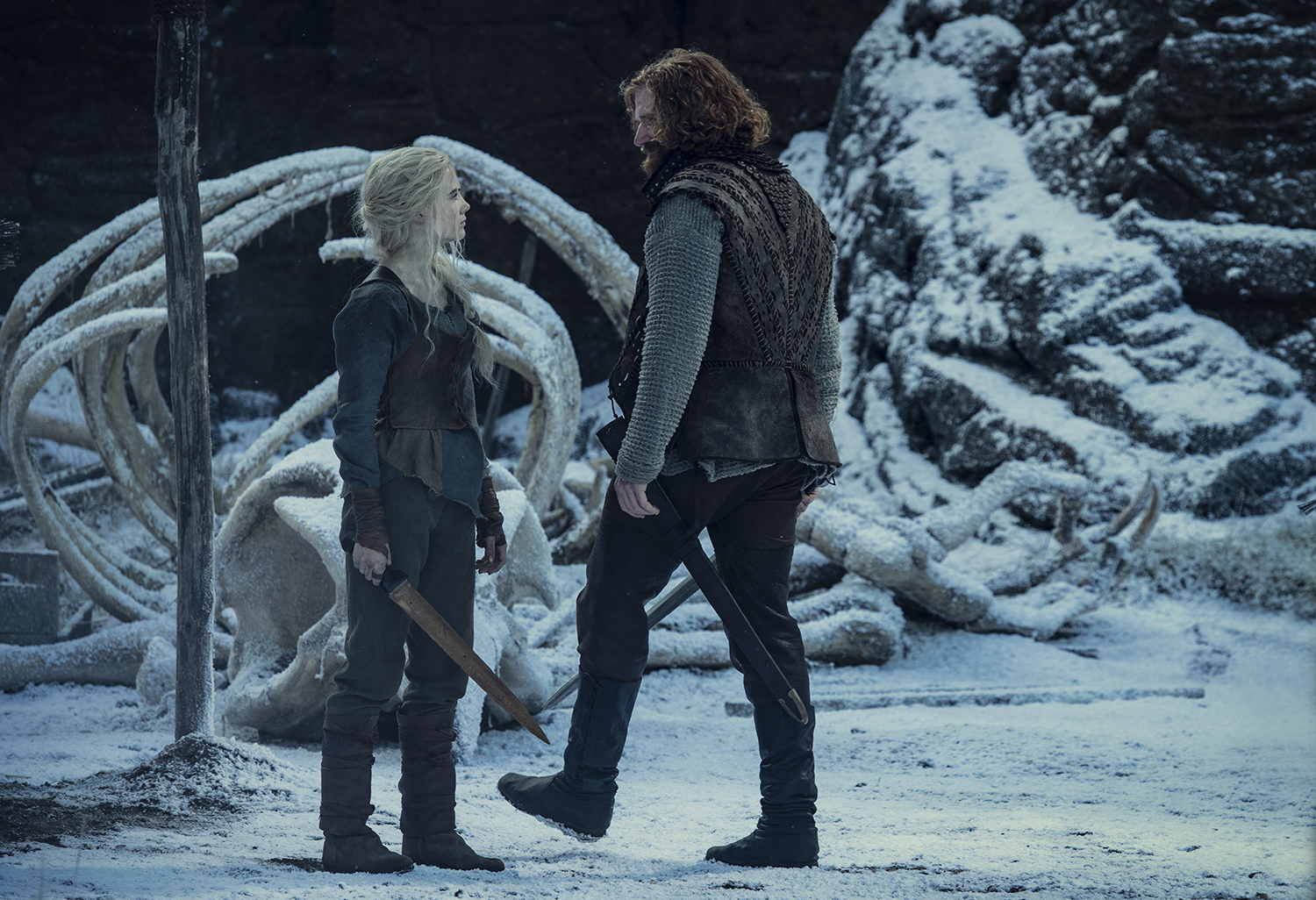
It’s the end of the week and, thankfully, WitcherCon provides! Lots of news about the second season of the Netflix series based on the popular Andrzej Sapkowski books (and which many fans know because of the popular video game franchise) is being revealed-including its December 17 premiere date. However, the virtual convention is also providing some interesting looks at what’s to come from the next set of episodes, including this photo of Ciri (Freya Allan) and Lambert (Paul Bullion) at Kaer Morhen, the Witcher training ground.

No Caption Provided

Fans will remember seeing Ciri in the first season of the series. However, this is the first appearance of Lambert, who has been added for Season 2. In the games, Lambert was, like Geralt (Henry Cavill), a Witcher.

“It was quite surreal because I watched Season 1 when it was released, knowing I was going to be joining in Season 2,” Bullion said about filming the series. “Henry brought me into the conversation about how the Witchers were like a band of Navy Seals.”

There’s still plenty more we’ll likely be learning about Season 2 of the Witcher before it premieres on December 17. If you missed WitcherCon, though, never fear. You can watch it from the beginning whenever you choose. Whatever you do, make sure to check out Jaskier’s new look in the show’s return.

GameSpot may get a commission from retail offers.

Game Scoop! 633: New Assassin’s Creed Game Confirmed

Welcome back to IGN Game Scoop!, the ONLY video game podcast! This week your Omega Cops — Daemon Hatfield, Tina Amini, Justin Davis, and Seth Macy — are discussing the next Assassin’s Creed, Nintendo Switch OLED model, Deathloop, Death Stranding, and more. And, of course, they play Video Game 20 Questions. The music in this episode is from Super Star Soldier on TurboGrafx-16.

Watch the video above or hit the link below to your favorite podcast service.

Listen on:

Apple Podcasts

YouTube

Spotify

Stitcher


Find previous episodes here!

The Witcher Season 2: Seven Episode Titles Revealed

Netflix has revealed seven titles for the eight-episode season two of The Witcher. While no plot details have been revealed, the titles could offer clues on where the next season will take us.

Each episode of The Witcher came with a title and title card, and the second season will continue that tradition. During WitcherCon, Netflix quickly showed the titles for its eight-episode second season, plus the title card logos. But only seven titles were revealed.

  • A Grain of Truth
  • Kaer Morhen
  • What Is Lost
  • Redanian Intelligence
  • Turn Your Back
  • Dear Friend
  • Voleth Meir
  • [Top Secret]

We can speculate on some of the titles given what we already know about season 2 of The Witcher. The season will follow Geralt as he learnes to become a father-figure to Ciri, who he finally meets at the end of the first season. Together they’ll go to Kaer Morhen and meet Geralt’s mentor Vesemir, and this could potentially be the plot of the second episode.

[widget path=”global/article/imagegallery” parameters=”albumSlug=netflixs-the-witcher-season-2-photos&captions=true”]
The other episodes are a little more vague, though the penultimate episode of the season does refer to a key character that’s been teased previously by The Witcher creative team. The final episode’s title is still a secret.

The second season of The Witcher is set to premiere on December 17. Check out the full WitcherCon schedule for everything happening during today’s show.

[poilib element=”accentDivider”]

Matt T.M. Kim is IGN’s News Editor.

Master Chief’s Creator Shows Off Unused Halo Guns, Including a Microwave Rifle

It’s funny how secrets about certain classic games keep turning up years after they release. Halo: Combat Evolved is one of those games, and today, veteran designer and Halo co-creator Marcus Lehto decided to share some of the unused weapon assets from the original Halo.

Sharing the assets via a video on Twitter, Lehto states that these assets were found when he was going through an old PC build of the game from 2000. The weapons are prototypes of Covenant weapons, and include a concussion gun, excavator, particle beam rifle, and a microwave gun.

As you can see in the video, the variety of guns on offer would have added even more versatility to Master Chief’s debut outing, but then Halo: Combat Evolved wasn’t exactly starved for weapon choice. Lehto clearly has his favourites here, as he shares in his tweet that he likes “the meter cooldown on the concussion gun”, whilst thinking that “the microwave gun would have been hilarious”.

It’s been a long journey for Master Chief since the release of the original Halo game 20 years ago, but we’ll finally get to see what’s next for the Chief when Halo Infinite launches later this year. To keep updated with all things Halo, stay tuned to IGN.

[poilib element=”accentDivider”]

Liam Wiseman is a Freelance News Writer for IGN. You can follow him on Twitter @liamthewiseman