We’re back with more secrets that you probably don’t know about in Breath of the Wild! This time we dive into miniaturized items, carrying snowy weather across Hyrule, Yiga Blademasters stealing the Master Sword, and much more! Rin’s Combat Glossary – https://docs.google.com/document/d/1qtYT06sxweRW3tRnovcCc-f4xIOGFNsD02pG1TzloHc/edit?usp=sharing
In the video above, we cover 29 tips and tricks that aren’t quite as well known, ranging from secrets to glitches, some that are pretty simple and others that are fairly complex. Breath of the Wild has been out for four years at this point, and players have found some amazing things, intended or not, that keep the game and its sense of discovery feeling fresh.
Lucasfilm and Disney+ unveiled the first look at the anime series Star Wars: Visions alongside revealing that all nine episodes will debut on September 22, 2021.
The news was shared during Anime Expo Lite, and it was revealed that this anthology of animated shorts celebrating Star Wars is being created by seven Japanese anime studios that will use “their signature animation and storytelling styles to realize their own visions of the galaxy far, far away.”
Lucasfilm made the decision to allow these creators to tell stories that didn’t have to fit in the official Star Wars timeline, even if they wanted to use established characters.
“We really wanted to give these creators a wide creative berth to explore all the imaginative potential of the Star Wars galaxy through the unique lens of anime,” James Waugh said. “We realized we wanted these to be as authentic as possible to the studios and creators who are making them, made through their unique process, in a medium they’re such experts at. So the idea was, this is their vision riffing off all the elements of the Star Wars galaxy that inspired them — hopefully to make a really incredible anthology series, unlike anything we’ve seen before in the Star Wars galaxy.”
The list of studios and their Star Wars: Visions shorts are as follows;
From The Duel that features Samurai-esque Jedi and Sith to Lop and Ochō which stars a “space bunny-person,” to a new tale of dark side twins and the story of master and padawan in a twist on “hallmark Star Wars motifs,” there will be a ton of variety and uniqueness in each story.
[poilib element=”accentDivider”]
Have a tip for us? Want to discuss a possible story? Please send an email to [email protected].
Adam Bankhurst is a news writer for IGN. You can follow him on Twitter @AdamBankhurst and on Twitch.
Warning: Full spoilers for The Forever Purge follow…
[poilib element=”accentDivider”]
Those who’ve already watched The Forever Purge witnessed what was originally meant to be the end of the Purge saga. That is until creator James DeMonaco had an idea a few months ago on how to continue the series. Even after the total implosion of America at the finish of the film.
Need a full Purge series catch-up? We broke down the entire saga in chronological order…
That’s right, (once again, spoilers) The Forever Purge wraps things up with all of America in flames, the entire nation having been taken over by the NFFA’s most racist and violent voting base – to the point where even the NFFA itself was battling back against these Ever After Purgers. Speaking with DeMonaco, he had this to say about the way the movie left things: “The love story was at the heart of everything. I wanted to follow this cyclical journey of these people coming from Mexico and seeking the American dream in an America that was dying. And then returning home. We flipped everything on its head and Mexico becomes the safe haven. And people are now going that way, and everything is turned upside-down. I thought that was an interesting way to take it.”
In the film, Ana de la Reguera (Army of the Dead) and Tenoch Huerta (the upcoming Black Panther: Wakanda Forever) star as the Mexican couple, Adela and Juan, who flee their country only to find that things are even worse in the United States.
“Like I’ve said, I thought it was the end [of the Purge universe],” DeMonaco explained. “I thought I was painting the end of this kind of country in a way. So how do I go forward? And then I woke up one day and was like, ‘I think I figured it out.’ I can’t give it away. I wish I could, but they’d kill me.
“I think I came up with the way that sort of changes the geographical structure of the nation, in a way that allows us to proceed and really, hopefully, expand the franchise into something bigger. I hope we can go and take things a little bigger now. But at first I thought it was definitively an ending. But even with that ending, I think some of the current politics fed into something new that I think I can create.”
Shooting That One-Shot Action Scene
The Forever Purge not only extends the Purge Night carnage out into the day as the Ever After Purge consumes everything in its path, but the franchise, for the first time, uses a one-shot — a “oner” — to follow our heroes through the chaos.
“As soon as I wrote the El Paso sequence in the script, Everardo [Gout], our director, said, ‘I want to do it as a oner,'” DeMonaco laughed. “I remember his original thought was, ‘I want to do the whole thing in a oner,’ and I was like, ‘That’s going to be a 15-minute oner, man.’ I’m like, ‘You’re insane.’ And he kept pushing, and I think it ended up being about two minutes. At some point I think it was actually longer. We may have cut a little bit of it. But he pulled it off. We shot it on the Universal lot and it was a crazy night. He pulled it off. He had it in his head the whole time. We had a tank and a helicopter. It was crazy to do. The actors had to hit their marks.
“It’s not that I’m not a fan of oners, but I think they’re just a gimmick sometimes, to be honest,” he said. “Sometimes it feels like the filmmaker is just playing a game. But there’s something that Everardo did that just makes it into such a visceral experience. He captured something. It’s beautifully done.”
Star Ana de la Reguera also spoke to us about that big tracking shot. “That was very exciting, but also very scary,” she said. But also we worked all night. We had to rehearse the whole thing with choreography because it’s all one shot with no cuts. We were at Universal Studios and we were inside of a truck and then as the truck went along you could see what we were looking out from inside the truck. And then the camera comes out of the truck and follows us through the whole town. And it’s a cool moment in the movie because there are these bombs and these fire shots and special effects and water and gas.”
It might’ve been a cool moment, but the actress also says it was pretty scary.
“And I was terrified because if anything goes wrong — like you could slip, you could get hit, there’s real fire… so we had to go through that,” she said. “So I was screaming outside of the frame, when I wasn’t in the shot for real. In the shot I was acting like I was tough and when I wasn’t in it I was like, ‘Ahhhhh!’ I was so afraid. And then when the camera would go back on me I would change my expression into something back in the moment. But it was a lot of fun too. It was a team effort.”
This Saturday has brought with it a bunch of PC related sales that are just too good to not talk about. MacBooks are on sale still at Amazon, while gaming and productivity laptops and desktops are available over at Dell. Want to build your own? Newegg has the latest Intel CPU on sale, as well as an awesome CPU cooler, and a nice mix of other deals rounds out our list.
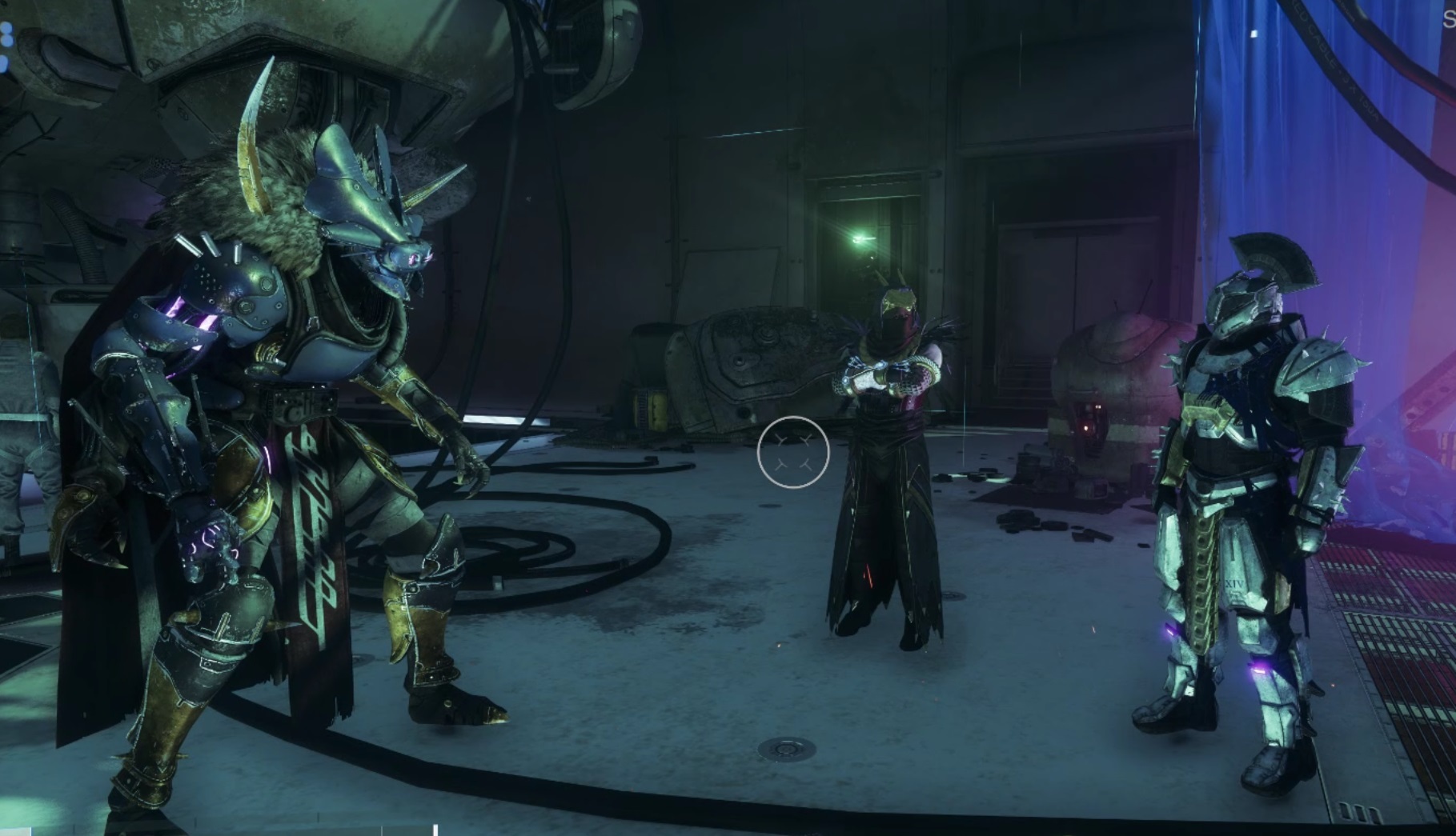
Destiny 2‘s weekly story in the Season of the Splicer has been some of its best ever. A big part of that is the ongoing, unfolding mystery of the actions undertaken by Savathun, the looming Hive god enemy Bungie has been slowly developing since the release of vanilla Destiny 2. Savathun’s whole deal is executing elaborate, spooky plans that are all about deception and obfuscation–tricking you literally makes her stronger. And that makes this week’s new events in Destiny 2 extremely suspect. Warning: We’re about to get into story spoilers for this season.
If you’re not fully caught up, the Season of the Splicer has been marked by the Endless Night, a weird Vex simulation that’s somehow blocked out the sun in the Last City, where all the humans and Guardians live. It might be the slow-burningest threat ever in Destiny; the Endless Night isn’t a bomb or a ship that’s going to crash into the Tower, but instead a miasma that is slowly draining electrical power, encouraging sickness, burdening resources, and damaging morale. The Endless Night has been making people edgy as food becomes increasingly scarce and infrastructure fails. It’s like the City is under siege but without a clear enemy, and that has caused a number of people to turn inward to find someone to blame. There’s distrust in the City’s military leadership, the Vanguard, and there have been attacks against alien refugees, the Eliskni, who have been given shelter within its walls.
Meanwhile, we’ve been attacking the Vex networks out in the solar system to try to disrupt the Endless Night and figure out what its whole deal is. Last week, we discovered the truth that had been suspected since the beginning: the Vex are actually under the control of Quria, a Vex machine that numbers among the Taken. The Taken are enemies that were magically manipulated by Oryx, the Hive god from Destiny 1’s Taken King expansion–Oryx could use his special powers to rob them of their free will and turn them into weird spectral monster things.
Quria is a special Taken. In Destiny 2’s lore, the Vex created Quria way back to study Oryx and figure out his weird “taking” power, since it’s one of those interesting Destiny things that defies the laws of reality (see also: all the players’ Guardian powers that are also known as the Light, and all the Darkness powers–this all falls under the category heading of things that are “Paracausal,” and it’s how Destiny gets away with space magic). Apparently, Quria did figure out how to “take,” despite then being enthralled by Oryx.
This is an ongoing thing in Destiny 2. See, we killed Oryx in The Taken King, so there shouldn’t be any new Taken, since the guy who can do the taking is dead. But new Taken have been popping up all over the place since vanilla Destiny 2. The story and lore has built over time to make it clear that Quria is the new thing doing the taking, using what it learned about Oryx. And we know from the lore that, way back in the past, at some point, Oryx “gifted” Quria to Savathun.
Being Vex but also Taken, Quria has been extremely useful to Savathun. Quria is how Savathun managed to grow the ranks of the Taken and do a whole bunch of things over the course of the last few years, including attacking key locations on Earth and creating the “curse” in the Dreaming City that traps it in a three-week time loop. With the Endless Night, Quria has been doing something similar to the Last City, creating a Vex simulation that mixes with Taken power to wreck everything and sow dissent and distrust–Savathun’s favorite things.
So that brings us up to now. Once we discovered Quria was controlling the Vex and running the Endless Night simulation, we were able to track it down and destroy it this week in a big, intense showdown battle. According to characters in the game and lore entries, the Endless Night is slowly starting to abate. It was tough, but we won, as usual.
Except there’s no way that’s all there is to it. In fact, I’m not convinced what we killed was even Quria.
As mentioned, Savathun’s whole deal is misdirection. Through their weirdo darkness magic, the Hive gain their immense power and even their immortality through a symbiotic relationship with evil worms they keep inside them. They constantly have to feed the worms, or the worms will consume them, so the Hive feeds them with violence (it’s a magic thing, don’t worry about it), and that’s why they’re always conquering. Except Savathun feeds her worm with other people’s “failure to understand me.” She literally needs to deceive people to stay alive and grow more powerful.
So that means we need to think about what Savathun gained from deploying Quria to create the Endless Night and what other angles she might be playing. First, getting Quria killed seems like a major loss. After all, if Quria is the weapon Savathun can use to create new Taken and has power to subvert the Vex’s will to do things like create the Endless Night in the first place, that seems like a helluva useful piece to lose on the game board. Meanwhile, what did Savathun actually get out of this attack? The Endless Night created some cracks in the unified front of humanity, and those cracks might broaden over time–but even if that long-term gain proves useful to Savathun, she still sacrificed a lot for it.
If we accept that Savathun’s plans aren’t what they appear to be, then we have to accept that there’s more going on with the Quria situation. Why would Savathun sacrifice what has to be her most powerful asset, essentially just to mess with us? Even if we assume Savathun was operating on the idea that the Endless Night would somehow be more successful and that we threw a wrench into her plans by allying with Mithrax and the Eliksni to defeat her, it was still an enormous risk to throw Quria out there where we could kill it. So what else is going on?
There are a couple of distinct possibilities, and more if we consider that there are a lot of things we probably don’t know.
First, there’s the ongoing assumption that Savathun has a spy within the City, likely in the leadership, that looks like a human but is actually Savathun herself in some kind of shape-shifted form. The smart money all season has been on this person being Osiris, who has been acting exceedingly weirdly for a long time now. Assume Osiris is really Savathun and most of his dialogue this season has sounded like the real purpose of all these Endless Night shenanigans has been to gain intel on Guardians. If we also buy the premise that Savathun is hoping to somehow trick or employ Guardians to kill her worm and free her from being forced to endlessly feed it–that’s my personal theory, as I laid out a couple weeks ago–then the Endless Night as an experiment to study us and our capabilities makes a lot more sense. But it still doesn’t seem like a win that’s worth sacrificing Quria.
Pointedly, though, unlike most Vex Hydras that we kill in Destiny 2, a big chunk of Quria was left behind at the end of the fight during this week’s new mission, Expunge: Delphi. Another fishy thing Osiris previously suggested was the idea of capturing Quria instead of killing it–but after floating that idea a while ago, he never brought it up again, even when we were actively shooting the damn thing. If Osiris is Savathun and Savathun suggested capturing Quria as part of her master plan (or even if Osiris is just Osiris and actually believed in that idea), why not bring it up again and try to stop us from wrecking the valuable Taken Vex? The answers are either that Savathun abandoned that plan because it was too suspicious, or that Savathun was just making that suggestion to sow doubt (which worked)–or, finally, that a surviving chunk of Quria might be enough for Savathun to enact that plan. If the Vanguard nabs that hunk of Quria and drags it back to the City, we could be in very big trouble.
Another possibility is that Quria wasn’t just some tool for Savathun to use but was more like an ally with, potentially, its own agenda. Consider last week’s Expunge mission, when we discovered that Quria was talking with us by leaving messages on our heads-up displays. It was a creepy moment that suggested Quria had more power than we knew, but it also established a Vex machine as being a lot more human than they ever have been before. The alien computer was taunting us. It seemed simultaneously arrogant and angry. These machines aren’t really known for their emotional output, so clearly there was more to Quria than we know.
Add to that the fact that Quria was originally a gift from Oryx. The thing about the Hive is, as much as they work together, they also are constantly fighting one another, and that’s most true of the Hive gods. Oryx, Savathun, and the third Hive god, Xivu Arath, spent eons killing each other whenever they could to increase their own strength. That’s their whole deal–anything that can be killed must be killed, because the Hive’s ethos is to destroy all weakness until only the strongest possible life remains. That’s the Sword Logic, and in the lore, we’ve seen numerous moments where the gods betrayed each other simply as a matter of course. Hell, that’s how Oryx wound up taking Quria to begin with, because Savathun executed a plan to get Oryx’s son, Crota, attacked by the Vex just to screw with him.
So it seems really, really dubious that Oryx gave Quria to Savathun just to be a nice guy. Being nice is against everything the Hive believe. If we assume an ulterior motive with that gift, then it stands to reason that Savathun and Quria might not have been allies at all, or that Quria might not have been fully under Savathun’s control. After all, the Taken King was Oryx.
Maybe assuming Quria was Savathun’s greatest asset is wrongheaded. Maybe Quria had plans of its own, or was as much an enemy to Savathun as an ally. Maybe part of Savathun’s machinations with the Endless Night was to hang Quria out to dry, in hopes that it would get rolled by some Guardians, since that’s exactly what happened.
And finally, there’s that possibility I floated up above, that what we just killed wasn’t Quria at all. We’re dealing with the queen of misdirection here. Quria is an enemy we’ve been hearing rumblings about for years. It would probably be very beneficial for Savathun to make us think we’d destroyed Quria, which might provide some leeway for her to continue with additional Taken plans without us realizing what’s going on. The Dreaming City, after all, remains caught in its Quria-created time loop.
Not long ago, Osiris speculated that the Vex network, the strange computer world we’ve been diving into in order to disrupt the Endless Night, is a lot like the Hive’s Ascendant Realm. That’s another weird lore thing, but essentially, the Ascendant Realm is another dimension where powerful Hive’s souls go when they’re killed in the material world. Since you only killed their material body, the Ascendant Realm makes these Hive effectively immortal. That’s why we’ve been forced to go into the Ascendant Realm to kill major Hive bosses so many times; if you don’t kill them in the Ascendant Realm, they aren’t really dead.
We don’t know how the Vex network actually works, but Osiris’s comment about it being similar to the Hive’s alternate dimension brings up the possibility that maybe killing Quria in that place didn’t fully destroy it–just like killing a Hive in the “real” world doesn’t fully destroy it. After all, you can copy files in a computer, and delete those copies, without harming the originals. That analogy might not be exactly what’s going on here, but the idea of a Vex equivalent of the Ascendant Realm adds some possible complications.
All that to say, of course, that it’s tough to put a finger on what exactly is going on. But if we know anything about Savathun, it’s that the easiest and clearest explanation of events is never the truth. Maybe we did wipe out Quria this week, but it’s probably a mistake to believe we just made Destiny’s biggest threat any weaker. That’s just what Savathun wants us to think.
Jonathan Ferguson, a weapons expert and Keeper of Firearms & Artillery at the Royal Armouries, breaks down the weaponry of Squad, including the PKP Pecheneg, the C14 Timberwolf rifle, and the SA80 assault rifle.
A little less than a month ago, Square Enix released Final Fantasy 7 Intergrade for the PlayStation 5. It proved to be a fine next-gen upgrade, not the least because it finally upgraded all those pesky doors, but it’s biggest selling point was definitely the DLC episode starring Yuffie — Final Fantasy 7’s high-energy ninja from Wutai.
Yuffie’s episode received strong reviews from multiple publications, which lauded its fresh take on the established combat system, its worldbuilding, and of course, Yuffie herself. It proved to be a microcosm for both the strengths and weaknesses of Final Fantasy 7 Remake, its sparkling worldbuilding occasionally undercut by sequences that could be slow and repetitive. Happily, Yuffie’s story generally moved briskly, never quite outstaying its welcome while also offering a tantalizing taste of what’s to come in Final Fantasy 7 Remake Part 2, which is now in full production.
Speaking with IGN over email, co-director Motomu Toriyama talked about the role the intermission plays in the larger story, and how it sets the stage for Cloud and company to meet Yuffie in a later installment. “As Cloud and company prepare to leave Midgar in the base game, so does Yuffie. Later, Cloud and his allies will end up encountering Yuffie in the expansive world outside of Midgar. By playing both the base game and [Episode Intermission], I think you’ll be able to understand where they are coming from, from an emotional perspective, and so I recommend playing through both.”
In the DLC, Yuffie is an agent dispatched to steal a massive piece of materia rumored to be in development at Shinra Headquarters. She teams up with Sonon, a staff-wielding series newcomer who mostly reacts to Yuffie’s rapid patter of quips with dry asides. Their fast friendship serves as the emotional core of the DLC, an element that extends even to the gameplay, which is based on the pair sycing up their attacks for large amounts of damage.
Like the base remake, Yuffie’s story is grounded at least in part in nostalgia. Much of it is set in established areas in and around Midgar, with a variety of familiar faces making appearances throughout. Scarlet, a diabolical Shinra executive who gets comparatively little screentime in the original game, is one of the main villains — another example of Final Fantasy 7 Remake’s expert melding of the familiar with the new.
“There were many things we learned from the reception of [Final Fantasy 7 Remake] since its release, but I feel that the response was especially great for the elements we remade while being cognizant to pay homage to the source material, and I recall players’ reactions were very positive,” says co-director Naoki Hamaguchi. “I don’t want to limit it to just this title; I am reminded that for the next installment, it’s of utmost importance not to damage the memories from the source material while reimagining it so it surpasses people’s expectations.”
In that light, Square Enix’s decision to have Episode Intermission run concurrently with Cloud’s adventure makes sense. It allows the development team to reuse some already established environments while providing a different perspective on familiar events. But it wasn’t always that way.
In an interesting twist, Hamaguchi says that writer Kazushige Nojima originally had a very different vision for Episode Intermission. “To be honest, when Mr. Kazushige Nojima turned in the initial draft of the [Episode Intermission] scenario, the story was going to take place at a different time from the events of [Final Fantasy 7 Remake], but we had him adjust it so that it happens simultaneously — while Cloud and his allies were on their adventure in Midgar,” he says. “I had a strong desire for the story of [Episode Intermission] to allow those who played [Final Fantasy 7 Remake] to experience the lore more deeply. As a result, we were able to dive deeper into Avalanche HQ, Wutai, the Shinra Building basement, etc. which were only touched upon in the base game of the remake — and this time from Yuffie’s perspective. As such, I’m hoping it turned out to be something our fans were able to enjoy.”
Another element that the team reimagined for the Yuffie DLC was the Fort Condor minigame. Named for a sidequest in the original game where you defended a giant condor from encroaching Shinra forces, it was reimagined for the DLC as more of a small-scale board game. The minigame has been lauded by many fans as addictive, putting it in the grand tradition of such classics as Triple Triad and Blitzball.
Hamaguchi says Fort Condor was an element he struggled the most with, as he knew it couldn’t just be a “half-baked” homage to the original. “At the start of development, I worked one-on-one with the game designer until we solidified the gameplay; even after the gameplay was solidified, I played it every day and pointed out areas that needed adjustments,” Hamaguchi says. “The person handling the adjustments for the difficulty level is really good with numbers, so there were times when the difficulty was raised without advanced notice… I remember still messing with it right up to finalizing the master build (laughs).”
The development team can only offer hints about what’s to come in Final Fantasy 7 Remake Part 2, but they do make for some tantalizing tidbits. Among other things, Toriyama says that it will “probably be a while until Wutai is showcased in earnest” owing to its distance from Midgar, but that “perhaps there may be a new aspect to things depicted along the way.”
Hamaguchi, meanwhile, says that he’s happy with how the first part made players feel like they’re “experiencing a movie through the gameplay,” but that the second part will have unique challenges. “As for improvement, or should I say “change,” moving forward — because the next installment will involve Cloud and company to leave Midgar and explore the world map, our next challenge will be to create gameplay that leverages the vastness of the world, unlike what we did in this current title.”
Director Tetsuya Nomura has previously said via an interview translated by a fan that Final Fantasy 7 Remake Part 2 will pick up directly after the events of Intergrade, and that the atmosphere will be “quite different from Part 1.” In particular, Cloud will be “running around a lot of nature.” Could this mean that Final Fantasy 7 Remake Part 2 has an overworld? We’ll just have to see.
In any case, Final Fantasy 7 Remake continues to be a roaring success, with Yuffie’s story once again demonstrating the love and care Square Enix has taken in translating its most popular game for the modern era. You can read our review of the original release here, as well as insights into its famous pole dancing scene and more. Final Fantasy 7 Remake Part 2 does not yet have a release date.
[poilib element=”accentDivider”]
Kat Bailey is a Senior News Editor at IGN. Yes, Yuffie is her favorite character.
This year’s E3 was strange, for a lot of reasons. Outside of Microsoft and Nintendo presence and a handful of show-stoppers from third-parties, big AAA games took a backseat to games outside of that high price bracket. As a developer who operates in a team of 3 with the occasional part-time contractor or two, this was quite exciting at first; E3 isn’t usually a place where smaller-scale games get too much of the spotlight.
However, the way these games were packaged made me feel uneasy. This year’s E3 made me feel like the definition of both AAA games and indie games are becoming more and more opaque. AAA is being compressed into a fewer number of mega-budget titles, and the term ‘indie’ feels more and more like it’s being stretched to encompass… everything else.
I don’t want to define “indie” in explicit terms. What I do want to posit is that we may be approaching the point where “indie” is no longer a practical term on its own and it might be time to reassess how we talk about these games.
Up front, there’s an elephant in the room here. “Indie” has always been a nebulous term in the games industry. In the decade or so that I’ve been working in games I can’t think of a time when the definition of the label wasn’t being actively discussed.
It’s a debate that has always trailed off sooner or later. Does it refer to production scope? Artistic priorities? Self-publishing? There is no satisfying answer because it’s difficult to define “indie” without boxing out at least some developers who rely on it.
The closest thing to a universal consensus is “you know indie when you see it.” This means that even though the definition is loose, it is a label that can still be practical when used in context. “Indie” doesn’t need greater clarity than that, because the game that you are talking about is what defines the label when it’s used.
So, how did we get here? Much of this current language around indie games is informed by the early 2010s indie boom. During the start of the decade there was an influx of commercial games by teams of 1-5 people; Super Meat Boy, Fez and Thomas Was Alone to name a few. This movement only grew as Steam opened its doors to more developers. Shortly after Sony and Microsoft began to actively encourage small studios to open dialogues with them in the interests of bringing games to their platforms (the Vita in particular began to be touted as a portable Steam machine).
This was all happening on the back of what many seemed to regard as something of a cultural lowpoint in mainstream video games, where “grey brown shooters” had saturated the AAA space. I’m not sure how fair that was, especially considering some of the fantastic games to come out between 2008-2010, but the sentiment that games were becoming homogenized was there nonetheless.
It was an environment that allowed a vibrant array of small games by hobbyists to rise to the surface, and small studios and alternative artists thrived more than ever in the marketplace. “Mid-tier” or “AA” games of course existed; Telltale’s Walking Dead, Tokyo Jungle and Spec Ops: the Line all arguably fall into this category (the definition of “AA” is just as ambiguous as “indie” is). However the dividing line between what was regarded as mainstream and what was indie was stark, normalized by the rise of let’s players and game streamers around the same time. What does “indie” mean if you’re in the mid-2010s? Point to one of the many cover shooters from the generation just gone and say “not that.”
The Many Different Types of ‘Indie’ Games
So what does “indie” mean in 2021? Depending on who you ask, an indie game could be made for itch.io by a scrappy team of 1-2 newbies, or it could also be a game with a $5,000,000+ budget, a team of 15-20 industry veterans and major platform support.
And you know what? That might be fine, or at the very least there might not be any value in trying to fight against it. The label is going to continue to encompass more and more games so long as that remains a valuable marketing tool, in that a promising project does become more notable when the narrative around it is that it’s made by a small group of developers working outside the mainstream.
Though this isn’t strictly true in the case of many games slapped with the “indie” label, it’s certainly not my place to tell any studio how they should identify themselves. I don’t believe better-financed developers accept the label in bad faith, or that anyone’s coasting on it. Every developer I’ve met works hard, and with “indie” meaning so many things to different people, I can understand why someone on a team of 15-30 developers could reasonably feel that they are.
But I believe the label has been oversaturated, and there are also developers who would prefer to market their games outside of it, due to the scope, or tone, of their projects. “We call Silent Games a ‘AA’ or ‘Double A’ studio for a few reasons, mainly that our studio size is probably larger than what I’d consider ‘Indie’ and we have intentions to grow larger in the future,” said Silent Games CEO Sally Blake (formally of Ubisoft) on the topic. “There are currently 15 of us and we will continue to expand over the coming years.”
Tonally, Silent Games’ projects sit outside of both the indie space and the AAA space, Blake continued. “I feel like ‘indie’ has been associated with a certain vibe or aesthetic…” she said. “We also thought carefully about giving the right impression to players about the scope of the game as we don’t want to be accidentally mistaken for a AAA studio, even though we are aiming to create a high-quality game.”
As a co-founder of a smaller studio myself, this kind of clarity is appreciated. It’s difficult to be on a 1-5 person team when looking at Hades’ almost 20 person team, or Hellblade’s AAA-plus motion capture experienced team, or 12 Minutes’ star-studded cast, and seeing “Indie” in their most popular Steam tags. In an industry where overwork and unfeasible production pressures are already rampant, the concern that those games might be setting the standards that your game is going to be held to is a sympathetic one.
It certainly means now more than ever it’s important for smaller developers to set expectations through whatever channels they have available, to clue audiences into what their game is once people find it.
But what if no one ever finds it?
‘Indie’ Is Too Broad a Brush
Whether you’re an outlet looking to highlight games by small teams, a streamer looking for indie games with alternative mechanics, or even just a lover of games who wants to support interesting new talent – searching for these games can be really difficult. Indie labels on most storefronts contain any game smaller than Control. Finding press about indie games is also difficult, as articles that make an earnest attempt to spotlight indie games are also broad in scope. I’m sympathetic to the games press in this situation, too. I have no idea how I’d begin to sift through the dozens of interesting small games that come out every week without developers using better language to delineate them with.
“Indie” appears to no longer serve the function it once did, but newer, more appropriate language hasn’t emerged to replace it. We are at a point in time when more games are being released than ever before, yet we lack the vocabulary to easily differentiate, and by extension, spotlight, some of the most interesting or ambitious ones.
I do want to stress that this is only an issue because games are more diverse, creative and ambitious than they ever have been. More developers are making games of varying scopes, styles and perspectives than ever before, something I believe Microsoft’s Xbox showcase at E3 2021 did a decent job of reflecting. In that showcase, games were treated as games rather than segregated into ‘AAA’ and ‘indie’ blocks, and sat next to one another without regard for their scope or budget. That is how far past the binary we are now, and that’s an incredible thing.
I do think, however, that if we don’t change the language we’re using when talking about anything less than the splashiest, most expensive games, a lot stands to slip through the cracks. Does that concern me as a developer? Sure, of course it would. But it’s the player in me, the fan of the offbeat and quirky, who feels that loss the most, and I’m sure I’m not alone in that.
[poilib element=”accentDivider”]
Dan Pearce is a Game Director and co-founder at Four Circle Interactive, developer of 10 Second Ninja X and an upcoming unannounced project. He has worked in the games industry at a small scale for over a decade and formerly developed the BAFTA nominated Castles in the Sky at The Tall Trees.
While Chris Pratt has faced off against plenty of foes on-screen, there is someone in Hollywood that he knows he can’t take in a fight. In an appearance on The Late Show with James Corden promoting his new science-fiction movie The Tomorrow War, Pratt told an anecdote about how he challenged his Guardians of the Galaxy co-star Dave Bautista to a wrestling match.
Pratt began his story by saying that he used to have a habit of taking sleeping aids like Ambien to help him get rest, which led to him occasionally blacking out and sending texts that he would forget about the next day.
“[Bautista] comes and says ‘Hey man, that text you sent last night.’ And I go, ‘What text?’ And [Dave] goes ‘You don’t remember?'” Pratt says, before launching into an imitation of Bautista’s belly laugh.
“[The text] was like, ‘Dave, I wanna wrestle you,'” Pratt recounted. “‘I want to wrestle you. Nobody needs to know, but I just want to know. I think I can take you. I think I can wrestle you, bro. Like collegiate rules, no elbows, no knees. I just wanna feel the power…’ I was mortified. Dave would kill me so fast.”
Pratt and Bautista are set to co-star in Guardians of the Galaxy Vol. 3. The Marvel sequel will release on May 5, 2023. Although MCU characters frequently make reappearances in later films, Bautista has stated that the film will “probably be the end of Drax.”
In our review of The Tomorrow War, IGN gave the film a 3, calling it “astonishingly bad” and saying it has “big and loud action, but nothing to rattle you to your core.”
[poilib element=”accentDivider”]
J. Kim Murphy is a freelance entertainment writer.
There was a time before Marvel Studios began producing its own TV shows for Disney Plus, that there were a bunch of different Marvel shows already on TV with dubious connections to the Marvel Cinematic Universe. And director James Gunn says that even shows like Agents of SHIELD don’t really count.
In the pre-Disney Plus era, there were quite a number of different Marvel TV shows. Netflix had its own inter-connected Defenders universe featuring Daredevil, Jessica Jones, Luke Cage, and Iron Fist, which had only the loosest connection to the MCU.
There was also ABC Disney-produced shows like Agents of SHIELD and Agent Carter which directly referenced the MCU, and both Agent Coulson and Agent Carter were in MCU films themselves.
But in a Twitter thread Gunn started about actors who are in both the MCU and the DC Universe, the director says he doesn’t include pre-WandaVision shows in the MCU.
That’s incorrect. There was never any coordination between the earlier TV stuff & the cinematic side of Marvel like there is now that they’re all under the purview of Marvel Studios.
The director justifies this by saying there was “never any coordination between the earlier TV stuff & the cinematic side of Marvel like there is now.”
The history between Marvel Television and Marvel Studios is tricky for sure. After the success of Phase 1 and The Avengers, Marvel Television spun up Agents of SHIELD at Disney-owned ABC Studios.
And while there were entire seasons dedicated to the events that happen in the movies — season 2’s storyline about SHIELD after the events of Captain America and the Winter Soldier, for example — the show and films never crossed over. Other shows produced by Marvel Television like Hulu’s Legion and Runaways, or the Netflix Marvel shows, were even further distanced from the MCU.
This has put Marvel’s pre-Disney Plus TV history into a bit of limbo. Marvel Studios technically inherited all of the shows produced by Marvel Television, but so far none of the movies or Disney Plus shows acknowledge their existence.
Even when Agents of SHIELD was on the air, the references were always a one-way street with the show acknowledging the movies, but not vice versa.
That hasn’t stopped fans from speculating over potential crossovers, though. Charlie Cox, who played Daredevil for Netflix, remains a popular figure among fans who hope to see the actor again as Daredevil in a proper MCU movie. But that’s just a wish for now.