Lost Judgment Review — Back To School

Like most good detective stories, Lost Judgment begins with the ghastly discovery of a maggot-infested corpse. A single homicide is merely the tip of the iceberg, of course, but the unusual circumstances surrounding the dead body’s discovery set the stage for another compelling mystery for private investigator Takayuki Yagami to solve. The first Judgment began in a similar fashion, presenting itself as a Yakuza spin-off that was nevertheless overly familiar due to its penchant for delving into the criminal theatrics Rya ga Gotoku Studio is known for. Yagami’s latest adventure still dips its feet into the deep end of the criminal underworld, but Lost Judgment distances itself from its Yakuza-flavored origins with much more regularity than its predecessor, resulting in a better and more distinct game that’s still tinged with an overt sense of deja vu.

This begins right from the off, as the first hour or so is spent traversing the well-worn streets of Kamurocho. Revisiting the bustling red-light district for the umpteenth time still doesn’t grow stale thanks to its lively atmosphere and intricate visual design. It’s a place full of fond memories and there’s a pleasant sense of comfort in its familiarity, yet it’s hard not to feel relieved when Yagami’s latest case takes you south of Tokyo and into the port city of Yokohama. The fictional district of Isezaki Ijincho was first introduced in last year’s Yakuza: Like a Dragon and makes its return in Lost Judgment relatively untouched. Based on the real-life Yokohama district of Isezakichō, it’s a bigger urban sprawl than Kamurocho but still maintains the same density, from the busy streets of Isezaki Road to the various storefronts and eateries located throughout the district.

Now Playing: First 16 Minutes of Lost Judgment PS5 Gameplay

Step through the automatic doors of a Poppo store and you’ll be greeted by a short electronic tune that announces your arrival. The magazine aisle is stacked with lifestyle magazines, manga, and cookbooks, while the refrigerators at the back of the store are filled with assorted snacks, from onigiri and Bento lunch sets to a dizzying array of drinks including Suntory green tea and BOSS coffee. Elsewhere, you can head to the bar district to find each cozy hangout stocked with real-world alcohol, while passing beneath the Paifang in Chinatown will lead you to restaurants adorned with dragons and golden guardian lions, as residents converse under a baroque pavilion.

There are Club Sega arcades where you can play the likes of Virtua Fighter 5: Final Showdown, Space Harrier, and even the ill-advised Sonic fighting game: Sonic the Fighters. If none of these tickle your fancy there’s also another sequel to the pseudo-House of the Dead sequel introduced in Judgment. This time it’s called Hama of the Dead, a fully-featured lightgun shooter that sees zombies invade the streets of Ijincho that’s reminiscent of the undead hordes shuffling through Kamurocho in Yakuza: Dead Souls–another series spin-off. Outside of the hypnotic lights of the arcade, you can also play shogi and mahjong, battle against AI opponents in a Mario Party-esque VR board game, compete in drone races, hit home runs at the batting cages, or simply befriend the neighborhood cats. This is all par for the course in an RGG Studio game, but the sheer breadth of diversions is still staggering, especially when so many of them are genuinely enjoyable.

And this love of distractions bleeds into Lost Judgment’s main narrative, too. With PI work in Kamurocho drying up, Yagami and best friend/business partner Masaharu Kaito get a call from their old pals Fumiya Sugiura and Makoto Tsukumo about some work in Yokohama. The case sounds delicate but easy enough for a seasoned pro–revolving around bullying allegations at a local high school–but it gradually expands into an intricate web that focuses on the frailties of the justice system and how law and order can be so easily manipulated. Heavy themes such as bullying, suicide, and sexual battery are handled with the deft touch required of such topics, and it even does an excellent job of making you feel empathy for characters that find themselves on the wrong side of the law by shrouding everything in grey.

Moments of levity between the core cast of friends ensure that it’s not always completely bleak, although Kaito takes more of a backseat this time around, leaving Yagami to carry most of the emotional load. Fortunately, he’s still an endearing and immediately likable protagonist, with a strict set of morals and a steely determination that’s only offset by his quick wit. He doesn’t need to wrestle with as many demons as he did in the first game, and his character development is surprisingly light, but Yagami is no less delightful to be around.

Lost Judgment is heartfelt and sentimental at times, too, even if these moments can be a tad melodramatic–but that’s to be expected. If there are any failings with the story, it’s that the script can be unnecessarily verbose at times, constantly regurgitating information you’re already well aware of. Aside from this, however, the core mystery is frequently gripping, with plenty of unsuspecting twists and turns, a devious villain, and intense moments that guarantee you’ll be perched on the edge of your seat for the long run.

The high school setting goes a long way towards differentiating Judgment from other RGG Studio games as well. The main throughline eventually leaves the school behind, but that doesn’t mean you have to. In order to stay at the school and continue his investigation, Yagami becomes an outside advisor for the school’s Mystery Club. Students in this extracurricular clique usually sit around reading Sherlock Holmes stories and other mystery novels, but with Yagami involved they set their sights a lot higher. It doesn’t take long before you’re infiltrating various student groups in order to unveil information about a nefarious figure known as The Professor. This elaborate side case doesn’t have anything to do with the main story, but with the setting and characters often overlapping, it all feels interconnected and cohesive, no matter how disparate both cases are from each other.

You start by helping students perfect their craft in the dance club, which features a rhythm mini-game and a pop-and-locking journey to the Nationals. After this, there’s the robotics club where you help engineer a fleet of robots and compete in a competition for territory control. There’s an entirely new combat style for your fights in the boxing gym, that also comes complete with its own separate upgrade tree and a plethora of opponents for you to jab and hook into submission. You can also give Tony Hawk a run for his money by getting involved in a power struggle between two rival skateboarding crews, or rule the road in a biker gang that holds high-speed death races. Aside from adding a veritable bucket load of variety, most of these school cases are surprisingly comprehensive. It’s easy to soak up hours finetuning your robot or barreling through the competition in the eSports club, and each one features an engaging conspiracy for you to uncover that feeds into an overarching narrative. And this is on top of the usual slew of absurd side missions RGG Studio excels at.

Unfortunately, Yagami’s investigative repertoire is mostly unchanged from the first game. Tailing missions are mercifully less frequent this time around, and those that do exist are slightly shorter, which does alleviate some of their arduousness. There are still plenty of on-rails chase sequences, though, which are as monotonous and stale as before. Occasionally you’ll need to search scenes for clues, but this process is little more than an ostentatious pixel hunt, and there are no fail states involved when you have to present evidence or engage in lines of questioning, so these moments lack any real player agency. Parkour is a new addition that sees you scaling pipes and leaping across gaps to reach places Yagami isn’t supposed to be. There are also a few instances of rudimentary stealth, but these sections are so stiflingly linear that it essentially holds your hand to the point where you’re barely even playing. You’re still here to accompany Yagami rather than deduce anything yourself.
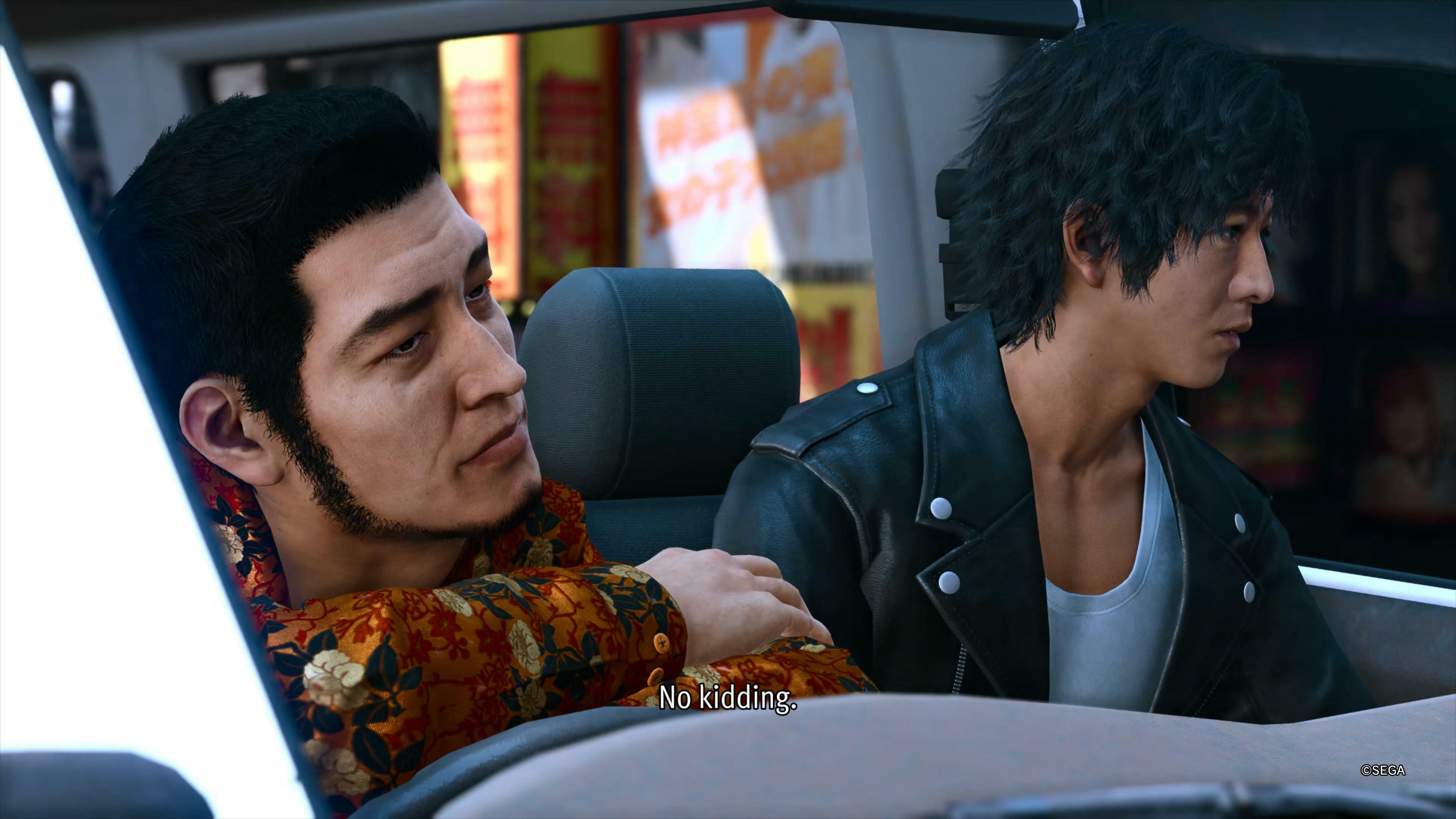
Kaito's drip remains immaculate
Kaito’s drip remains immaculate

Gallery

That doesn’t mean there aren’t plenty of opportunities to kick people’s teeth in, however. Yagami is still adept at his own curious brand of kung-fu, with both the Crane and Tiger styles returning from the first game. Snake style is a new addition that specializes in disarming enemies and countering attacks. All three styles are ostensibly designed for specific situations–Crane excels against crowds, while Tiger is used to deal heavy damage to a single target–but this isn’t a strict rule and mostly comes down to personal preferences and how much you want to shake things up. Combat is as hard-hitting and satisfying as ever, particularly once you throw in some devastating EX moves, and it also feels surprisingly fresh off the back of Yakuza: Like a Dragon’s shift to turn-based combat.

Lost Judgment improves on its predecessor by cutting down on some of the more tedious elements of its design rather than outright changing the mechanics to make the investigative side of the equation more engaging. In this sense, it’s disappointing that it doesn’t lean into what makes Judgment unique compared to the Yakuza series and instead remains at its best when sticking close to those origins. The story is compelling with an endearing cast of characters, the sheer amount of stuff to do is astounding, and there’s still an inherent joy that comes from pummelling the city’s delinquents into the ground. But it’s hard not to feel disappointed that you still feel like a passenger when it breaks away from the Yakuza mould. If this is indeed our last time with Yagami and co., then it’s one to cherish. There will just always be a nagging feeling that this was a missed opportunity to do something truly special.

WipEout Rush Announced

Following in the footsteps of games like Super Mario Run, wipEout Rush brings a fan-favorite gaming franchise in a way uniquely suited to the mobile platform. It will be released for both iOS and Android devices in early 2022. Check out the announcement trailer above and a gallery of screenshots below.

Publisher Rogue Games is aware that many fans still want to see a return on its original PlayStation platform. “If I want that visceral, immersive, intense racing experience, I’ll find it waiting on PlayStation,” said Rogue CEO Matt Casamassina. “But at the same time, we’re delighted that we could rethink wipEout for mobile with some fun new play mechanics and gorgeous visuals.

“We hope fans will come to it with an open mind because—although different—we’re proud to bring the wipEout franchise back into focus with a fresh take on the formula,” he continued. “And we’ve poured a lot of love into the presentation, which includes loads of iconic ships and tracks, a new comic book-inspired narrative, a fitting electronica soundtrack, and gorgeous visuals that run at 60 frames per second on modern hardware.”

wipEout Rush includes 60 ships from the original games as well as a single-player campaign featuring 12 championship cup races across five distinct environments. That campaign also includes comic book-influenced storytelling that will give more personality to the racers. And in one more nod to the originals, wipEout Rush features an original electronica soundtrack from veteran Sony musician Alastair Lyndsay.

Ryan McCaffrey is IGN’s executive editor of previews and host of both IGN’s weekly Xbox show, Podcast Unlocked, as well as our monthly(-ish) interview show, IGN Unfiltered. He’s a North Jersey guy, so it’s “Taylor ham,” not “pork roll.” Debate it with him on Twitter at @DMC_Ryan.

Bitcraft, a ‘New Kind of MMORPG’, Announced

Startup developer Clockwork Labs has announced Bitcraft, a “new kind of MMORPG” that emphasizes player cooperation and allows players to have a large amount of agency over the game world.

The PC MMO, which you can sign up to play the pre-alpha build at on the official Bitcraft website, features a mix of crafting, building, hunting, farming, trading, and exploration. It’s also got a unique art style, which you can see for yourself in the trailer above and the screenshot gallery below.

“BitCraft is an MMO community sandbox game which takes place in an enormous, fully editable, procedurally generated landscape all hosted in a single unsharded world, providing players with an unparalleled level of creativity and depth,” said Clockwork Labs cofounder Tyler Cloutier.

The developers promise “unparalleled freedom and long-term character progression which enables players to create their own stories and write the new history of this world.” Stay tuned for more on Bitcraft as development progresses.

Ryan McCaffrey is IGN’s executive editor of previews and host of both IGN’s weekly Xbox show, Podcast Unlocked, as well as our monthly(-ish) interview show, IGN Unfiltered. He’s a North Jersey guy, so it’s “Taylor ham,” not “pork roll.” Debate it with him on Twitter at @DMC_Ryan.

Skull & Bones Leak Reveals More Details For Ubisoft’s Pirate Game – Report

New details on Skull & Bones, Ubisoft’s long-in-development seafaring game, have apparently emerged. According to leaker Tom Henderson–who has had a solid record with Call of Duty and Battlefield leaks over the years–the game reportedly features five different tiers of ships which are divided into the cargo, combat, and exploration categories depending on the journey that you’ll take.

New ships are unlocked via blueprints and can be customized, such as enhancing a vessel’s predetermined arsenal of cannons with mortars, ballistas, and other weapons.

Now Playing: Skull and Bones Pirate Hunting Gameplay – E3 2018

Each ship also has its own strengths and weaknesses, with Henderson saying that smaller boats can outrun bigger ships if a chase occurs. Like most of Ubisoft’s games, Skull & Bones is claimed to be an open-world title set in the waters of the Indian Ocean and a fictional pirate haven based on Madagascar.

You’ll start the game off as a complete nobody, eventually working your way up the pirate ladder by earning cash from jobs, raiding other ships, attacking settlements, and hauling cargo across the ocean according to the leak. It’s worth noting that Henderson’s thread of tweets contains several leaked images, some of which have already been removed due to copyright claims.

The more money you make as a pirate, the more powerful you become. As for what’s changed since the game was shown off in 2018, Henderson added that ship perspective has been slightly tweaked while disembarking on land has players exploring their hideout and safe havens on foot. Just don’t expect any Assassin’s Creed gameplay here, as there’ll be no combat or parkour in these sections of the game that are dedicated to conversation with NPCs.

Skull & Bones was first revealed at E3 2017, under the development of Ubisoft Singapore. Since then, the game has been delayed numerous time, with Ubisoft explaining in September 2020 that the studio was working on a “new vision” for the game, following a report that said the title was getting rebooted. The latest delay was announced in May this year during an earnings report, with Ubisoft expecting Skull & Bones to launch during the fiscal year 2022-2023, which runs April 1, 2022-March 31, 2023.

GameSpot may get a commission from retail offers.

Steam’s Latest Surprise Hit is a Sim Where You Run a Gas Station

Aside from showcasing the latest triple-A heavyweights to grace the world of video games, the Steam store is also no stranger to the occasional out-of-the-blue indie success story. The store’s latest surprise hit comes in the form of Gas Station Simulator, a game that does exactly what the title suggests: run a gas station.

Currently ranked third on Steam’s Top Sellers list, DRAGO Entertainment’s Gas Station Simulator is topped only by new releases Deathloop and Timberborn.

In Gas Station Simulator, players find themselves at the forefront of a brand new business opportunity. After purchasing their very own abandoned gas station – The Dust Bowl – budding entrepreneurs are then tasked with restoring it to its former glory. Throughout the game, players will need to expand upon their station’s services as they attempt to keep up with the pace of its customers’ demands.

Gas Station Simulator incorporates all the best elements from your multiple memorable times at gas stations. From refuelling cars at the pump to tending to customers at the checkout, and even changing tires in the workshop, the game looks to draw upon the best tasks of station life.

In an attempt to keep players grounded, the game does more than just show off the wild side of running your own gas station. Taking out the trash and sweeping the station’s shop floor are a couple of the day-to-day jobs players will need to master in order to maintain high standards at their business. That being said, if work-life balance is a concern for prospective new company owners, the game also has a basketball hoop that you can visit and attempt to earn high scores on.

According to SteamDB, Gas Station Simulator has reached a peak of 5619 concurrent players since its launch yesterday (September 15). With over 4,000 players currently playing Gas Station Simulator at the time of writing, that’s a lot of floors swept, tanks refuelled and tires changed. Players looking to try their hand in the car refuelling business can pick up a copy of Gas Station Simulator on its Steam store page where the game is currently listed with 10% off until September 22. If you prefer your simulators a little more exciting, then check out Flight Simulator’s upcoming Top Gun DLC.

Jared Moore is a freelance writer for IGN. You can follow him on Twitter.

Battlefield 2042 Open Beta Rumored For October

Battlefield 2042 has been officially delayed to November 19, and this impacts a number of other particulars about the game, including its Early Access release date and the open beta. Community manager Freeman cleared up some of the specifics on Twitter. In addition to that, rumors emerged that the open beta will begin in early October.

The Early Access period has shifted to November 12. As announced previously, the Gold and Ultimate editions of the game release one week early. Previously, this would have been October 15, but now it’s November 12 to match up with the delay.

As for the open beta, the dates have shifted, too. DICE never said when the open beta was previously slated to launch, but it was rumored for late-September. Now, it’s seemingly been delayed to coincide with the game’s overall delay. Don’t expect to learn the new dates this week, however, but the reveal will happen this month.

According to insider Tom Henderson, the Battlefield 2042 beta will take place starting October 6 for people who preorder and October 8 for everyone else.

It’s been a long road to release for Battlefield 2042 already, as DICE took an extra year to develop the game to help give developers more time to make the most out of the PS5 and Xbox Series X|S. The game supports 128 players on those platforms, compared to 64 on PS4 and Xbox One.

Plenty of games planned for 2021 have shifted to 2022, due to the impact of the pandemic and other factors. For more, check out GameSpot’s roundup of all the games delayed so far.

GameSpot may get a commission from retail offers.

Composer Marty O’Donnell Must Pay Bungie Over Use Of Destiny Music

Destiny’s original composer Marty O’Donnell has been found in contempt of court for his usage of the game’s assets, that he had uploaded to his YouTube channel and other platforms. Bungie served O’Donnell with papers in April 2014 this year, as he was ordered to return all material related to Destiny and Music of the Spheres–the foundation that the game’s soundtrack was built on–as part of a 2015 injunction after he was fired from the company in April 2014.

O’Donnell originally won a settlement from Bungie and president Harold Ryan after filing a lawsuit over his dismissal, which he claimed then was done “without cause.”

Now Playing: Behind the Games: Meet the Composers – Marty O’Donnell

In 2019, O’Donnell began uploading that music and other materials to YouTube, as well as tracks and an album titled “Sketches for MotS” to Bandcamp that users could purchase from him according to Eurogamer.

“Mr. O’Donnell’s very possession of such materials proves he did not comply with the order to return ‘all material’ to Bungie,” Bungie’s motion read. Bungie claimed that these actions added up to a contempt of court and a violation of the 2015 injunction, which the court agreed on.

“Mr. O’Donnell intentionally disobeyed, and is hereby held in contempt of, the September 17, 2015 order confirming and enforcing final arbitration award [the “Order”] entered in this Matter,” judge Regina Cahan of the Superior Court of Washington King explained in their ruling.

What does this mean for O’Donnell? Besides now owing Bungie all the money that he made from Bandcamp sales, he has been ordered to pay the studio’s attorney fees, the costs associated with the third-party examination of his electronic devices, and “reasonable costs” associated with the contempt proceeding. Bungie is asking for $100,000 for this last point, a fee that O’Donnell’s representatives are arguing against and calls unreasonable.

In addition to that, O’Donnell was also forced to remove all the relevant material from the internet, and inform third-party sites hosting that content to also delete it. Finally, he has to “post a message, the wording of which the parties agree to, on his Twitter, YouTube, Bandcamp, and Soundcloud sites/channels stating that he did not have legal authority to possessor provide material related to Music of the Spheres or Destiny and asking anyone who previously downloaded any such assets to delete them and refrain from sharing and will destroy any copies of them.”

Signs that O’Donnell had entered into a new dispute with Bungie first surfaced when he removed Destiny-related videos from his YouTube channel and deleted his Twitter account. O’Donnell restored his Twitter account in June, and cryptically tweeted that he was considering retiring from the video game industry and in a now-deleted reply as to why his YouTube channel had been shut down, O’Donnell wrote: “Ask [Bungie CEO] Pete Parsons.”

The Halo composer later asked fans to consider buying the soundtrack to the 2019 PlayStation VR game Golem that he worked on at his new studio, Highwire Games, saying that the money raised would help him pay his “huge” legal bills. Highwire Games is currently working on the Iraq war game Six Days in Fallujah, which has generated plenty of controversy since it was announced.

GameSpot may get a commission from retail offers.

The 10 Best Dragon Ball Z Characters

Even decades after its original run, Dragon Ball Z remains one of the most popular anime series ever released. Who doesn’t love watching colorful, muscular heroes battling it out with the fate of the entire world at stake?

Even as the franchise continues to grow thanks to Dragon Ball Super and the upcoming sequel movie Dragon Ball Super Hero, we feel now is a great time to celebrate DBZ and its most iconic heroes and villains. Let’s count down the 10 best characters from the show’s long run, from Frieza to Vegeta to Goku.

Note: This list only covers Dragon Ball Z, not the original Dragon Ball, Dragon Ball GT or Dragon Ball Super!

10. Bulma

Bulma isn’t quite as central to the Dragon Ball Z saga as she is the original Dragon Ball, but she’s still a character worth highlighting. The rare science dork amid a sea of musclebound fighters, Bulma is always happy to save the day with a handy gadget or three. Where would our heroes be without her trusty array of Capsule Corp. accessories? Bulma’s unlikely romance with Vegeta also proves to be one of the series’ more compelling subplots. She’s come a long way since her very first team-up with Goku.

9. Android 18

While the line between good and evil is usually pretty well defined in the DBZ-verse, there are exceptions. Android 18 is certainly one such case. One of the world-conquering androids Future Trunks is sent to warn our heroes about, 18 quickly proves herself to be more than just a killing machine. Her independent streak and sarcastic sense of humor reveal a deep-seated humanity Dr. Gero couldn’t quite snuff out. By the end of the series, 18 has given up her original programming in favor of starting a family with Krillin. It’s a shame the series never shows us more of how that relationship developed, but 18 nonetheless ranks among the series’ more intriguing and nuanced characters.

8. Cell

The ultimate creation of Dr. Gero, Cell is a creature who has near limitless growth potential. What is most interesting about him, though, is that he is willing to wait for characters to reach their full potential. He could simply kill everyone with his immense power, but often he is seen stalling and waiting, as he wants to battle the heroes of Earth when they are at their true potential.

If not quite the greatest villain in DBZ history, Cell is certainly responsible for some of the series’ best moments. Who can forget the tragic death of Android 16, spurring Gohan to unleash his true power? And don’t forget the dramatic final showdown, when the late Goku returns to help his son finally destroy this all-powerful threat to humanity.

7. Krillin

You really can’t make a list about Dragon Ball Z without including Krillin, Goku’s longtime friend and training partner. Although his power is quickly outpaced by Goku during the events of Dragon Ball Z, Krillin is always around and ready to fight, even if it often does mean he gets beat up. In fact, Krillin’s poor fighting record has become a bit of a running joke at this point. The most memorable of his many deaths occurs at the hands of Frieza, something Krillin himself has never forgotten. However, it was not entirely in vain, as his death served to spark the initial Super Saiyan transformation in Goku. He may never be the strongest, or the most… alive, but Krillin is always there for his friends, and that’s what makes him number seven on our list.

6. Trunks

Trunks is unique among the DBZ fighters in that he appears in two completely different forms over the course of the series. We first meet Trunks early in the Cell Saga, as a battle-hardened teen warrior from the future with a dire message. Trunks makes quite the first impression, handily dispatching both Mecha-Frieza and King Cold with a few lightning-quick sword slashes, and he continues to gain new layers over the course of that storyline and the tie-in movie, The History of Trunks.

Later, fans meet the younger version of Trunks, a boy no longer burdened by growing up in a hellish world of evil androids. Along with his BFF Goten, Trunks is the source of endless comedic relief during the Buu Saga. Whichever version you prefer, he’s a worthy addition to the series’ cast.

5. Piccolo

Piccolo did quite the 180 over the course of DBZ. It’s easy to forget he was the main villain in the final story arc in the original Dragon Ball. Piccolo slowly morphs from Goku’s mortal enemy to reluctant ally to outright friend over the course of the series. Whatever differences the two warriors might once have had, Piccolo is redeemed after taking a strong interest in young Gohan, helping nurture his pupil’s immense hidden power. Piccolo is also notable for being the one non-Saiyan character who can keep up with the likes of Goku and Vegeta, thanks mainly to his habit of fusing with fellow Namekians like Nail and his doppelganger Kami.

4. Gohan

Goku’s older son Gohan could potentially be the strongest fighter in the series. Sadly, that potential is never fully realized, as he would rather live his life as a pacifist, only fighting in times of true need. Even with that mentality, though, Gohan has been involved in some of the largest and most memorable moments of the entire franchise. We are teased throughout the series that his inner potential is greater than anyone’s, and we see an example of this when he becomes the first Super Saiyan 2 in order to defeat Cell. His potential is further unlocked during the Buu Saga, when he gains the ability to go into an Ultimate form, totally separate from his Saiyan forms. Perhaps he never truly eclipses his father in terms of power, but in many ways Gohan is the true heart and soul of DBZ.

3. Frieza

He may not be anywhere near the most powerful villain by the series’ end, but Frieza’s capacity for evil is unrivaled. Frieza and the rest of his family rule over a massive space empire, and they clearly prefer to do so with an iron fist. Even before meeting Goku, we learn that Frieza has destroyed countless worlds, killed millions of people and was responsible for the destruction of Planet Vegeta, the homeworld of the Saiyans. Once we do meet him in the series, his evil ways are further displayed as he kills and tortures the people of Namek to obtain their Dragon Balls. He kills Krillin, and in his last act, destroys the planet Namek in an attempt to kill Goku. Years after his original debut, there has still been no villain who can match Frieza’s ruthless, evil ways, and for this reason he makes it to number three on our list.

2. Goku

Goku is the main character of the Dragon Ball saga, and it only makes sense he’d rank very high on this list. Time and again, Goku proves himself to be the hero his adoptive home planet needs. He always digs deep and finds a new reservoir of strength or a new level of Super Saiyan-hood to overcome the mightiest opponents the universe has to offer. No one, not Frieza, Broly or Buu, can truly defeat the ultimate Saiyan warrior.

Goku is also a fundamentally good guy. He wants nothing more than to train hard, prove his mettle and come home to a good meal. Maybe that makes him simpler and less complex than his archrival Vegeta, but you have to admire Goku’s consistency over the years.

1. Vegeta

No character experiences a greater or better-defined arc over the course of Dragon Ball Z than Vegeta. When we first meet him, this prince of the lost Saiyan Empire is a planet-destroying bully come to conquer Earth. But over the course of the series, Vegeta evolves from foe to reluctant friend of the Z Fighters. He even settles down with Bulma and starts a family. But even when he turns over a new leaf, Vegeta has a habit of putting his rivalry with Goku ahead of the planet’s best interests.

Vegeta is the series’ greatest character because he’s also the most fascinating. He’s cursed to always be second best. No amount of high-gravity training or death-defying schemes will allow Vegeta to stay ahead of Goku for long. But that doesn’t stop him from trying, and that’s why we love him.

Do you agree with our picks? Does the #1 choice make you want to go Super Saiyan? Sound off in the comments below!

Lord Of The Rings: Rise To War Reveals More Details About Its Vision Of Middle-Earth

Lord of the Rings: Rise To War is a mobile strategy game based on the Third Age of Middle-earth. It’s due to release soon, dropping just a day after Bilbo and Frodo’s shared birthday on September 23, and developer NetEase is sharing some juicy new details on how the game will play.

NetEase released a video with senior game designer Nicolas Perrin, who discusses the appeal of bringing Middle-earth to life in a video game before going into more detail as to how Rise To War has handled that task.

Perrin says the game’s format alone sets Rise To War apart from the numerous other Lord of the Rings games that have been made over the years. “While most of the other Lord of the Rings games are about roleplay, our game is about strategy,” Perrin said. “We think that it’s an opportunity for players to experience going to war in Middle-earth.”

To that end, players will be able to experience battles across the entire map of Middle-earth. “We paid especially great attention to recreating the game map as faithfully as possible,” Perrin said. “It will include all the classic places of Middle-earth like Dol Guldur, Minas Tirith, Edoras.”

You’ll also be able to play with some of Tolkien’s most beloved characters, whether you know them from the movies or the original novels. “We will include all the fan favorites Gandalf, Aragorn, Legolas, and Gimli,” Perrin said. “But also we hope to include less famous characters and hopefully give them a chance to get some time in the spotlight.”

The video shows off a few sneak peeks of the actual gameplay, revealing that players will be able to create and deploy different combat units belonging to a faction of their choice. A shot in the video shows a number of factions available to choose from including Isengard, Rohan, Gondor, Mordor, Lothlorien, and Erebor.

Rise To War is due out on mobile platforms later this month on September 23. If that doesn’t scratch your Lord Of The Rings itch, there are plenty of other projects on the horizon including a Gollum-centered game and a number of enhancements for the long-running Lord Of The Rings Online MMO.

GameSpot may get a commission from retail offers.

Marvel’s Eternals Will Have A Big Effect On Future Of MCU

The Eternals is set to be a big entry in the Marvel Cinematic Universe’s Phase 4, introducing a whole new cast of characters to the comic-based saga. In an interview with GamesRadar’s Total Film, director Chloé Zhao has promised that the new movie will have a big impact on the MCU going forward.

“I think we stand alone as a film for sure,” Zhao told Total Film. “But I do think we will have a very big effect on the future of the MCU with what happens in this film. Which, you know, as a fan, is really satisfying for me! I geek out.”

Now Playing: Who Are Marvel’s Eternals?

Of course, the MCU being the MCU, we can’t expect too many early details on just how The Eternals will impact the already sprawling Marvel universe. Members of the cast who were also interviewed refused to give away details, though they were happy to talk about the real-world ways they believe The Eternals is going to be influential.

“No one [normally] calls and says, ‘I’ve been thinking about you for my next film. And it’s also a huge movie, and you are one of the leads. And you get to be a superhero in your fifties, when you’re Mexican Lebanese,'” said Salma Hayek, who plays Ajak. “The Eternals were smarter than Hollywood. You see that they’ve got the essence of something. Our diversity goes beyond the geography. It’s just a group of unique individuals.”

“I feel that with more representation and diversity within the MCU, that sense of optimism and ‘can-do’ becomes more strong, more palpable,” said Lauren Ridloff, who plays Deaf hero Makkari. “I hope that people who feel seen also feel empowered to dream bigger.”

The Eternals will release in cinemas on November 5 and, following in the footsteps of latest release Shang Chi and the Legend Of The Ten Rings, will be a theatrical exclusive for at least 45 days until a possible release on Disney Plus.