Developer BioWare first teased a new Dragon Age-related project in December 2018. Two years later, BioWare officially confirmed that it is working on a fourth, currently untitled Dragon Age game (which we will henceforth refer to as Dragon Age 4). Since then, we’ve heard small nuggets of information about the upcoming role-playing game.
With Anthem abandoned and Mass Effect: Legendary Edition now out, it stands to reason that BioWare is now fully focusing on its next projects, namely Dragon Age 4 and a still untitled new Mass Effect game. So there’s a chance that we learn more about either game at E3 2021, which is right around the corner.
Click To Unmute
Size:
Want us to remember this setting for all your devices?
Now Playing: Dragon Age Trailer | Game Awards 2020
Below, we go over everything we currently know about Dragon Age 4, as well as what we might see of the game at E3 this year.
What We Know So Far
Currently, we know very little about Dragon Age 4–we don’t even know what it’s going to be called. But since the game’s announcement in December 2020, BioWare has revealed a few details.
BioWare: Stories and Secrets, a book that encompasses the developer’s history, revealed that the primary setting for Dragon Age 4 is Tevinter–which matches what Dragon Age: Inquisition‘s Trespasser expansion teased. We’ve never actually seen Tevinter in-game, though it’s been referenced several times, referred to as a human nation ruled by a council of mages.
On top of that, reports state that the planned multiplayer component to Dragon Age 4 has been cut so that the game will launch as a completely single-player RPG. Dragon Age 4 executive producer Christian Dailey has also teasingly released concept art for the game.
Related Stories:
What’s Confirmed For E3 2021
Right now, there is no planned announcement in regard to Dragon Age 4 for E3 2021. BioWare isn’t even currently scheduled to make an appearance at the conference.
Dragon Age 4’s publisher, Electronic Arts, is set to have its own event just prior to E3 (like it’s done the past few years) on June 9, but the headlining game for the livestream is a new Battlefield. EA hasn’t confirmed any of its other games for the event, presumably saving them for EA Play Live on July 22.
Related Stories:
What We Hope To See At E3 2021
At this point, we’d love to see something concrete for Dragon Age 4. Hopefully, that’s a new teaser trailer that reveals the game’s title, as well as official word from BioWare that the game doesn’t have multiplayer (or, if it actually does, what that will look like). It still feels like we’re a ways off from seeing actual gameplay, but obviously, we wouldn’t be opposed to a gameplay reveal if BioWare is ready to show it off.
Assuming EA’s June 9 event is exclusively geared towards the new Battlefield and nothing else, we hope to see Dragon Age 4 pop up during the Xbox & Bethesda showcase on June 13. Xbox looks to be striving towards being the go-to console for western RPGs, with first-party role-playing games like Fable and Avowed coming to the Xbox Series X|S. Xbox has also hosted several big-name third-party RPG developers at E3 in recent years, such as CD Projekt Red. So a Dragon Age 4 trailer would feel right at home on the Xbox & Bethesda stage.
Personally, if I can be selfish for a moment, I want to see BioWare announce that Dragon Age 4’s planned release window is 2022. It doesn’t really match BioWare’s current release schedule of a new game every two to three years (Dragon Age: Inquisition in 2014, Mass Effect: Andromeda in 2017, Anthem in 2019, Mass Effect: Legendary Edition in 2021), but given that Dragon Age 4 was first teased in 2018, I’m hopeful that that means BioWare has actually sunk a fair amount of development time into the game already.
Related Stories:
Watch live streams, videos, and more from GameSpot’s summer event. Check it out
Warning: This article contains full spoilers for The Conjuring: The Devil Made Me Do It.
[poilib element=”accentDivider”]
While The Conjuring franchise has thrived on its roster of colorful supernatural foes, The Devil Made Me Do It takes the road less traveled by centering on a human antagonist. The motivations of the Occultist (Eugenie Bondurant) are left vague for much of the film, but a third-act twist recontextualizes her devotion to the demonic and hearkens back to an element of Conjuringverse lore first established (and last referenced) in 2014’s Annabelle.
Early in The Devil Made Me Do It, Ed and Lorraine Warren (Patrick Wilson and Vera Farmiga) discover a witch’s totem hidden under the Glatzel house and very astutely observe that this creepy-ass thing is probably connected to the demon plaguing the Glatzels and Arne Johnson (who claims that, yes, the devil made him commit a murder, just like his real-life counterpart asserted). For more information on the totem, the Warrens’ friend Father Gordon points them to John Noble’s Father Kastner, a priest who helped to bring down a cult of Satan worshippers before he retired. That cult is the Disciples of the Ram, which was first mentioned in 2014’s Annabelle.
Who Are the Disciples of the Ram and How Do They Connect to Annabelle?
The Disciples of the Ram are a Satanic cult which, in Father Kastner’s estimation, is devoted to causing chaos and despair through blasphemy and pain. Case in point: the senseless and seemingly random murder of the Higgins family in 2014’s Annabelle, where Mr. and Mrs. Higgins are brutally killed by their estranged daughter Annabelle and her lover. Annabelle: Creation gave this moment some additional background by retconning Annabelle Higgins to be the assumed identity of Janice, an orphan who was possessed by a demon inside the Annabelle doll during an encounter with it at a farm in 1958. After this encounter, Annabelle/Janice escapes the farm, gets adopted by the Higgins family, grows up, loses contact with her adoptive parents, and joins the Disciples… all while still possessed by the Annabelle demon. It’s only when Annabelle/Janice kills herself while holding the doll (which the Form family next door very conveniently and coincidentally just purchased for themselves) that the demon is transferred back into its initial vessel.
News reports at the time of the Higgins murders specify that Annabelle/Janice and her boyfriend were members of a cult, but it’s only later in Annabelle that Mia Form’s research leads her to identify that cult as The Disciples of the Ram. Mia discovers that the Disciples of the Ram work to call forth inhuman spirits into our world, which require a soul to stay on our plane. These inhuman spirits target the weak and defenseless, like children and infants, and that’s a thread that remains relevant all the way into the events of The Devil Made Me Do It.
In The Conjuring 3 (a.k.a. The Devil Made Me Do It), we learn that Father Kastner was responsible for uncovering the Disciples of the Ram and helping to bring them to justice. But they didn’t go down quietly. Kastner tells the Warrens that while the cult was on trial the lead prosecutor’s wife gave birth to a stillborn baby whose heart had grown on the outside of its body. This horrific tragedy led the prosecutor’s wife to commit suicide by laying down on a train track. As Kastner says, the Satanist’s “sole aim is chaos, its nectar despair.” Kastner, who has an artifact room somehow more unsettling than the Warrens’, surrounds himself in memorabilia related to the Disciples, obsessed with the fallout his unearthing of the Disciples caused. At the time, it seems like it may just be the loss of the prosecutor’s wife and child plaguing the old priest’s conscience, but when Lorraine returns to Kastner’s house alone later in the film, we learn his guilt hits much closer to home.
Father Kastner reveals that he raised a daughter, Isla, in secret on his secluded property. While Kastner was busy taking down the Disciples of the Ram, he failed to see that the isolated Isla was becoming increasingly obsessed with his research… and not in a “send demons back to hell because that’s what God wants” way. Isla grew apart from her father and pursued her fascination with the dark arts, becoming The Occultist who plagues the characters in The Devil Made Me Do It.
So it was Father Kastner’s obsession with the Disciples of the Ram that led Isla Kastner to become the Satan-worshipping Occultist, but does that mean she was a card-carrying member of the Disciples? And what do those cards look like? Neither of those questions have clear answers in The Devil Made Me Do It. Isla never mentions the Disciples herself, nor do we see her having drawn their symbol, the vaguely “A”-shaped rune that Annabelle/Janice scrawled in blood in the Forms’ house when she killed herself in Annabelle. But what Isla taught herself about demons she learned from texts gathered during her father’s investigation of the Disciples, so it’s likely that at least some of her evil education came from material tied to the cult.
The Future of the Conjuring Universe’s Disciples
As of now, it seems unlikely that we’ll ever learn more about the Kastners and their connection to the Disciples of the Ram, seeing as Isla slices her father’s throat and then gets her soul taken by a demon at the end of The Conjuring 3. But what about the Disciples themselves? Was Isla the very last Satanist inspired by their teachings, or was Father Kastner’s victory over the group only partial? A resurfaced cult of chaos-spreading devil-worshippers sounds like they’d leave a big mess in their wake… messes that Ed and Lorraine could investigate over the next few Conjuring movies. The Conjuringverse has always propelled itself forward with already-established lore, so it doesn’t seem like a stretch to imagine the Disciples of the Ram evolving into the series’ shadowy antagonistic group, similar to HYDRA or SPECTRE. Too bad it’s not a cool acronym.
The Conjuring: The Devil Made Me Do It is in theaters and streaming on HBO Max now.
Marvel’s Loki series on Disney+ features Tom Hiddleston’s God of Mischief causing all manner of mayhem across the MCU timeline, but when does Loki take place in the MCU timeline? The short answer is Loki takes place just after the Battle of New York (as seen in Avengers and later Avengers: Endgame), but to better explain Loki’s somewhat confusing timeline we’re going back to the beginning and recapping his whole story so far.
By the time you’re done with this Loki timeline, you’ll be fully prepared for Loki’s big solo Disney+ debut on June 9, 2021.
Loki Timeline: Thor
A long time ago in a realm far, far away Loki was born as a tiny blue baby and left to die by his father Laufey, ruler of the Frost Giants in Jotunheim. But after dear ol’ dad was defeated in battle, Odin rescued the little Smurf and raised him as a prince of Asgard alongside his son, Thor. There’s no way that’ll ever blow up in his face, right?
Wrong! Growing up in the shadow of his big brother, Loki resented him for his burly muscles, beautiful blonde locks, and for being the heir to the throne of the Realm Eternal. He spent his days scheming to remove Thor so that he, Loki, God of Mischief, could take the throne instead. On the day of Thor’s coronation, Loki provoked his hot-headed older brother into launching a counter-attack on the Frost Giants in direct defiance of the All-Father.
While the other Asgardians battled, Loki was shocked to learn he was actually a Frost Giant. Loki’s plan worked and Odin banished Thor, leaving Loki to confront Odin about his true nature. And when Odin fell into the Odin Sleep, mother Frigga had no choice but to grant the throne to her son Loki and name him ruler of Asgard. Ahh, don’t you love it when a plan comes together?
But it wasn’t meant to last. Soon enough, Loki lost in battle to a once-again-worthy Thor, faced the disappointment of his father, and rather than admit he was wrong, let himself fall into a bottomless abyss.
Loki may have lost his family, but he made some new friends in Thanos and his Chitauri army. Using the powerful scepter gifted to him by Thanos, Loki laid siege to Earth and stole the Tesseract.
You see, Loki was so over ruling Asgard–he didn’t get the power and respect he wanted there, so he thought he might get it by making himself king of Earth instead. As part of his master plan, Loki let himself get captured by the Avengers in order to break them apart from the inside with a little help from the Jolly Green Giant. And it almost worked.
With Earth’s mightiest heroes scattered, Loki was free to open up a portal above New York City and launch a full-scale invasion on Earth. Unfortunately for him, the Avengers assembled to kick his butt and save the world. (Remember this moment later because it’s of key importance for the new Loki show!)
Loki Timeline: The Dark World
Now a prisoner in the dungeons of Asgard, Loki had some time to reflect on his life of mischief. We learned he actually does have a soft side, but only in regards to his sorcerer mother Frigga who taught him his many magical tricks. It sure would be a shame if something were to happen to her… So of course she dies, thanks to Malekith and his Dark Elf army during the Sacking of Asgard.
This tragedy inspired Loki to team up with Thor to take revenge on Malekith and to stop him from using the Aether to cover the universe in darkness. But Loki gonna Loki–he faked his own death, and while Thor went on to save the Nine Realms, Loki snuck back into Asgard and disguised himself as Odin to at long last take the throne of Asgard. Aah, don’t you love it when a plan comes together… again!
Hats off to Loki for finally pulling off his scheme and getting what he wanted. Well, for a few years, at least. Loki ruled over Asgard in a life of luxury, casually eating snacks and rewriting Asgardian history with a little help from Matt Damon. Then Thor had to go and show up and reveal him as a fraud.
To make matters worse, then they had to go talk to Doctor Strange, who bullied poor Loki, all so they could find Odin just before he passed away and released Hela from her prison. Thor blamed all of this on Loki, and we kind of agree with him, but how did Loki know his long lost sister was going to show up, swat him and his brother away like flies, and take over their home?
Now stranded on Sakaar, Loki did what he does best and wormed his way into the favor of the Grandmaster while Thor fought Loki’s least favorite person in the universe, the incredible Hulk.
Despite everything that happened between them, Thor and Loki shared a moment of brotherly bonding, with Thor finally seeing his brother for who he truly is, and Loki finally getting a taste of his own back-stabbing medicine.
Eventually the Revengers took the fight to Hela, and Loki chose to fight alongside his brother to save their people. Yet even as he seemingly turned to the Light Side, Loki couldn’t stop himself from stealing the Tesseract. Loki summoned Surtur to defeat Hela and hopped a ride with the survivors as his adopted home exploded in the distance.
And then, to Thor’s surprise, Loki chose to stay among his people and turn over a new leaf. It was a beautiful moment of growth for the God of Mischief. Unfortunately, it wasn’t long before his past caught up with him in a big, purple way.
Loki Timeline: Avengers: Infinity War
That’s right, Thanos and his Black Order tracked Loki down because he was in possession of the Cosmic Cube housing one of the Infinity Stones. Suddenly things got real, real bad for Loki. The Mad Titan disabled the Asgardian ship, slaughtered half of the people on board, and took the stone from Loki. With his brother’s life on the line, Loki played the greatest trick of all: being selfless for once. He tried to take out the Mad Titan and paid for that heroic act with his life.
And yes, Thanos did say no resurrections, but he didn’t say anything about spin-off TV shows!
As part of the Avengers’ plan to beat Thanos and restore half the universe back to life, they used time travel to revisit the Battle of New York–back when Loki was still alive and well. And when the time heist went awry, this past version of Loki seized the opportunity to escape with the Space Stone!
So while the present day Loki died at the hands of Thanos, this past version has avoided that fate and is charting a new course through time and space. And remember, this Loki is fresh off getting his butt kicked by the Avengers, meaning he never experienced the character growth seen in The Dark World and Ragnarok, so he’s probably feeling angry, spiteful, and more power-hungry than ever. In other words, it’s the Loki we all know and love!
When Does Loki Take Place?
Where the God of Mischief made off to with the Tesseract remains a mystery, but we’re about to learn all about it in the new Disney+ series, Loki. The show takes place just after the events of the Battle of New York, which means it will start years in the MCU’s past. The Battle of New York happened on May 4, 2012 in the MCU timeline, so expect the Loki show to start on that date in MCU history.
What we know about the story so far is that Loki’s escape seems to have created fractures in the timeline, the sort the Ancient One warned Bruce Banner about in Avengers: Endgame. Removing an Infinity Stone (in this case, the Space Stone housed inside the Tesseract) from its proper place in time will eventually destabilize the entire universe, so now the Time Variance Authority, AKA the TVA, have captured Loki and are insisting he help fix what he broke. Something tells us Loki will probably go along with it up until the point they find themselves cursing him for his sudden yet inevitable betrayal. And being fans of Loki, we wouldn’t have it any other way.
Jonathan Ferguson, a weapons expert and Keeper of Firearms & Artillery at the Royal Armouries, breaks down the insane weaponry of Battlefield: Bad Company 2, including the XM8 assault rifle, the AEK-971 assault rifle, and the iconic Carl Gustaf recoilless rifle.
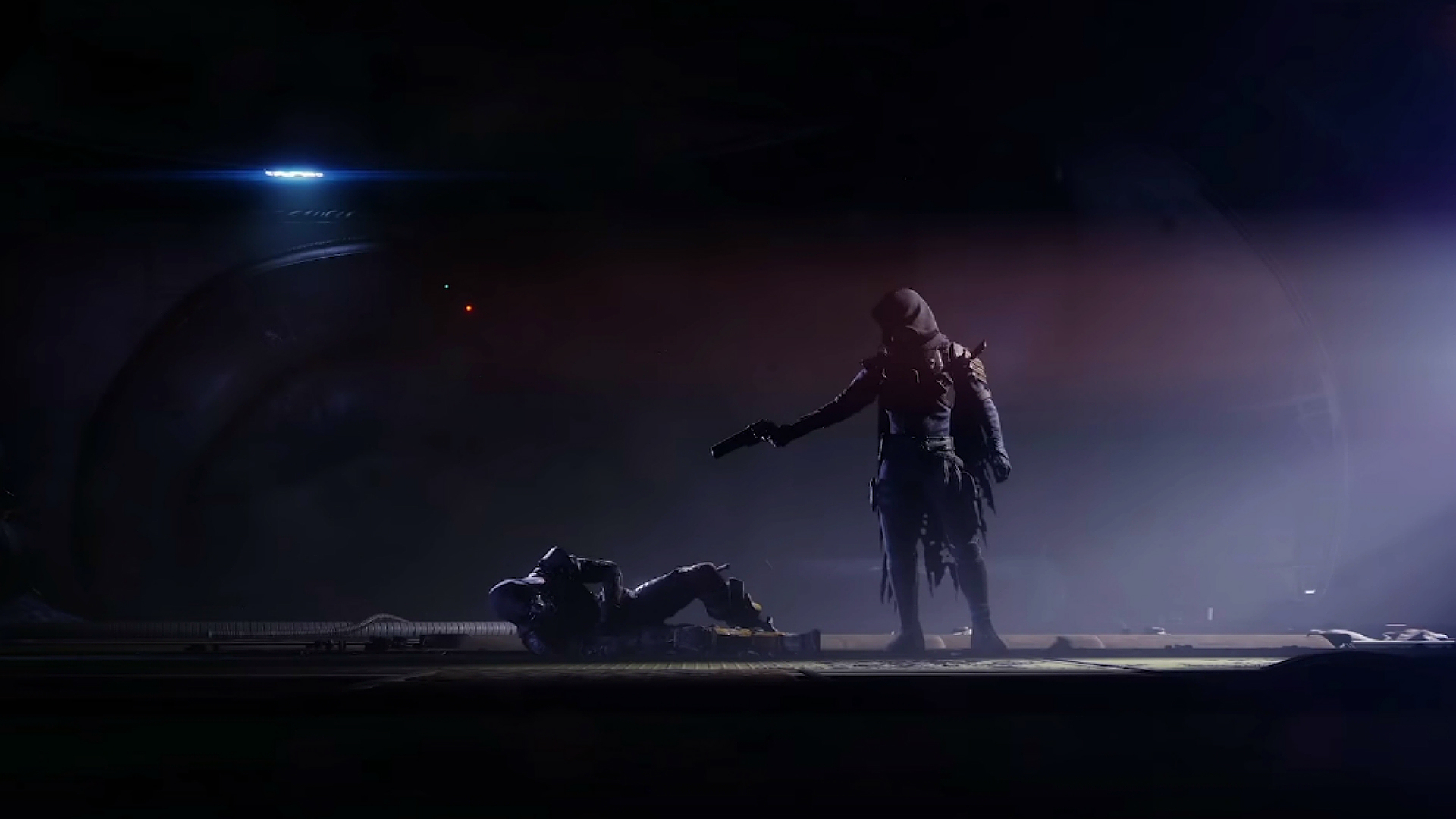
Saint-14 is one of Destiny‘s greatest heroes. Unlike the powerful figures who rose in the game’s distant history with the power of the Light, granted immortality but not guidance for how to use it, the “Risen” known as Saint-14 never became a tyrannical warlord who sought his own power. Instead, he was always a protector of the rest of humanity, wandering the post-apocalyptic wilds to save humans from the many alien threats on Earth that sought to destroy them. Saint-14 is beloved by children and animals–a big, cuddly, Russian bear of a guy.
He is also a rampaging, bloodthirsty monster, from a certain point of view.
We got that point of view in the latest weekly story quest in Destiny 2‘s Season of the Splicer. A quick catch-up: the robotic Vex have done some kind of weird computer simulation shenanigans, and that has blanketed the Last City, where most humans and Guardians live, in an “endless night.” That night is sapping electrical power, spreading sickness, and straining the City’s resources. The Guardian leadership known as the Vanguard has recruited the help of the House of Light–a friendly group of Eliksni aliens, the species otherwise known as the Fallen throughout the game–to help deal with the Vex threat. In exchange, those Eliksni have been allowed refuge in the Last City.
The Eliksni, a race who’ve become scavengers, pirates, and bandits since they’ve arrived in our solar system, have been the enemies of humanity for hundreds of years. Now there are some living in the Last City, humanity’s only bastion of safety. That’s creating a lot of tension on both sides. Some City leadership wants the Eliksni to leave, and this week, the Eliskni Quarter in the City was vandalized. Saint-14, who has been assigned to work with the Eliksni, shook off the event by saying that people can have a hard time living beside their monsters.
Mithrax, the leader of the House of Light, countered with an incredible tale of a monster of Eliksni legend. An unstoppable, unkillable creature that pursued their people with murderous rage, even when they fled–even when they were innocent. Ripping through whole Eliksni families, whole Eliksni houses, this creature was so fearsome that it never left survivors. Eliksni told stories to their children about it. It’s now ingrained in their culture.
That monster, Mithrax says, called itself “the Saint.”
It’s a phenomenal story moment in Destiny 2. Characters in the game are talking to each other about each other in a way that’s never really happened before. With the Eliksni in the City, we’re getting a new viewpoint on a looming figure in Destiny lore. Last year, we spent a whole season using time travel to undo Saint-14’s death. We, the players, literally rescued him from his fate, resurrecting a hero who had passed into legend. And now we’re getting a different perspective on one of humanity’s storied saviors.
The story in Destiny 2 has never been this good. This year, in particular, has been marked by moments like this–uneasy alliances, conversations between adversaries, and new views on things we thought we knew. There are Eliksni living in humanity’s City right now, trying to carve out a life with their former enemies, working together with them. For context, the very first thing that happens in the original Destiny, moments after you’re resurrected as a Guardian for the first time, is a pitched battle between you and the Fallen. First, you run from them. Then you kill a bunch of them. In the first five minutes of that game. The Fallen were Destiny’s very first monsters.
What we’ve seen in the seasons beginning with the Beyond Light expansion is an evolution in Destiny 2 storytelling that has elevated the game in a way we’ve never seen before. Characters are questioning their ideologies loudly, frequently, and most importantly, in the game. For literally years, most of Destiny 2’s best story was relegated to text passages connected to armor and lore delivered online through Grimoire Cards. Now, we’ve got people like Saint-14 and Mithrax challenging each other in conversations we’re watching, in radio dialogue delivered during and at the end of missions and activities, and in awesome, animated cutscenes.
It all really kicked off with the inclusion of Crow in the Season of the Hunt, back when Beyond Light was released. This new character was the culmination of a storyline begun in the Forsaken expansion–Crow is now a Guardian and can’t remember any of his past life before he was resurrected as one of the superhero characters that players embody in the game. But before he was a Light-bearer, Crow was Uldren Sov, the man who killed beloved Guardian Cayde-6. Crow doesn’t remember any of that; he is, in fact, a different person now, thanks to his resurrection. But Bungie built on and addressed all that baggage, and it did so within the game, not in some buried lore card only seen by players who would go looking for it.
Crow has brought a different perspective to the game that’s shaking up Destiny 2 all over the place. He spent time with the Eliksni before he came to the City, so he’s much more disposed to the idea of peace and understanding between the two species. He brought the same perspective to the season before this one, the Season of the Chosen, which saw tenuous discussions of treaties and alliances between humanity and the Cabal. There’s a lot of baggage there, too–the Cabal, as a conquering empire, sacked the Last City during the vanilla campaign of Destiny 2. They murdered a whole lot of people when they did that, including a key in-game character, the human leader called the Speaker. A bunch of the characters in Destiny 2, like famed pilot and shipwright Amanda Holiday, express a lot of resentment toward the Cabal.
But in-game, we’ve seen Crow’s perspective of wanting to find common ground with the “enemies of humanity” affecting other characters. We’re getting dialogue that suggests, because of Crow, Amanda has come around to the idea of trying to understand and find peace with the Cabal, despite what they’ve done, and the Eliksni, despite what they’ve done. We’re seeing ideological debates within the game. We’re seeing characters we’ve known for years grow and change.
At the same time, we’re seeing interpersonal conflicts brewing and politicking coming to the forefront of the Last City, two things that have barely been included in Destiny 2 up to now, outside of its deep (and often really, really interesting and well-written) lore. In the Season of the Chosen, we spent a bunch of time with Lord Saladin, the guy who usually just runs the Iron Banner PvP event. As the ground commander working against the Cabal, we heard a lot from Saladin about offering the enemy no quarter, about the possibility of waging total war against them. Saladin clashed with both Crow and Zavala, the Vanguard commander–and honestly, Saladin’s unyielding, hawkish viewpoint provided a lot of new nuance and depth to his character, and not all of it painted him in a positive light.
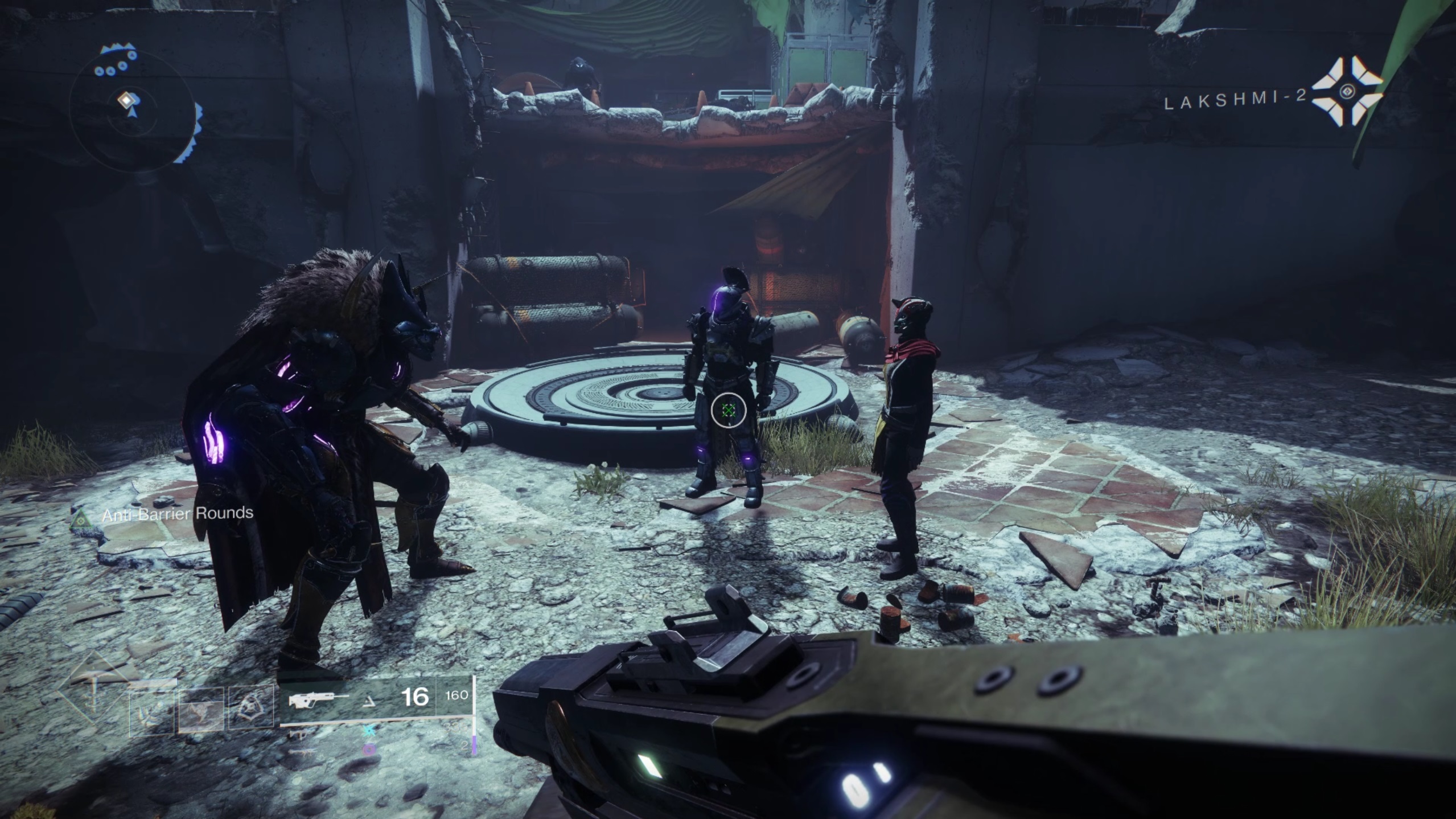
In the current season, the long-absent Lakshmi-2, the leader of one of the factions meant to represent the civilian population of the City, has had a big role. She’s the voice that wants the Eliksni out of the City, and she’s racist as hell in delivering that message. Each week, Lakshmi makes new broadcasts out to the City’s populace, using demagoguery to whip up support for expelling Mithrax and his people. She’s sewing dissent against the Vanguard leadership. She’s using the situation to advance her own power. It’s something we’ve never really seen in Destiny before, and it’s adding a lot of depth to the events of the game week-to-week.
Even on a larger scale, ever since Beyond Light introduced the ability for players to wield Stasis, a power otherwise known as “Darkness” in the game, Destiny 2 has become more nuanced than ever before. For years, the moral and ideological calculus of Destiny was: “Light equals good; Darkness equals bad.” That necessarily led to us, the players, being good, since we “serve the Light,” and all other aliens we face being bad. Now we’re using Darkness to do good, and a lot of characters are having a very difficult time reconciling that situation. There’s a real fear that using Dark power could corrupt Guardians along the way. But even if it doesn’t, the game is repeatedly bringing up a singular question: we can use the weapons of the enemy to do good, so what else are we wrong about?
And finally, there’s the flow of seasonal story arcs. Since the release of the Shadowkeep expansion, Bungie has been working to tell seasonal stories that bleed into and set up one another to make one year-long narrative that then flows into the next big expansion. Last year’s stories did an okay job of this, but they still felt fairly disjointed from one another. Since Beyond Light, the approach has worked much better.
It’s not because each season has a story that’s super-dependent on the others, though. The Season of the Hunt was about stopping Hive baddies from doing a thing; in the Season of the Chosen, we stopped Cabal baddies from doing a thing; and in the Season of the Splicer, we’re stopping Vex baddies from doing a thing. They’re not especially related and still feel fairly episodic in nature.
What is related, though, are the themes of those episodes–and how they’re affecting the people involved. As mentioned, we’re seeing ideological differences emerging between people that were previously unabashedly considered heroes. We’re seeing questions arising about how we treat characters who have been our enemies and whether all we’ll ever know with these other peoples is endless war. And we’re seeing characters changing over time. The thing that’s continuous between all the seasons this year isn’t necessarily one long, flowing story of cause and effect–it’s a thematic story in which we’re seeing how these discreet episodes are causing characters to change.
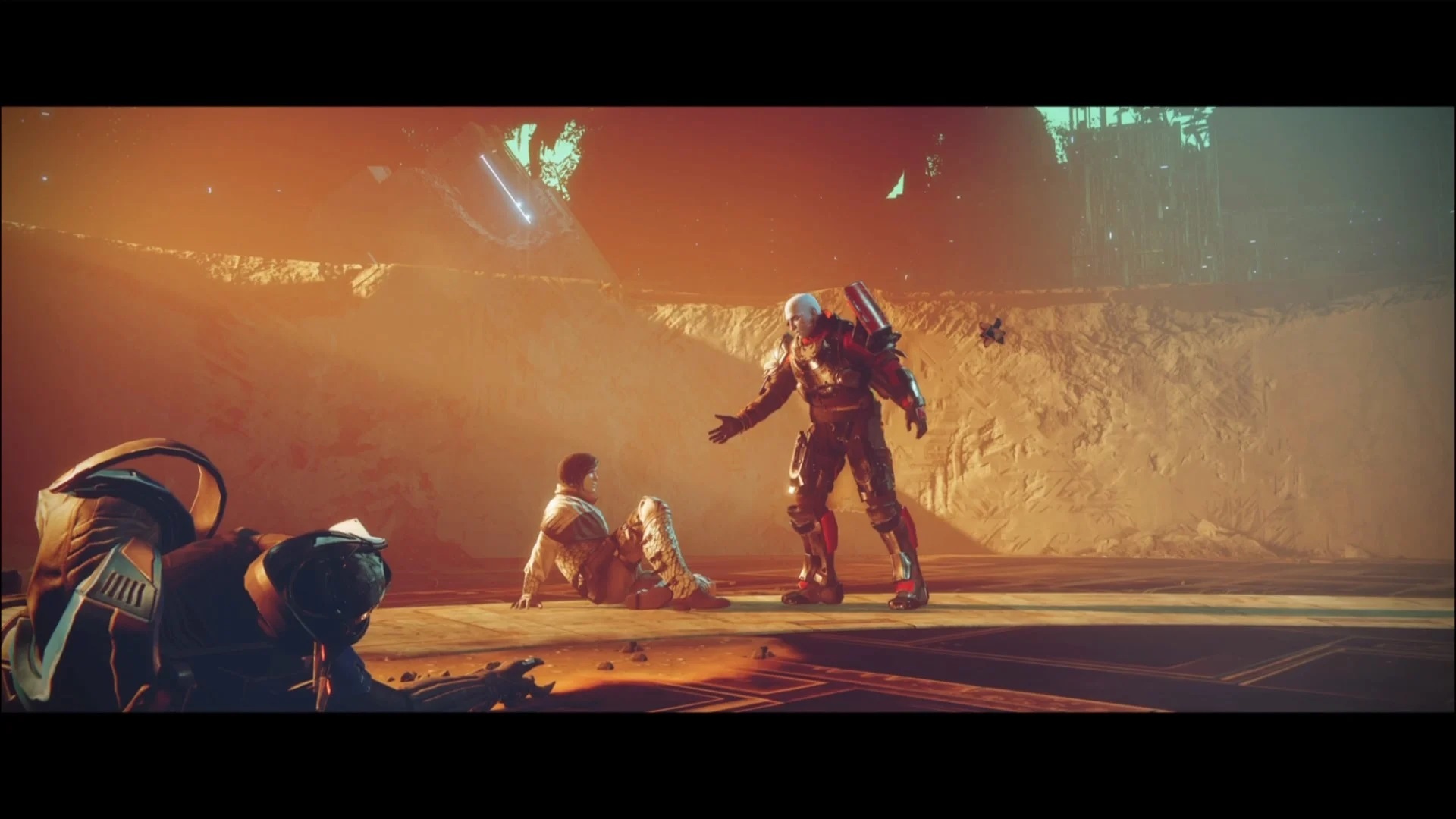
Suddenly, abruptly, Destiny 2 is full of characters with arcs, agendas, ideas, conflicts, and internal struggles. Big-hearted Saint-14 is confronted by the idea that he is an element of nightmares. Scheming Lakshmi-2 is fomenting a potential coup against the Vanguard leadership. Stalwart Zavala is starting to see pathways to peace where before there was only war. Unyielding Saladin is wondering if the Vanguard has lost the will to do what needs to be done to protect humanity. Earnest Crow is hoping people can offer forgiveness, for their alien enemies as well as for him.
This is, and I cannot stress this enough, happening in the game. The story isn’t being delivered only in monologues when you go turn in a quest. It’s not hiding only on a lore card for a pair of shoes you pick up off some random enemy. It’s scenes and dialogue that are happening all the time between characters as you play. And the story is still deep, fascinating, and affecting, even if you never dive deeper than the scenes that happen to advance the plot each week–and if you do, it’s even more well-realized.
In no uncertain terms, I’ve been waiting for Destiny 2 to deliver us this story in this way since I first started playing in Destiny’s original beta period. I’ve been a fan of Destiny lore for a long time, especially when it really ramped up with intrigue and mysteries in Forsaken. But my big issue has always been that Destiny 2 has been bad about making its stories feel like an immediate part of the game. That situation has completely changed. Destiny 2’s story has never been better, and I can’t wait to jump in every week to see where it’s headed next.
PC game hosting site itch.io has announced a new indie bundle with thousands of games and other accouterments that directly benefits Palestine in a time when the state’s people are subjugated to a humanitarian crisis.
The Indie Bundle for Palestinian Aid is a pay-what-you-want (above $5 USD) bundle that packages an assortment of experiences, with the headliner being Liyla and The Shadows of War, an atmospheric side-scrolling adventurer based on actual events about a young girl living in Gaza during the 2014 war. All proceeds will go directly to the United Nations Relief and Works Agency.
The UNRWA is a nonprofit dedicated to assisting and advancing Palestinian people, providing food assistance and mental and physical health protection. UNRWA was one of the many organizations we featured in our charity list aimed at aiding displaced Palestinians by the recent Hamas-Israel conflict.
Indie bundle for Palestinian Aid is NOW LIVE – Spread the word! Buy @Liylawar for $5, get 1,020 items for free! Available until THIS Friday. All proceeds donated for Palestinian Aid. RT appreciated! https://t.co/3sGffjCjFx
— Alanna Linayre is writing Roll for Confidence. (@Tybawai) June 4, 2021
In addition to Rasheed Abueideh’s Liyla and The Shadows of War, the Indie Bundle for Palestinian Aid packages other items like game assets and official soundtracks donated by developers and creators from around the world. There’s short experiences such as its been a while since i went for a walk and Strange, as well as more action-oriented titles like Cat Ace and Dona Vasa. Even titles available now, including Calico and Switch ‘N’ Shoot, are featured in itchi.io’s indie bundle.
The bundle’s target is $500,000. At the time of this writing, it’s amassed nearly 20% of its overall total. The bundle will be available until June 11.
Watch live streams, videos, and more from GameSpot’s summer event. Check it out
Actors Dwayne “The Rock” Johnson and Yahya Abdul-Mateen II are teaming up for Emergency Contact, an action film to be produced through Warner Bros., according to The Hollywood Reporter.
Emergency Contact is an original concept, not based on an existing property, so plot details are light. The film will reportedly be a “high-octane action film set amid the underground music scene of Austin, Texas.”
Johnson is currently filming Black Adam for Warner Bros., and the upcoming Disney film Jungle Cruise is completed. Abdul-Mateen II is all over the place recently, having starred in HBO’s Watchmen as Cal Abar, and in Aquaman (and the upcoming Aquaman 2) as Black Manta. He also stars as the titular character in the completed Candyman, and will appear in The Matrix 4 and Mad Max: Fury Road prequel Furiosa.
Rory Haines and Sohrab Noshirvani wrote the original pitch for Emergency Contact, as well as the current draft of the script. Johnson will produce alongside Beau Flynn, Hiram Garcia, and Dany Garcia.
With the film so early in production (and its stars so busy), there is no current release window for Emergency Contact.
Watch live streams, videos, and more from GameSpot’s summer event. Check it out
Issa Rae will dive into the Spider-Verse for the upcoming Into the Spider-Verse sequel, where she’ll voice Jessica Drew–better known as Spider-Woman–according to The Hollywood Reporter.
Rae is best known for her HBO series Insecure and the 2020 film The Lovebirds. She’s also the first new addition to the Spider-Verse sequel’s cast. Only stars Shameik Moore and Hailee Steinfeld are confirmed so far.
Click To Unmute
Size:
Want us to remember this setting for all your devices?
Now Playing: Spider-Man: Into The Spider-Verse – Official Trailer
Details on the movie–and Rae’s character–are light. The original film had Shameik Moore’s Miles Morales discovering his self confidence with help from Peter B. Parker (Jake Johnson) and Spider-Gwen (Hailee Steinfeld) to defeat the Kingpin and stop the multiverse from collapsing, but the end of the film left the multiverse open for future adventures. Writer and producer Phil Lord has previously hinted that Japanese and Australian Spider-Men could join the cast of characters in addition to Rae’s Spider-Woman.
Phil Lord and Chris Miller are once again writing and producing for Spider-Verse, which is currently in production, alongside David Callaham. Kemp Powers (Pixar’s Soul), Joaquim Dos Santos (Avatar: The Last Airbender), and Justin K. Thompson will direct.
The currently-untitled Spider-Man: Into the Spider-Verse sequel is currently scheduled to hit theaters on October 7, 2022 after being delayed from its initial April 2022 release.
Watch live streams, videos, and more from GameSpot’s summer event. Check it out
E3 2021 and all of the gaming events around it are rapidly approaching, which means that it’s time for game announcements and surprises. While there usually is an air of mystery around what games will and will not be at the show, there are some games that we do know will be there. Below, you can find the full list of games coming to PC that are confirmed to be at E3 2021.
The majority of PC games that are appearing at E3 will be featured in the Guerrilla Collective‘s two showcases, which take place on June 5 and 12 and will show off a variety of indie titles. Games like Anno: Mutationem, Moonglow Bay, and Loot River will all be making an appearance and are confirmed to be coming to PC.
Click To Unmute
Size:
Want us to remember this setting for all your devices?
Now Playing: E3 2021 Hype, Speculation, What We Want To See | GameSpot After Dark
Another showcase that is confirmed to have some PC games is the Xbox and Bethesda showcase on June 13. Details on what games will be present are scarce, but the art used to announce the showcase included images from both Halo Infinite and Starfield. Halo Infinite is confirmed to be coming to PC, although Bethesda currently hasn’t announced what platforms Starfield will release on. That said, Bethesda’s previous titles have been on PC and Microsoft puts most of its first-party titles on PC at launch, so Starfield will probably be coming to PC. In addition to those two titles, other Xbox Game Studios games, like Avowed, the new Perfect Dark, Fable, and more might make an appearance at the show, but no guarantees.
That covers the majority of PC games confirmed to be at E3; however, there are multiple showcases happening that might feature PC games that you should keep an eye on. The PC Gaming Show will also be happening on June 13, but no games have been confirmed for the show just yet. Ubisoft Forward is happening on June 12 and is expected to have upcoming titles Riders Republic and Rainbow Six Quarantine, both of which are coming to PC.
There are plenty of gaming showcases to watch, and GameSpot has a full E3 presentation schedule in addition to a full list of all the games confirmed for E3, regardless of platform. While not every presentation is guaranteed to feature games coming to PC, there will still be plenty of interesting surprises.
Check out the full list of all the PC games confirmed to be at E3 2021 and the surrounding events; we’ll continue to update this list as more are confirmed.
All The PC Games Confirmed For E3 2021
AK-xolotl
Aeon Drive
Akatori
Anno: Mutationem
Archvale
Batora: Lost Haven
Bear and Breakfast
Beasts of Maravilla Island
Behind the Frame
Black Book
Blooming Business Casino
Chernobylite
Death Trash
Death’s Door
Demon’s Mirror
Despot’s Game
Elderand
Endling
Eternal Cylinder
Falling Frontier
Fire Tonight
Ghostrunner 2
Grime
Halo Infinite
Happy’s Humble Burger farm
Hello Neighbor 2
Industria
Kitsune Tails
Kraken Academy
Kung Fu Kickball
Lamentum
Loot River
Moonglow Bay
My Lovely Wife
No Longer Home
Omno
Onsen Master
Paralives
Phantom Abyss
Potion Craft
Rubi: The Wayward Mira
Run Die Run Again
Sable
Serial Cleaners
Severed Steel
Shadow Warrior 3
Slime Heroes
Starfield (Expected to come to PC, but platforms have not been confirmed)
Super Space Club
Tamarindo’s Freaking Dinner
The Gecko Gods
The Legend of Tianding
The Lightbringer
Tinkertown
Trash Sailors
Trifox
Unmetal
Unpacking
Venice 2089
White Shadows
Wolfstride
Ynglet
Zodiac Legion
Watch live streams, videos, and more from GameSpot’s summer event. Check it out
The first two episodes of Lisey’s Story, titled “Blood Hunt” and “Blood Bool,” hit AppleTV+ on Friday, June 4th.
[poilib element=”accentDivider”]
Stephen King is one of our generation’s most prolific writers, and because of that, he’s also one of the most adapted writers of our time. The newest project based on his work comes from AppleTV+ and director Pablo Larraín, adapting his 2006 novel Lisey’s Story. Boasting a star-studded cast led by Julianne Moore and Clive Owen, this is one of the most high-profile prestige TV King attempts in years. And while what we saw does tower over lesser recent adaptations like CBS’ messy and ridiculous The Stand, the atmospheric and dense first two episodes have their own problems to contend with.
Scott Landon (Clive Owen) is a bestselling author who lived a seemingly idyllic life with his wife Lisey (Julianne Moore), but that’s cut short when he dies unexpectedly. Two years later we find Lisey still trying to come to terms with that loss as we navigate the impact Scott had on the lives of people around him. While that sounds like a relatively simple premise, this isn’t just a meditation on one man’s life and loves. That’s because Scott had an unbelievable secret, one that Lisey has repressed and will need to uncover before finding peace after her husband’s death. And it’s that wild secret that overwhelms the debut episodes.
Lisey’s Story takes place over a series of different timelines, with us reliving Scott and Lisey’s lives through the latter’s memories. This method veers from effective to frustrating as another great performance by Moore often gets pushed to the side for the sake of Owen’s intangible Scott. It might be reductive but there’s definitely an argument for this being renamed Scott’s Story, as that is really who we’re excavating and exploring here. While Lisey is our main character, this is really a tale about a male writer–as so many of King’s are–and his connection to something so otherworldly that even after his death it lingers, leaving a dark, confusing, and ambiguous mystery for his wife and us the viewers to solve.
How much you enjoy Lisey’s Story will likely revolve around how much ambiguity and atmosphere you can lose yourself in, as the first two episodes definitely don’t explain much that non-readers of the source material will understand. Moore fills each scene she’s in with grief and gravitas that makes you wish that this was truly her story. How often do we get to see a woman truly grieve? To really explore the ways that someone has to survive the death of another? Instead, Lisey’s life becomes filled with other people.
There’s her self-harming sister, Amanda (Joan Allen), who had a deep and unexpected connection to Scott and his strange past. Then there’s her husband’s colleague who’s desperate to publish an unfinished manuscript that he believes is still in the family home. And, of course, there’s Scott himself, because you don’t cast Clive Owen and really kill him off in the early moments of the show. Make no mistake, Scott is dead but he is still arguably the lead of Lisey’s Story. That’s mostly due to the fact that Lisey is on a sort of post-mortem treasure trail left by her husband. But while that seems ripe for a useful and unexpected take on the narrative MacGuffin it’s barely utilized in any real way except to push the story forward.
While the first episode goes for a decidedly slow and steady take on building tension, most of that is lost as we head into the second episode. It’s filled with jarring flashbacks both real-world and otherwise that are sometimes hard to follow, but the confusing shifts and tone aren’t pointedly experimental or surreal enough to make that murkiness feel like a conscious choice. It’s a shift that might draw some viewers in but could easily turn off those who were engaged by the slow burn consistency of the first episode. For this reviewer, it felt like a Hannibal-lite attempt at mixing high art with a genre that never quite melded during the debut episodes.
The one thing that does shine, though, is Moore. As we learn about her relationship with Scott she becomes more alive, more tragic, and more sympathetic as we see her surrounded by people she loves but can barely understand as they all struggle with clearly undiagnosed mental health problems. That’s another space the show has yet to truly deliver on; the supernatural can be a great analogous place to explore mental health and trauma, but here each character’s mental state is merely used as a sort of shield or excuse that normal people use to explain things they don’t understand. But it’s loath to actually make a statement. Instead, it wavers between using self-harm and catatonia for narrative tools or shock, and as a way to hint that mentally ill people are sort of ESP manic pixie dream people.
Lisey’s Story is definitely more ambitious and stylized than your average King adaptation. It boasts a great turn from a powerful if underused Moore. But from the first two episodes, it’s yet to find its footing, struggling to balance the deep topics it presents and the tragic treasure hunt at its core.